

Key Highlights
- The U.S. accelerates lunar ambitions amid geopolitical competition.
- China’s advancements in space exploration raise concerns in Washington.
- The Artemis program aims for both scientific discovery and strategic positioning.
The moon has always been a silent witness to humanity’s dreams, hanging above us as both a mystery and a promise. Yet, as history often reminds us, even the quietest places can become stages for the loudest ambitions. Today, the renewed urgency to return to the lunar surface carries echoes not only of curiosity but of competition.
In recent years, the United States has accelerated its lunar ambitions under evolving political narratives, particularly during the leadership of Donald Trump. The framing of space exploration as a strategic frontier has increasingly emphasized geopolitical positioning, especially in relation to China’s rapidly advancing space program. This shift reflects a broader trend where space is viewed not just as a realm for scientific inquiry but as a critical domain for national security and technological leadership.
China has made significant strides in its space endeavors, from its Chang’e missions to ambitious plans for a lunar research station. These developments have not gone unnoticed in Washington, where policymakers are increasingly concerned about maintaining a competitive edge in space. The perception of space as a battleground for technological supremacy has intensified, with both nations racing to establish their presence on the moon.
The Artemis program, led by NASA, embodies this dual purpose of exploration and competition. While it promises scientific discovery and international collaboration, it also serves as a demonstration of capability. The initiative aims not only to return humans to the moon but to establish a sustained presence, signaling long-term intent and commitment to lunar exploration. This program is seen as a countermeasure to China's advancements, reinforcing the U.S. position in the global space race.
Critics argue that this framing risks overshadowing the spirit of exploration. They suggest that the language of dominance may reshape priorities, shifting focus from shared knowledge to strategic advantage. Supporters, however, contend that competition has historically driven innovation, pointing to the original space race as a catalyst for technological breakthroughs. This debate highlights the tension between collaboration and competition in the realm of space exploration.
The intersection of politics and space exploration is not new. During the Cold War, the race to the moon symbolized ideological rivalry. Today, the dynamics are more complex, involving economic interests, technological ecosystems, and global alliances. International partners, including Europe and Japan, play key roles in the Artemis program, underscoring a collaborative dimension even as underlying tensions persist. The balance between cooperation and competition remains delicate, with each nation navigating its own interests while attempting to foster international partnerships.
Meanwhile, China continues to pursue its own timeline, emphasizing self-reliance and long-term planning. Its approach reflects a broader strategy that integrates space exploration into national development goals, positioning itself as a formidable player in the global arena. As humanity prepares for a new era of lunar exploration, the question remains whether the moon will serve as a shared frontier or a contested ground. The answer may shape not only the future of space travel but also the nature of international relations.
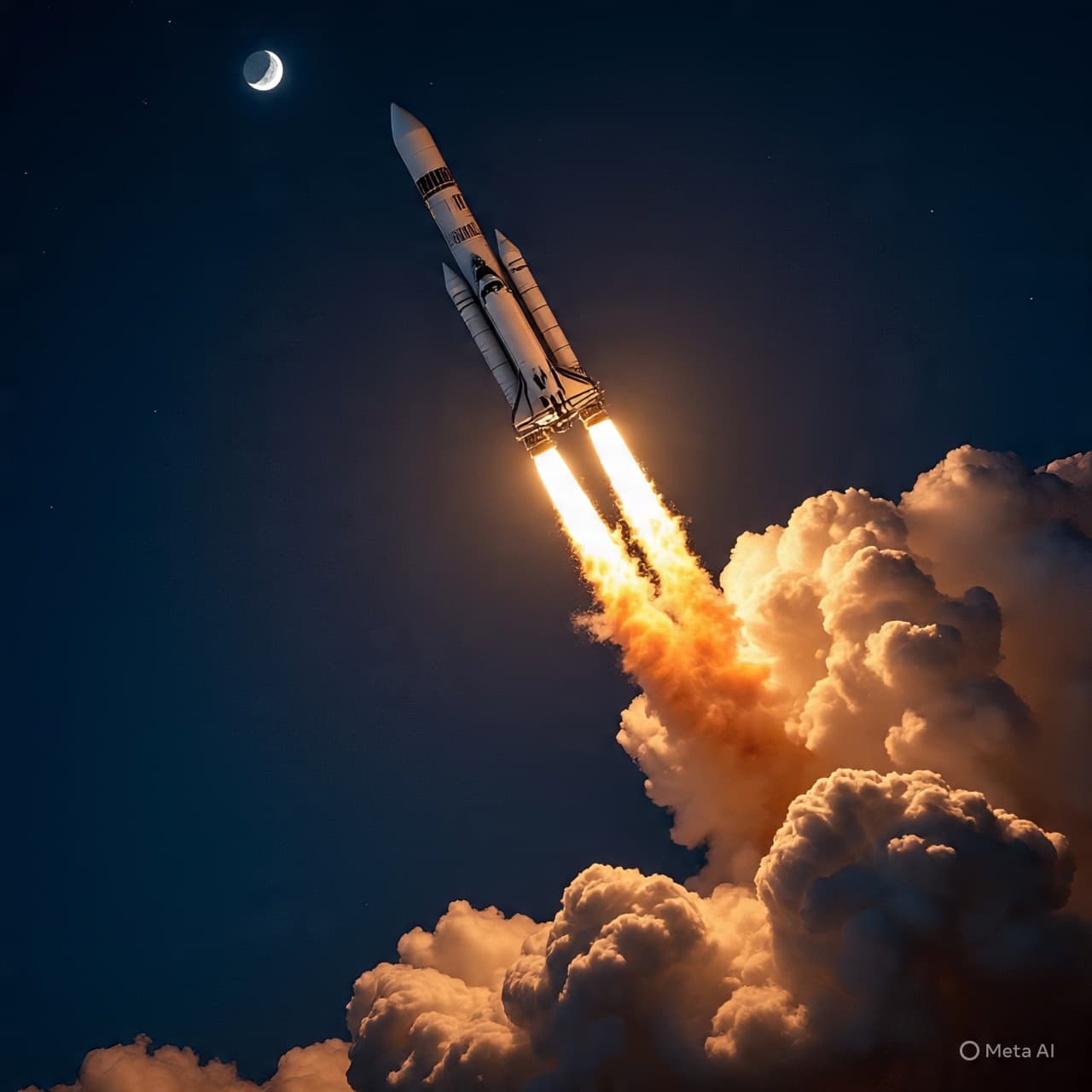
AI Image Disclaimer: Images in this article are AI-generated illustrations, meant for concept only.
Published by Banx Network. This article is part of the Banx decentralized media programme, powered by the BXE token on the XRP Ledger.




