There are moments in exploration when the horizon seems close enough to touch, only to drift gently farther away. The promise of a launch window, like the first light before dawn, carries both certainty and suspense. For months, March had lingered in conversation as a waypoint for humanity’s next lunar chapter. Yet spaceflight, by its nature, moves to the rhythm of caution rather than the impatience of calendars.
The anticipated journey of Artemis II — NASA’s first crewed mission around the Moon in more than half a century — now appears unlikely to lift off in March as once hoped. Officials have signaled that technical reviews, hardware readiness, and safety verifications may require additional time. In the quiet corridors of mission control and contractor facilities alike, engineers continue their meticulous work, measuring twice and then once again.
Artemis II is designed to send four astronauts on a lunar flyby, testing the Orion spacecraft’s life-support systems and performance in deep space. It is meant to be a proving ground — not merely a voyage outward, but a rehearsal for the even more ambitious Artemis III mission, which aims to return humans to the lunar surface. Such milestones are not rushed; they are assembled carefully, layer by layer, like a bridge suspended over vast uncertainty.
Delays in major space programs are rarely the result of a single obstacle. They often emerge from a tapestry of considerations: propulsion systems undergoing further inspection, heat shield assessments, integration checks between the Space Launch System rocket and the Orion capsule. NASA has emphasized that crew safety remains paramount. In an era shaped by both technological ambition and public scrutiny, each checklist item carries the weight of history.
There is also the broader context of Artemis itself — a program intended not only to revisit the Moon, but to establish a sustainable presence there. The timeline has already shifted in previous years, reflecting the complexity of assembling next-generation systems. Contractors, policymakers, and international partners all share in the choreography. Every adjustment to the calendar ripples outward.
Yet postponement does not diminish purpose. If anything, it underscores the seriousness of the endeavor. The Moon has waited for billions of years; it will wait a little longer still. For the astronauts training for Artemis II, readiness is measured not in weeks but in preparation. Simulations continue. Procedures are refined. The launch date, though fluid, remains a destination rather than a doubt.
NASA has not formally confirmed a new target date but has acknowledged that March may no longer be feasible. Further updates are expected following ongoing technical evaluations and program reviews. For now, the mission stands in a familiar space between anticipation and assurance — a reminder that exploration is as much about patience as it is about propulsion.
When Artemis II finally rises, whether in spring or beyond, it will carry with it more than a crew. It will carry a renewed expression of human curiosity, steady and deliberate. And sometimes, the most important step forward is the one taken carefully.
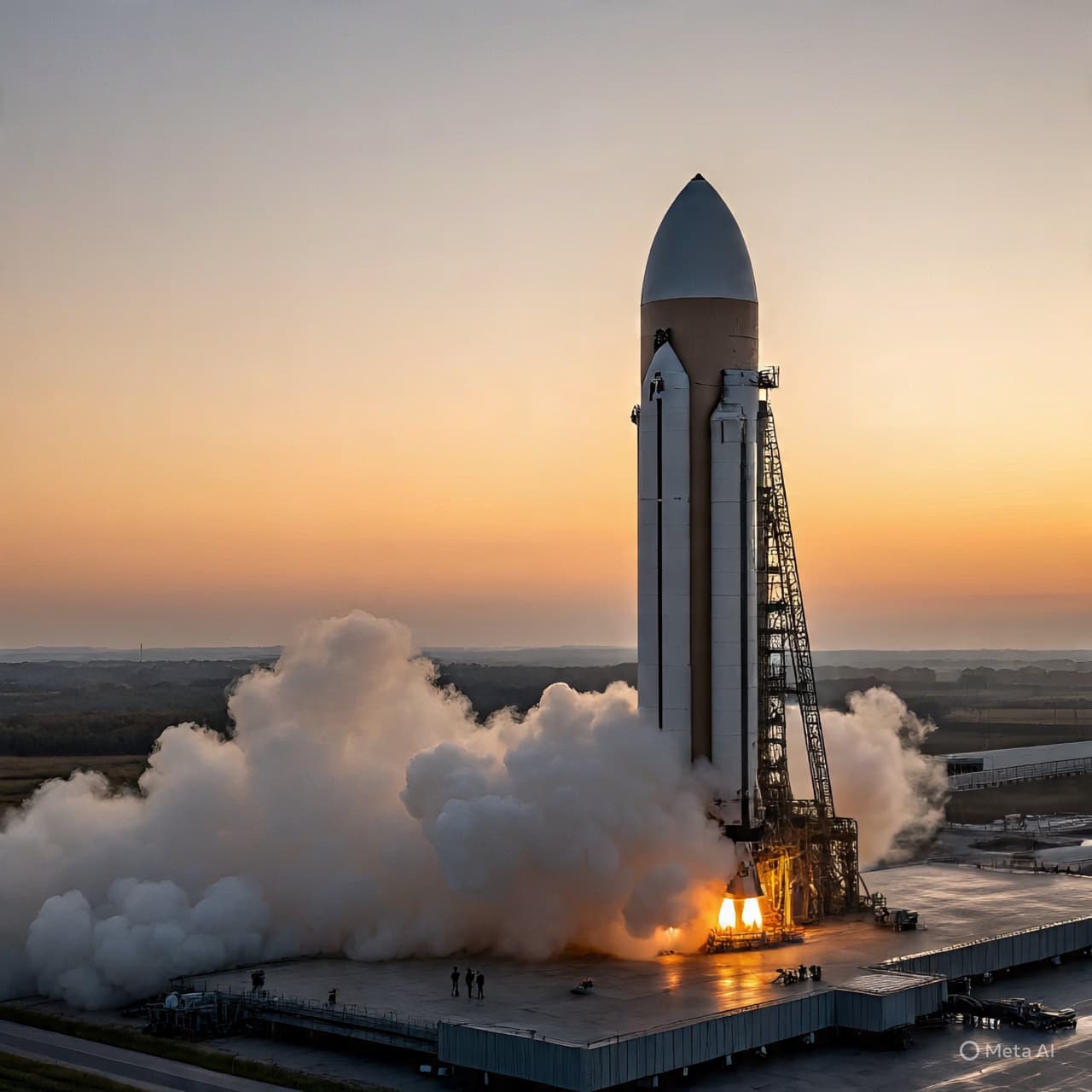
AI Image Disclaimer Illustrations were produced with AI and serve as conceptual depictions.
SOURCE CHECK
Credible mainstream coverage found from:
NASA
Reuters
The Associated Press
Space.com
The Washington Post
Published by Banx Network. This article is part of the Banx decentralized media programme, powered by the BXE token on the XRP Ledger.