For many years, dark energy has occupied a central place in the modern story of the universe. Like an unseen wind pushing a vast cosmic sail, it has been used to explain why the expansion of the universe appears to be accelerating. Yet science advances not only through confirmation but also through careful challenges, and a new study is encouraging researchers to reconsider whether the cosmos might operate differently than currently assumed.
The standard cosmological model proposes that dark energy accounts for much of the universe’s total energy content. Although it has never been directly observed, the concept helps explain measurements indicating accelerated cosmic expansion.
A recently published study suggests that this acceleration may not necessarily require dark energy. Instead, researchers argue that certain mathematical assumptions within existing cosmological models could contribute to the appearance of accelerated expansion.
The proposal joins a broader tradition of alternative cosmological theories that seek to explain observations through modified interpretations of gravity, matter distribution, or large-scale cosmic structure. While such ideas remain outside the scientific mainstream, they continue to generate discussion and testing.
Interest in alternatives has grown as increasingly detailed observations provide new opportunities to evaluate established models. Large-scale surveys and cosmic mapping projects have produced data of unprecedented precision, enabling scientists to examine subtle discrepancies and unanswered questions.
Researchers emphasize that challenging dark energy does not automatically invalidate the standard model. Any alternative explanation must account for a wide range of observations, including galaxy distributions, cosmic background radiation, and large-scale structure formation.
The scientific process encourages such scrutiny. New models are proposed, tested, criticized, and refined through observation and peer review. Many promising ideas ultimately fail, while a few contribute to deeper understanding even if they do not replace existing theories.
As more observational data become available, researchers will continue comparing predictions from competing frameworks. Whether dark energy remains central to cosmology or evolves into a different explanation, future evidence will play the decisive role.
The new research does not settle the question of dark energy, but it highlights the ongoing effort to understand the forces shaping the universe. In cosmology, even long-standing ideas remain open to examination, reflecting a discipline that continues to refine its picture of the cosmos through evidence and observation.
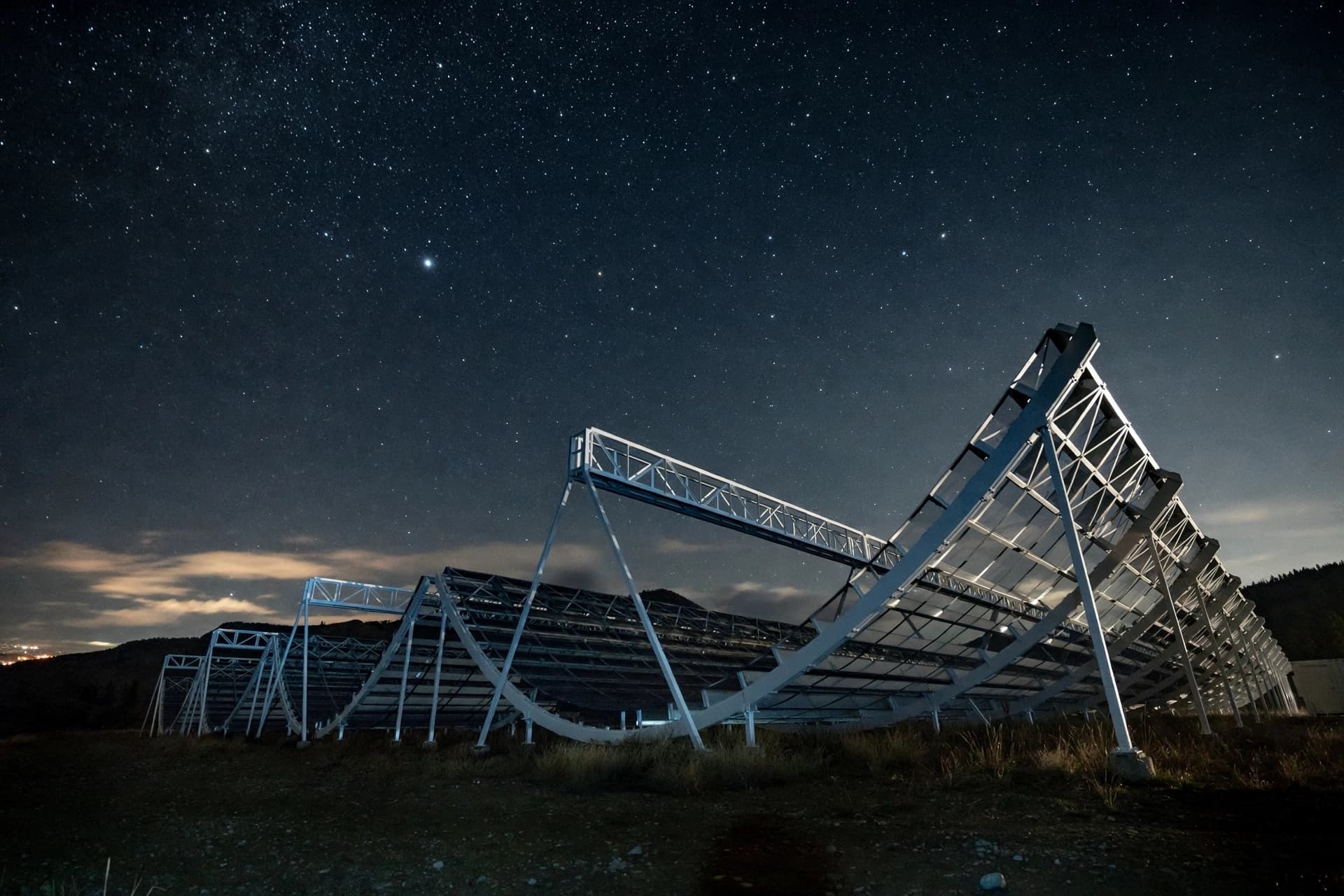
AI Image Disclaimer: Visuals associated with this article are AI-generated representations intended to illustrate scientific themes and should not be interpreted as actual observations.
Sources Verified:
Gizmodo ScienceDaily The Guardian Peer-reviewed cosmology research Academic cosmology literature
Published by Banx Network. This article is part of the Banx decentralized media programme, powered by the BXE token on the XRP Ledger.