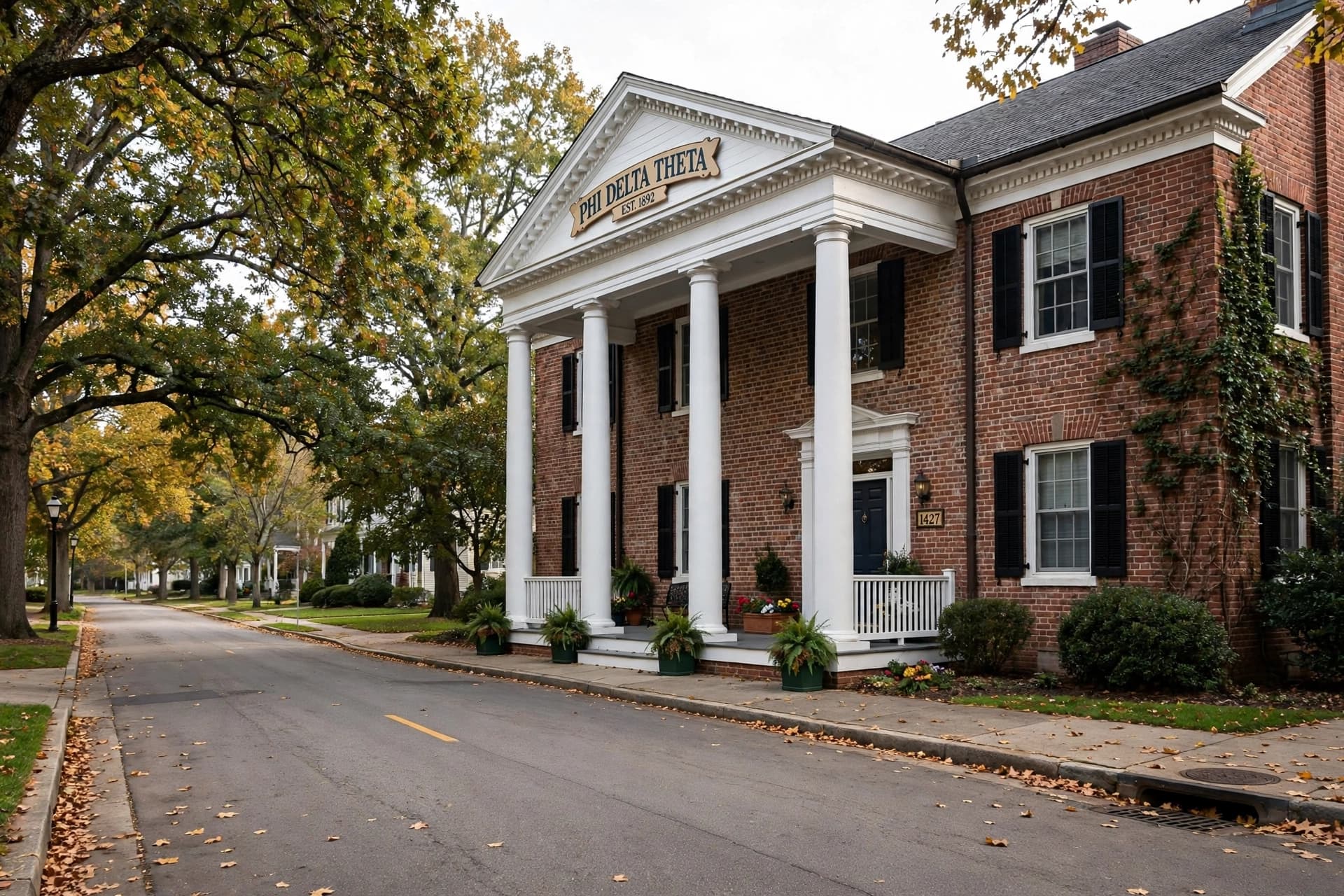
There are moments when an institution must look at itself in a mirror it did not choose, and decide whether the reflection is one it can live with. For Cornell University, that moment arrived with a lawsuit filed in September, alleging that a female student was drugged and sexually assaulted by multiple fraternity members at the Chi Phi house in October 2024—a night she says unfolded while other men entered the room and messages describing her circulated on Snapchat without her knowledge . The university’s response, announced Tuesday by President Michael Kotlikoff, is sweeping: a suspension of all parties and social events at Interfraternity Council houses through the end of the 2026–27 academic year, a “zero tolerance” policy for violations, and a new role for New York State Police investigators who are independent of the university .
The measures arrive after weeks of mounting pressure. The woman, identified in court documents as Jane Doe, said she reported the assault to Cornell police in 2024, but the district attorney declined to prosecute within weeks, and no criminal charges were ever filed . New York Governor Kathy Hochul removed the district attorney from the case this month following public outcry, and Attorney General Letitia James is now leading the investigation . Cornell has separately hired former Deputy U.S. Attorney General Sally Yates to conduct an independent review of its response .
What makes the suspension notable is its scale. Cornell has more than 20 active fraternities affiliated with its Interfraternity Council, and one-third of students participate in Greek life . Kotlikoff acknowledged that sexual violence extends beyond fraternities, saying the university must also confront a culture of excessive drinking and drug use, and expand education about students’ responsibility to intervene . He called the measures “first steps toward systemic change” .
Not everyone sees the ban as the right remedy. Andrew Miltenberg, a lawyer for one of the men accused in the lawsuit, criticized the restrictions as a sweeping response to problems that extend beyond fraternities, warning that parties could simply move off campus, where oversight would be even thinner . “Changing the address doesn’t change the behavior,” he said . The seven men accused have denied the allegations, saying either that the sexual activity was consensual or that they were not involved .
For Jane Doe, the lawsuit was not only about accountability but about what she says was a system that failed her. According to reporting by The New York Times, her statement to Cornell police was condensed to a six-page summary for the district attorney that omitted her direct assertion that she was “100 percent certain” she had been raped . The district attorney also declined an offer to review additional evidence, the Times reported . Those gaps are part of what the state police’s involvement and Yates’s review are meant to address.
Cornell also plans to add a case manager to its Office of Civil Rights, expand victim advocates, and accelerate recommendations from a 2025 task force on campus sexual assault . The faculty senate was scheduled to take up a resolution expressing no confidence in the administration’s handling of sexual assault the day after Kotlikoff’s announcement—a reminder that the measures, however broad, may not quiet all the questions .
“We must meet this moment by acknowledging where we have fallen short and taking meaningful action,” Kotlikoff wrote. “Cornell must be a place where safety is not an open question” . Whether the suspension and the new investigative partnerships will make that true is a question that will be answered not by the announcement, but by what follows.
The measures were announced Tuesday and will remain in effect through the 2026–27 academic year. The New York State Police will work alongside campus police on sexual assault investigations. No criminal charges have been filed against any of the accused men. The attorney general’s investigation and Yates’s review are ongoing .
Note: The images in this article are generated by artificial intelligence and are not real photographs.
---
Sources: Associated Press, The New York Times, CBC News, UPI, TribLIVE
Published by Banx Network. This article is part of the Banx decentralized media programme, powered by the BXE token on the XRP Ledger.