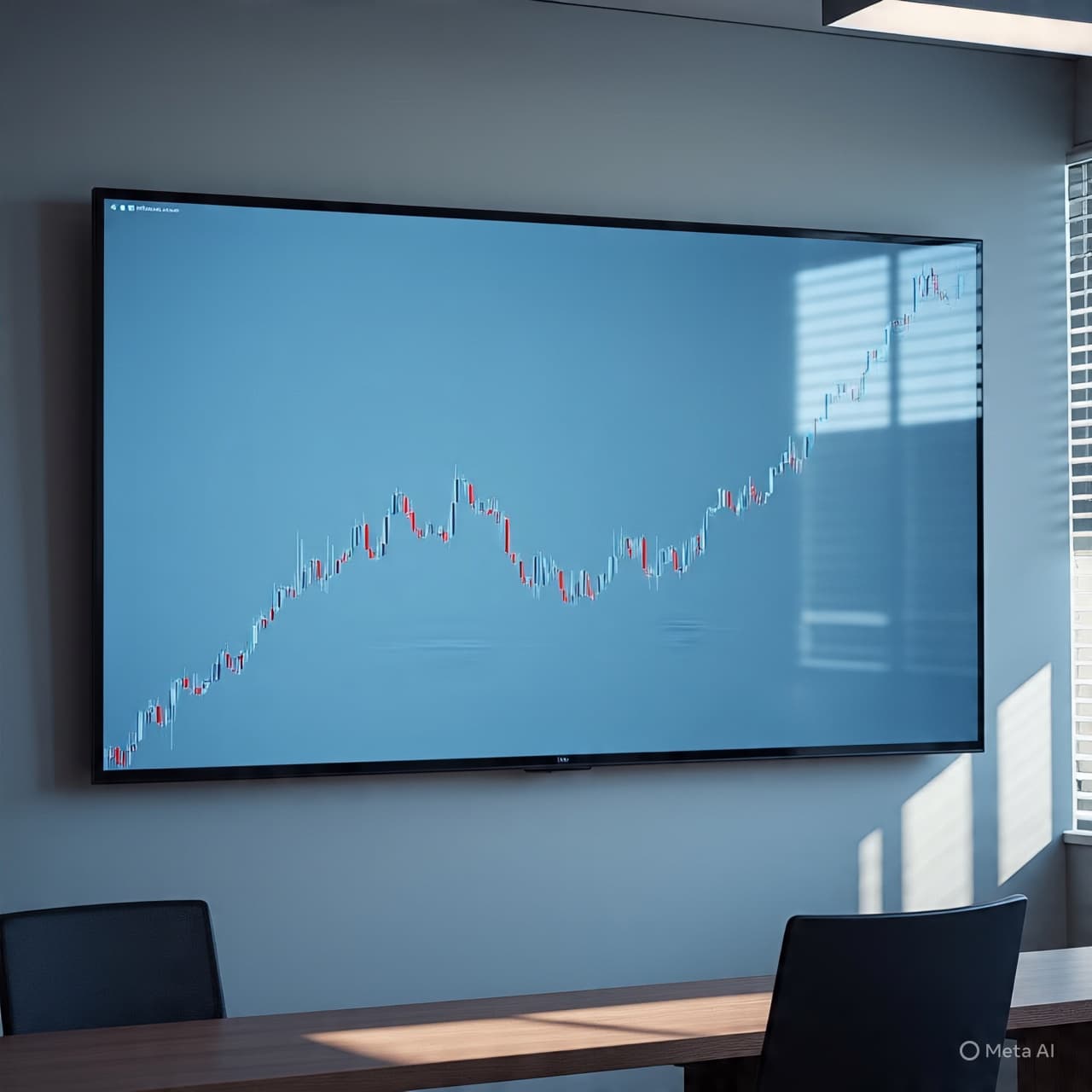
Markets rarely fall in a straight line, yet there are weeks when the descent feels less like a stumble and more like a quiet, persistent drift—like a tide receding without urgency, but with unmistakable direction. This week, the Dow Jones Industrial Average appears to be tracing such a path, edging toward what could become its longest weekly losing streak since 2023. There is no singular shock driving the movement, no dramatic rupture, but rather a layering of unease—subtle, cumulative, and difficult to ignore. Across the broader landscape, the S&P 500 and the Nasdaq Composite echo the same rhythm, both on track for a fourth consecutive week of declines. It is as if the market, once buoyed by optimism, is now pausing mid-journey, reconsidering its footing. Investors are not retreating in panic; instead, they seem to be stepping back, recalibrating expectations in light of persistent economic signals. Much of this hesitation is tied to the evolving outlook on interest rates. The earlier narrative—one that hinted at swift easing—has softened. In its place stands a more measured, uncertain horizon where central banks, particularly the Federal Reserve, remain cautious. Inflation, though tempered, has not fully retreated into comfort, and the labor market continues to show resilience that complicates the policy path. The result is a market caught between hope and restraint, where each data point carries disproportionate weight. Corporate performance, too, plays its part in this unfolding story. Earnings have not collapsed, but neither have they provided the kind of momentum that fuels sustained rallies. Technology stocks, long the torchbearers of growth, have shown signs of fatigue, while industrial and cyclical sectors navigate a more complex global environment. The narrative is no longer one of clear leadership but of dispersed signals, each pointing in slightly different directions. Yet beneath the surface, there is a quieter truth: markets often move not only on what is known, but on what remains unresolved. Geopolitical tensions, shifting trade dynamics, and questions about global growth linger like distant weather patterns—visible, yet not fully predictable. Investors, in turn, adjust not just to present conditions but to the possibility of what may come next. As the week draws toward its close, the numbers themselves may tell a straightforward story of declines and streaks. But the deeper narrative is less about loss and more about transition. Markets, like seasons, do not simply end one phase and begin another with clarity; they overlap, blur, and evolve. This current stretch may well be remembered not for its duration alone, but for the subtle shift in sentiment it reflects—a moment when confidence paused, reconsidered, and quietly reshaped itself.
Published by Banx Network. This article is part of the Banx decentralized media programme, powered by the BXE token on the XRP Ledger.