
Key Highlights
- Reform UK made significant gains in local councils across England.
- Labour Party faced losses in several expected strongholds.
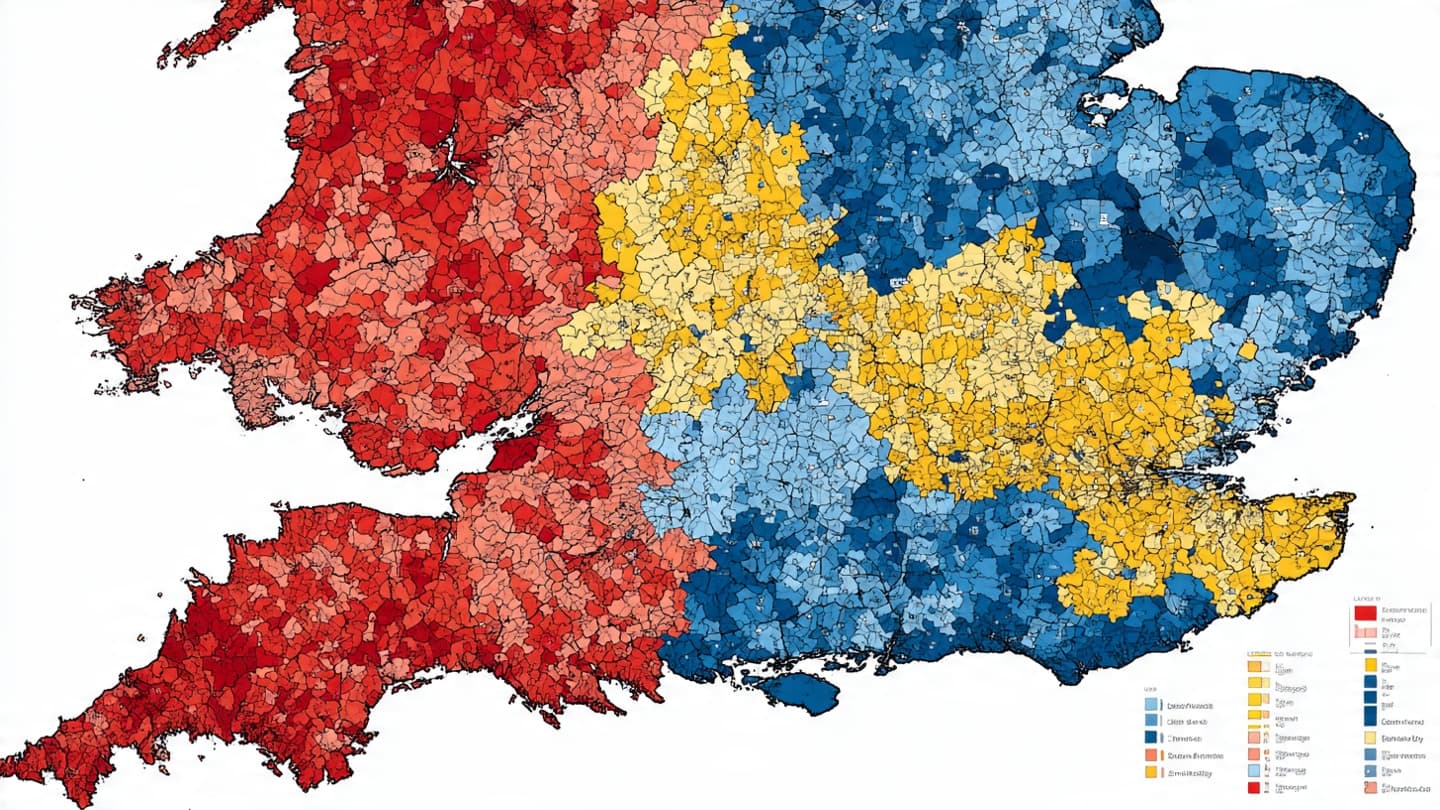
- The electoral map indicates a fragmentation of voter support.
The recent local elections in England have unveiled a shifting political landscape, as the results were visually represented through maps and charts. These changes, often subtle yet profound, reflect the evolving sentiments of voters across the country. As the votes were tallied, the transformation of the electoral map became apparent, signaling a departure from traditional party strongholds.
Reform UK emerged as a notable player in these elections, achieving remarkable victories in various councils. In Hartlepool, the party claimed all 12 contested seats, marking a significant breakthrough. Similarly, in Tamworth, Reform UK demonstrated its growing influence, suggesting that voters are increasingly seeking alternatives to the established parties. These early results were among the clearest indicators of the night, showcasing a shift in political allegiance.
Conversely, the Labour Party faced a more challenging narrative as the results unfolded. While the party managed to retain control in some areas, it also experienced losses in several councils that were anticipated to remain under its influence. The distribution of these losses is critical, as it highlights a potential decline in Labour's traditional support base, particularly in northern and central England. This shift suggests that voter dissatisfaction is not merely a reaction to the current government but may indicate a broader search for alternative representation.
The Conservative Party's performance also contributed to the evolving electoral map. The party maintained its foothold in regions such as Broxbourne, while the Liberal Democrats made gains in councils like Stockport. This fragmentation of support across multiple parties indicates a departure from the binary narrative often associated with UK politics, suggesting that voters are exploring a wider array of options.
As analysts reviewed the projected seat totals, the implications of these local elections became clearer. Estimates indicated that Labour could face significant losses, potentially numbering in the hundreds, while Reform UK and the Greens appeared poised to make gains. However, the full national totals remained incomplete as counting continued, leaving the final picture still uncertain.
Local elections often reflect the immediate concerns of communities, encompassing issues such as local governance, public services, and community trust. Yet, the maps generated from these elections capture a larger narrative about the political climate in England. They reveal whether voters feel secure in their choices or are expressing restlessness and a desire for change.
As councils across England continued to report their results, the emerging political landscape remained in flux. However, the early maps provided a compelling insight into the shifting terrain of the country's politics, illustrating that significant changes were underway long before the final counts were completed.
Published by Banx Network. This article is part of the Banx decentralized media programme, powered by the BXE token on the XRP Ledger.



