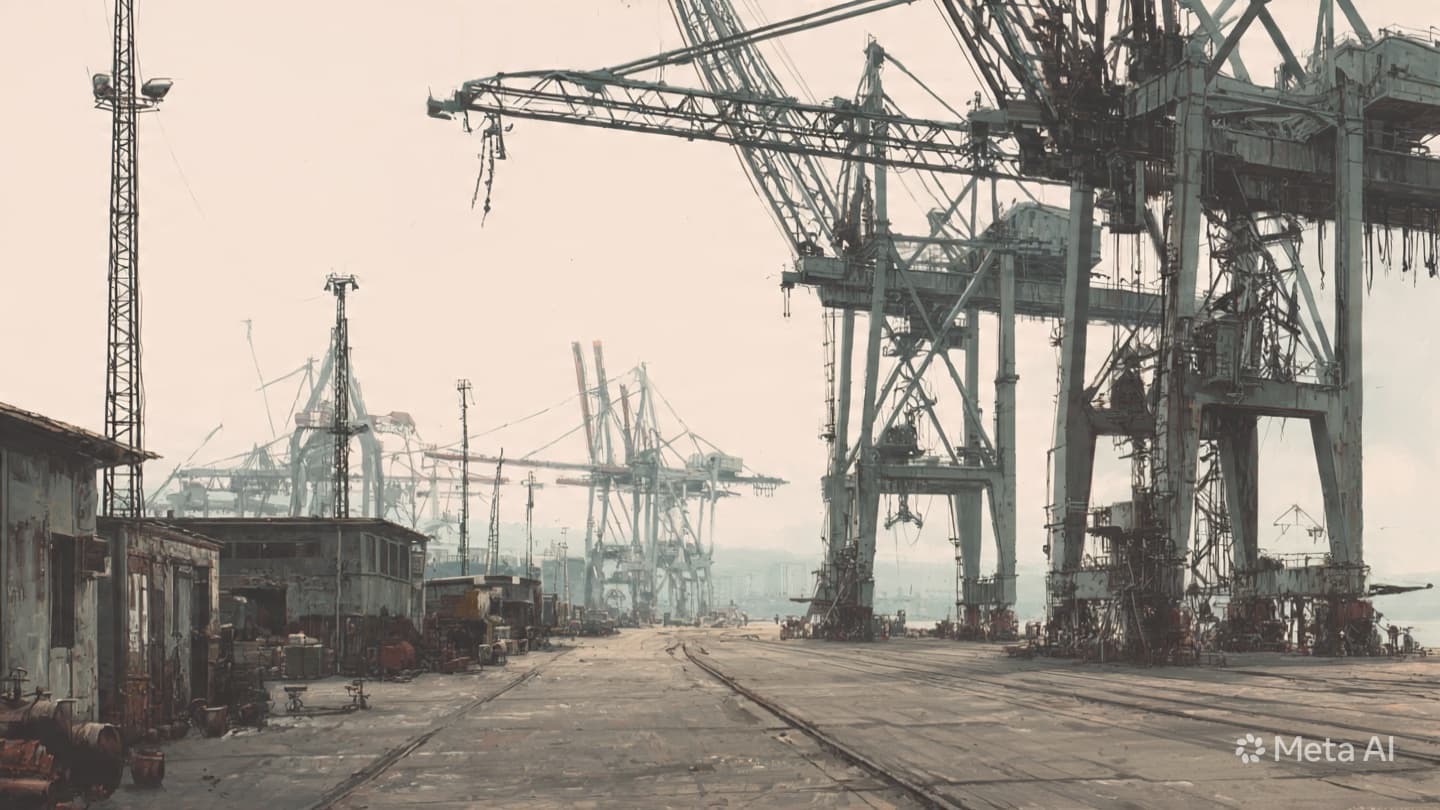
The docks of Taranto, a landscape defined by the sheer scale of industrial infrastructure, are the heartbeat of the region’s maritime and logistical economy. It is a space where the movement of steel, machinery, and goods creates a rhythm that is both immense and vital. Yet, when an industrial accident occurs, that rhythm is violently shattered. The recent report of severe injuries at the dockside is a jarring reminder that for the workers who operate in these environments, the price of productivity can, in an instant, be paid with their own physical well-being.
Industrial work, by its nature, demands a high degree of precision and adherence to safety protocols. It is a domain where the margin for error is razor-thin, and where the forces at play—the weight of heavy cargo, the momentum of machinery—are constantly testing the limits of human control. When something goes wrong, the accident is rarely a minor affair; it is an event of significant consequence, often leaving behind severe injuries that permanently alter the trajectory of a worker’s life.
For the person who sustained the injuries, the experience is one of profound, life-altering shock. The transition from the routine of a shift to the immediate, visceral reality of a medical emergency is a trauma that unfolds in the span of seconds. The hospitalization that follows is the final stage of a journey that was meant to be one of standard labor, now redirected toward the sterile, measured focus of trauma care. It is a story of human vulnerability in the shadow of the massive industrial apparatus.
The emergency response, as in any industrial setting, is a critical component of the site’s safety infrastructure. The rapid mobilization of medical teams and the coordination with local hospital facilities are the essential, life-saving actions that follow the alert. It is a process performed with a focused intensity, a reflection of the commitment that these services have to the individuals who operate within the hazardous zones of our economy. They provide the necessary support that ensures that even in the face of accident, there is a pathway to care.
As the investigation into the causes of the accident proceeds, the focus shifts to the structural and operational factors that may have contributed to the event. The inquiry is a necessary, administrative process, seeking to identify the points of failure—whether it was a breach of protocol, a mechanical malfunction, or an environmental factor. It is an editorial process of accountability, seeking to ensure that lessons are learned and that future accidents can be prevented through rigorous, evidence-based safety improvements.
For the workers of Taranto, the incident is a sobering marker in their own work history. It prompts a dialogue about the inherent risks of their daily labor and the importance of a safety culture that is not just written in manuals, but lived in every action. It is a reflection on the value of the human life that is at the center of the industrial machine, and a demand for the highest standards of protection and care for those who contribute to the economy of the docks.
The process of healing and recovery is a demanding, long-term endeavor. For the injured worker, the road ahead is one of physical and emotional reconciliation, a struggle to find a new equilibrium in the wake of a sudden, shattering event. It is a story of resilience, of a community that rallies to support its own, and of the enduring, essential value of the worker who stands at the center of the industrial landscape.
In the final analysis, the dockside accident in Taranto is a reflection on the interconnectedness of our modern life. We rely on the industrial outputs of the docks, the materials they move, and the economy they support, but we often forget the human cost that underpins this productivity. The accident serves as a quiet, pressing call to reconsider the systems we build and the degree to which we prioritize the safety of the individual over the speed of the machine.
As the operations at the docks resume and the activity continues, the memory of the injury remains—a sobering reminder of the gravity of the labor and the fragility of the life that sustains it. It is a narrative of industrial reality, one that demands a constant, vigilant commitment to the well-being of the workers who are the true foundation of our shared prosperity.
Published by Banx Network. This article is part of the Banx decentralized media programme, powered by the BXE token on the XRP Ledger.