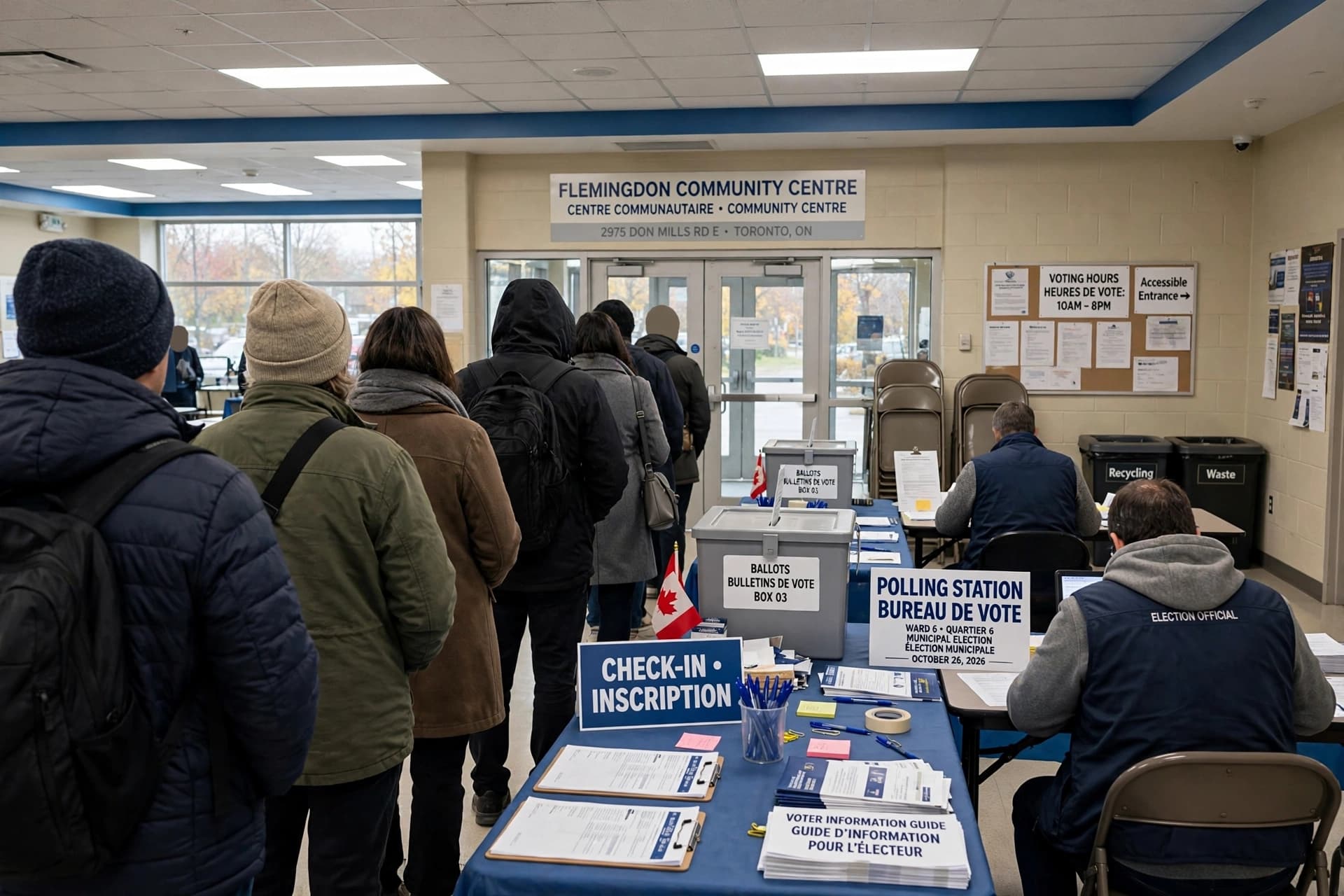
There is something quietly encouraging in the sight of a line of people waiting to vote—not because the act itself is dramatic, but because it is not. It is the ordinary, patient work of democracy, performed in school gymnasiums and community centers, by people who have decided that their voice is worth the wait. In Toronto this October, that decision was made by more people than at any point in more than a decade.
Advance voting in Toronto's 2026 municipal election ended on Sunday, October 11, with 222,550 eligible voters casting ballots over six days . The turnout was the highest for advance voting in a municipal election since 2010, and it represented a nearly 72 percent increase from the 2023 mayoral by-election, which saw just over 129,000 early votes . Compared to the 2022 municipal election, which drew nearly 116,000 advance voters, the increase was even more pronounced .
The daily numbers tell a story of steady engagement that built toward the end. Tuesday, October 6, saw 36,743 voters. Wednesday drew 31,018. Thursday dipped to 28,666. Friday rose to 33,579. Saturday brought 39,181. And Sunday, the final day, surged to 53,363 . The pattern suggests that as the deadline approached, more voters decided not to wait for election day on October 26.
What accounts for the surge is not immediately clear. Municipal elections typically draw far lower turnout than provincial or federal contests, and Toronto's 2022 election saw just over 30 percent of eligible voters cast ballots overall. The advance voting numbers may reflect a heightened interest in the issues at stake, a response to the convenience of early voting, or a broader sense that this particular election matters more than most.
The city has not released a breakdown of which wards or demographics drove the increase, nor has it offered an explanation for the pattern. What is known is that the infrastructure held: polling stations opened on time, lines moved, and the process unfolded without major disruption. For an election that will determine the direction of Canada's largest city for the next four years, the early turnout is a signal that voters are paying attention.
Election day is October 26. If the advance voting numbers are any indication, the city may see a turnout that breaks with recent trends. But advance voting is not a guarantee of overall participation—some who vote early would have voted anyway, and others may still stay home. What the numbers do show, however, is that more than 222,000 people decided not to wait. In a city of nearly three million eligible voters, that is a start.
AI Image Disclaimer: All images associated with this report are AI-generated and serve illustrative purposes only, not as documentary records of the election described.
Sources: City of Toronto, The Canadian Press, CBC News
Published by Banx Network. This article is part of the Banx decentralized media programme, powered by the BXE token on the XRP Ledger.