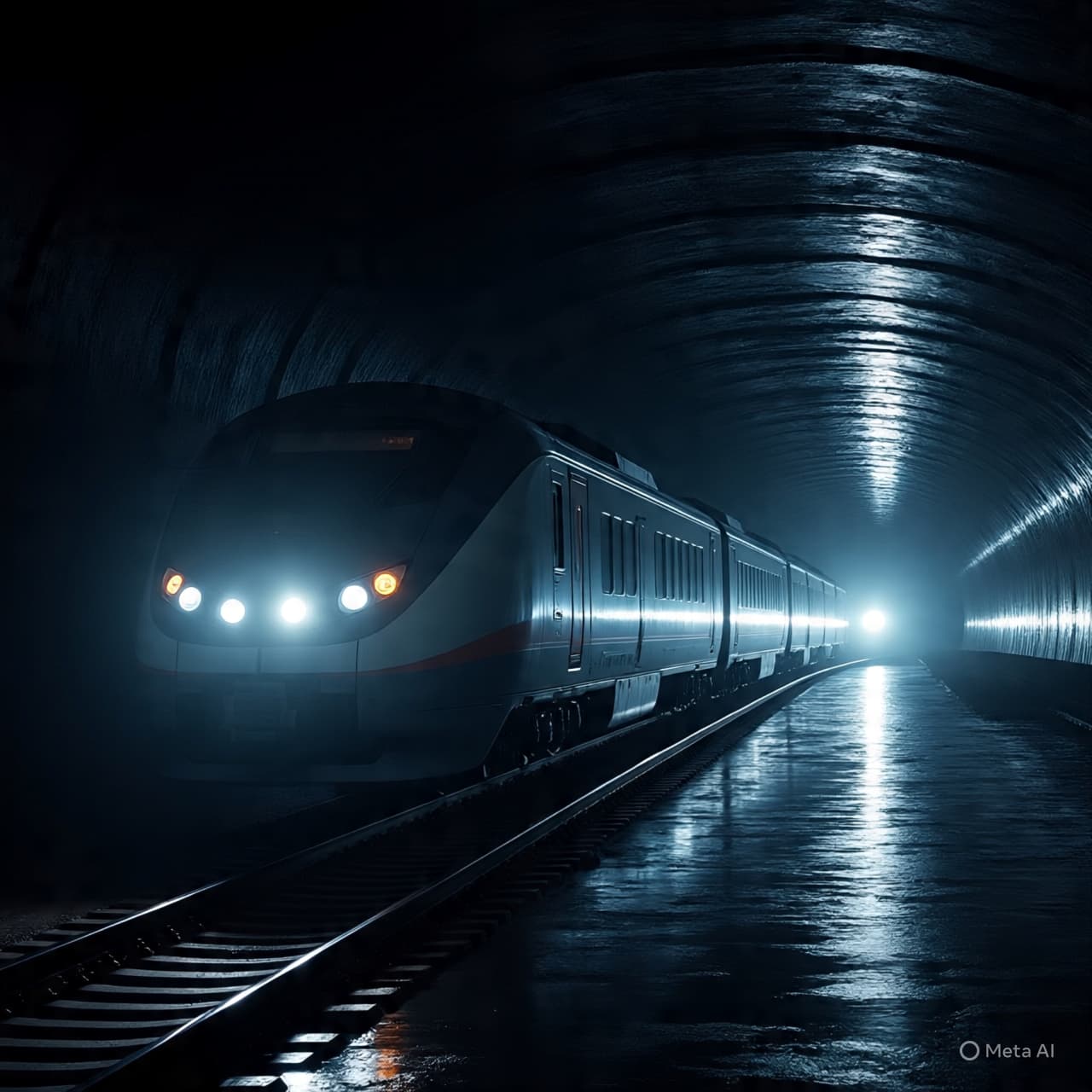
The lights are back on beneath the English Channel, but normality has yet to fully return. After a power failure disrupted operations in the Channel Tunnel, rail services connecting Britain and mainland Europe resumed cautiously, leaving thousands of passengers navigating delays and uncertainty long after the technical issue itself had been resolved.
The malfunction, which temporarily halted traffic through one of Europe’s most critical transport arteries, underscored how dependent cross-border travel has become on complex electrical and control systems. Engineers moved quickly to restore power, and operators confirmed that the fault had been addressed. Yet the ripple effects of the disruption proved harder to contain than the outage itself.
High-speed services linking London with Paris and Brussels resumed gradually, but schedules remained compressed as trains and crews were repositioned. Stations experienced congestion as travelers sought updates, rebookings, or alternative routes. For many, the frustration lay not in the outage itself, but in the cascading delays that followed — a reminder of how finely balanced modern rail networks have become.
Rail operators emphasized that safety systems functioned as designed, preventing more serious consequences. Still, the incident exposed how even a short interruption can ripple across international networks that operate on tight margins of timing and coordination. Each delayed train displaced another, creating a chain reaction that took hours to unwind.
Beyond the immediate inconvenience, the disruption revived broader questions about infrastructure resilience. The Channel Tunnel, a symbol of European connectivity for three decades, depends on aging systems that require constant maintenance and modernization. As passenger numbers rebound and demand increases, the pressure on that infrastructure continues to grow.
By the end of the day, services were slowly stabilizing, though not yet fully restored. For travelers, the episode served as a reminder that even the most advanced transport links remain vulnerable to small technical failures — and that recovery, once momentum is lost, can take far longer than the fault itself.
Published by Banx Network. This article is part of the Banx decentralized media programme, powered by the BXE token on the XRP Ledger.