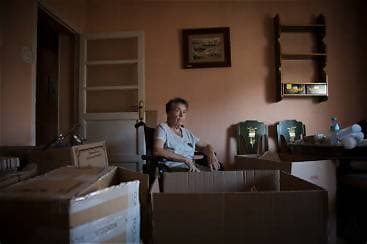
In the quiet juncture between renting and owning a home, many aspiring buyers imagine a journey filled with possibility — a gentle ascent toward independence and rooted life. But for some, that journey does not unfold as smoothly as hoped. It can feel more like an unexpected detour, full of paperwork and decisions that weigh far heavier than their pages suggest. For Erin Bell, a 32-year-old hopeful home buyer in Tasmania, what was meant to be a helping hand from a government shared-equity scheme became a string of setbacks that left her disheartened and questioning whether the system truly serves those it was designed to help.
Ms Bell had her heart set on buying her first home, envisioning a place of her own where independence and the possibility of a future family could take shape. Like many first-time buyers, she recognized that without assistance — particularly given the rising cost of housing — a traditional purchase might remain out of reach. The MyHome scheme, offered by the Tasmanian government, allows buyers to access properties with reduced upfront costs by having the government purchase a share — up to 30 percent of an existing home or 40 percent of a new build — to make ownership more attainable. But in practice, Ms Bell’s experience unfolded as a series of emotional and procedural twists.
Over the course of six months, she applied for the scheme repeatedly, only to meet hurdles at each turn. In one early instance, her application was initially declined because she disclosed that she had a boyfriend of five months. The lender’s interpretation of eligibility rules placed unnecessary conditions on her personal circumstances, leaving her frustrated and in tears. Even though the bank later corrected the situation and reinstated her as a single applicant, the emotional toll and confusion added layers of stress to an already complex process.
Beyond this personal challenge, Ms Bell found that the pool of properties within her price range was limited. The dual goal of finding an affordable existing home and building a new one — within the parameters of the shared-equity scheme — proved elusive. Her story resonates with broader themes in housing affordability debates: that well-intentioned policy frameworks sometimes encounter bottlenecks at the point where policy meets real-world complexity and market conditions.
Shared-equity schemes seek to reduce financial barriers for first-home buyers, especially in markets where high prices and tight credit make entry difficult. By sharing ownership with a government body, buyers can reduce the size of their mortgage and lessen the weight of upfront costs. The dream of a new or renovated home can feel closer with such support — but the journey toward that dream can still be filled with negotiation, interpretation of rules, and unexpected requirements.
Stories like Ms Bell’s help illuminate the lived experience behind policy text: where eligibility rules defined by banks and administrators meet the real choices of people trying to build homes and lives. Her experience underscores that while schemes can widen doors, the paths through them must still be clear, responsive, and attuned to the varied circumstances of those they are designed to help.
Closing with straightforward reporting, a first-home buyer in Tasmania has publicly described her challenging experience with the MyHome shared-equity home-purchase scheme, noting repeated setbacks that complicated her efforts to buy an existing property and pursue plans to build new housing, even as officials maintain the program aims to support buyers into home ownership.
AI Image Disclaimer Visuals are created with AI tools and are not real photographs.
Sources (5 media names):
ABC News Consumer real estate news reporting Housing affordability reporting Real estate buyer experience coverage Property finance scheme analysis
Published by Banx Network. This article is part of the Banx decentralized media programme, powered by the BXE token on the XRP Ledger.