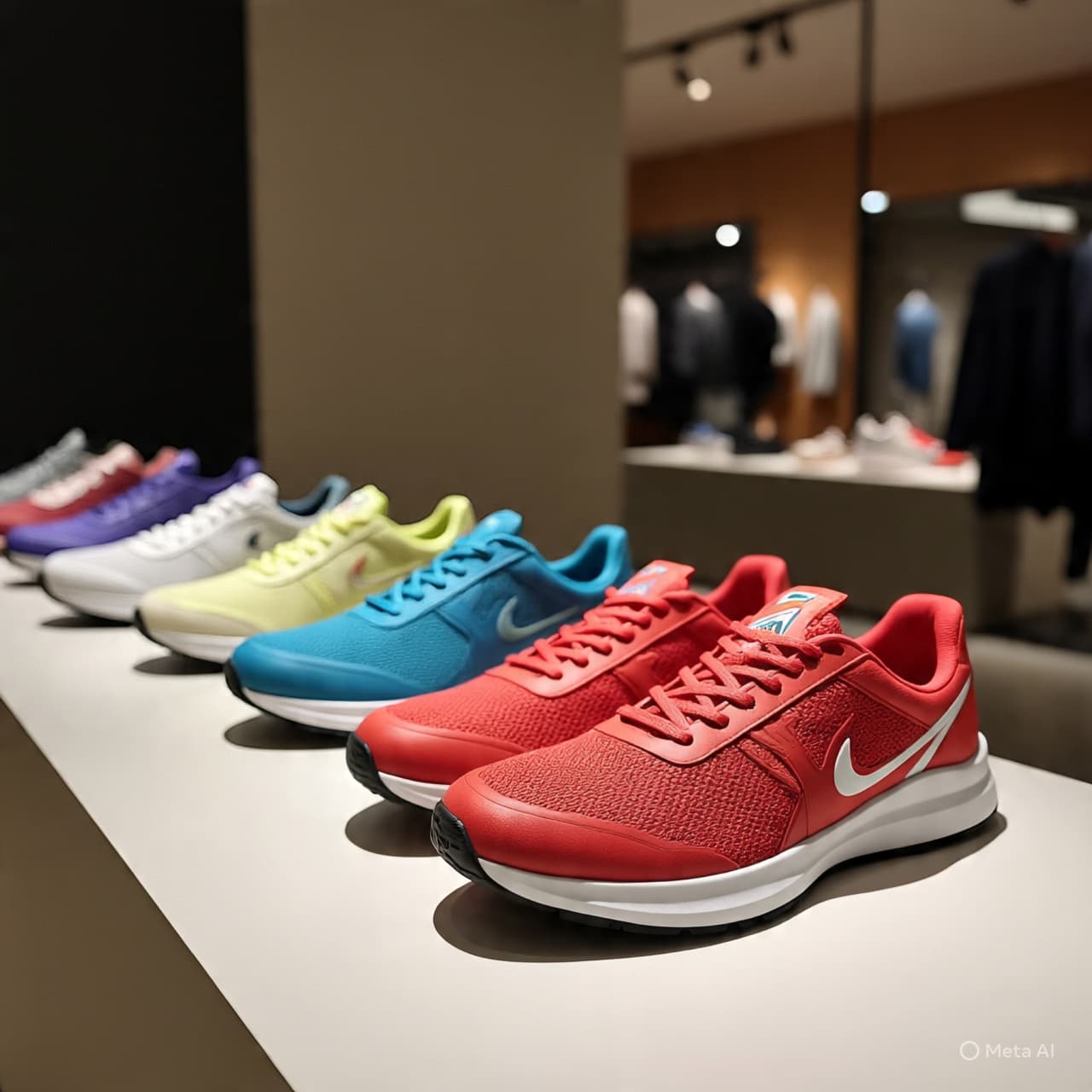
For years, sneakers felt immune to gravity.
They crossed from gyms into offices, from subcultures into balance sheets, carrying with them the promise of endless reinvention. Limited drops fueled anticipation, collaborations blurred the line between sport and fashion, and global demand rose with the confidence of a market that believed it had found a permanent stride.
Now, that rhythm appears to be changing.
Analysts say the two-decade sneaker boom that lifted brands such as Nike and Adidas may be reaching its natural slowdown. After roughly twenty years of steady expansion, growth across the athletic footwear sector is expected to ease to around 4 to 5 percent annually, down from an average near 9 percent since the late 2000s. The shift is not abrupt, but it is notable, particularly for an industry long defined by acceleration.
The reasons are structural rather than dramatic. Markets that once felt underpenetrated are now mature. Consumers already own multiple pairs, often more than they need. Fashion cycles move faster, loyalty fragments more easily, and the novelty that once powered premium pricing has become harder to sustain.
At the same time, cost pressures have quietly reshaped the landscape. Inflation has squeezed discretionary spending, while supply chains that once optimized speed and scale are being re-evaluated for resilience. Promotions, once rare for top-tier sneakers, have become more common, subtly changing how value is perceived.
None of this suggests collapse. Sneakers remain embedded in daily life, work culture, and identity. But the era of effortless expansion — when cultural relevance and financial growth moved in near-perfect alignment — may be fading. What follows looks less like a downturn and more like normalization.
For major brands, the challenge now is adjustment. Growth may come less from volume and more from precision: targeted innovation, disciplined inventory, and clearer differentiation. The playbook shifts from chasing momentum to managing maturity.
The broader implication reaches beyond footwear. The sneaker boom was a model for how culture-driven products could scale globally and sustain growth for years. Its cooling offers a reminder that even the most successful cycles eventually ask for recalibration.
As analysts frame it, the long upcycle is not ending with a stumble, but with a slowdown — a moment when an industry built on speed learns, once again, how to walk. AI Image Disclaimer: Visuals are AI-generated and serve as conceptual representations.
Sources: Bank of America Reuters Financial Times
Published by Banx Network. This article is part of the Banx decentralized media programme, powered by the BXE token on the XRP Ledger.