
Key Highlights
- Incident:A train derailment occurred in the Northern Territory, leading to a hazardous material spill.
- Response:Emergency management teams and environmental specialists are conducting a large-scale cleanup operation.
- Impact:Freight services in parts of the Northern Territory are currently suspended due to the incident.
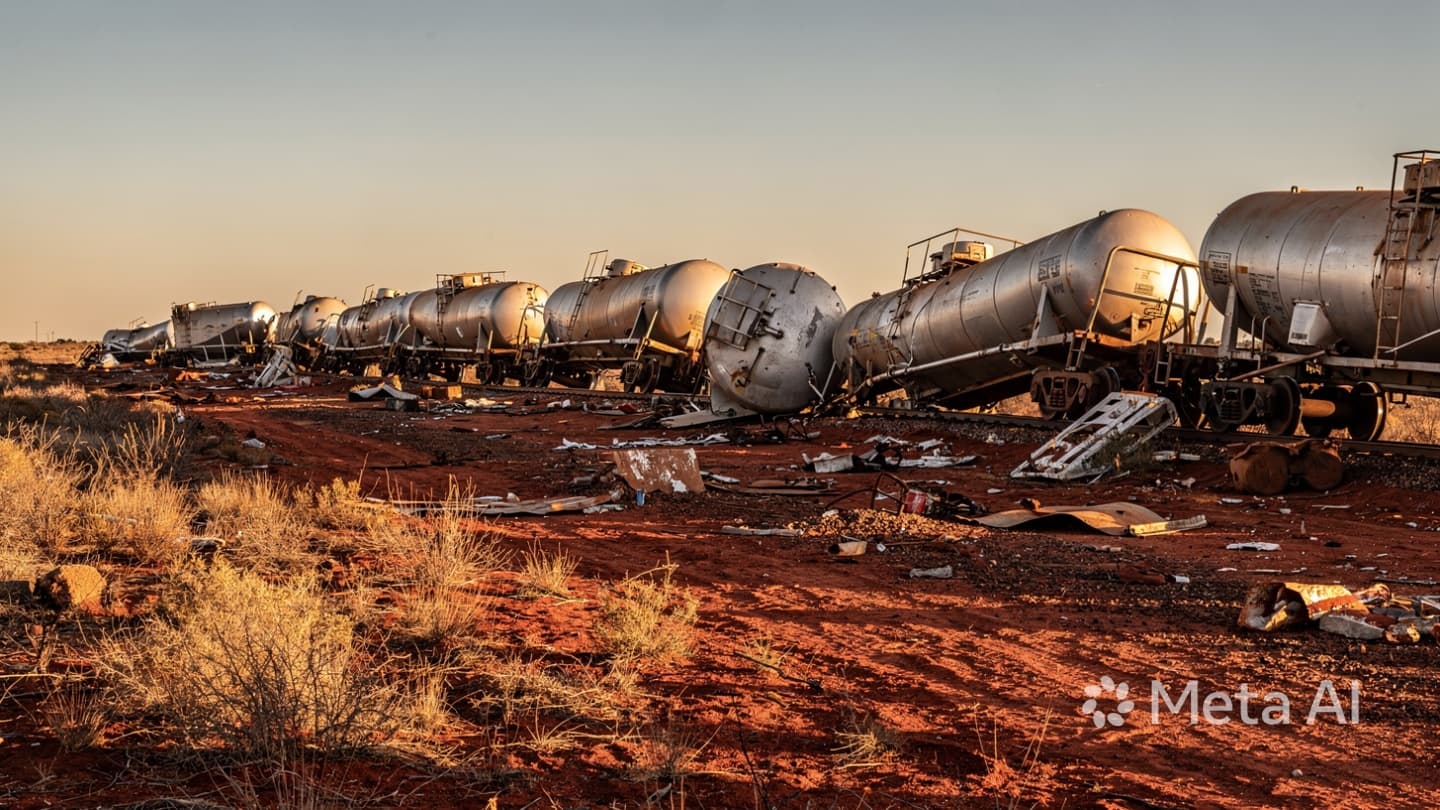
On a seemingly ordinary morning in the Northern Territory, the tranquility of the vast landscape was abruptly disrupted by the sound of a train derailment. The freight train, a vital artery of commerce, transformed from a symbol of movement into a scene of chaos, with twisted metal and scattered cargo marking the landscape. This incident not only halted the usual rhythm of transportation but also raised significant environmental concerns due to the hazardous materials involved.
The derailment occurred along a stretch of track that typically sees the steady passage of freight trains, which are essential for the region's economy. As the train veered off its path, it left behind a trail of destruction, with cars overturned and cargo spilled across the terrain. The immediate aftermath revealed a stark contrast between the natural beauty of the Northern Territory and the industrial disaster that had unfolded.
Cleanup crews, clad in protective gear, swiftly mobilized to address the hazardous situation. Their task was not only to clear the wreckage but also to contain and remediate the spilled materials that posed a threat to the local ecosystem. The air was thick with the acrid scent of chemicals, a reminder of the risks associated with transporting goods across such remote areas. The urgency of their work was palpable, as they aimed to prevent further contamination of the soil and water sources.
From an aerial view, the scene resembled a chaotic puzzle, with colorful containers scattered across the tracks. This visual starkly highlighted the reliance on rail transport for goods movement, emphasizing how quickly normalcy can be disrupted. The railroad, which usually facilitates the flow of commerce, became a focal point for environmental scrutiny, as the implications of the spill began to unfold.
As the day progressed, heavy machinery was brought in to assist with the recovery efforts. The process of unhooking and removing the wreckage was labor-intensive, requiring careful coordination to avoid further damage. Each car that was lifted away revealed the extent of the spill, leaving behind dark patches on the ground that would require extensive remediation efforts. The cleanup was expected to take several days, with ongoing assessments to ensure the safety of the surrounding environment.
By evening, the first cars had been righted, and soil testing commenced to evaluate the extent of contamination. While no injuries were reported, the incident served as a stark reminder of the potential hazards associated with freight transport. As investigations into the cause of the derailment continued, the silence that enveloped the area was a poignant contrast to the usual sounds of trains passing through the outback.
In summary, the train derailment in the Northern Territory has prompted a significant response from emergency services and environmental specialists. The cleanup efforts are crucial not only for restoring the affected area but also for safeguarding the local ecosystem from the impacts of hazardous materials. As freight services remain suspended, the community is left to grapple with the aftermath of this industrial incident, highlighting the delicate balance between commerce and environmental stewardship.
Published by Banx Network. This article is part of the Banx decentralized media programme, powered by the BXE token on the XRP Ledger.



