
Key Highlights
- Incident:Two passenger trains collided near Kolding, Denmark.
- Injuries:Eighteen individuals were treated for non-life-threatening injuries.
- Investigation:Authorities are examining signaling errors during maintenance.
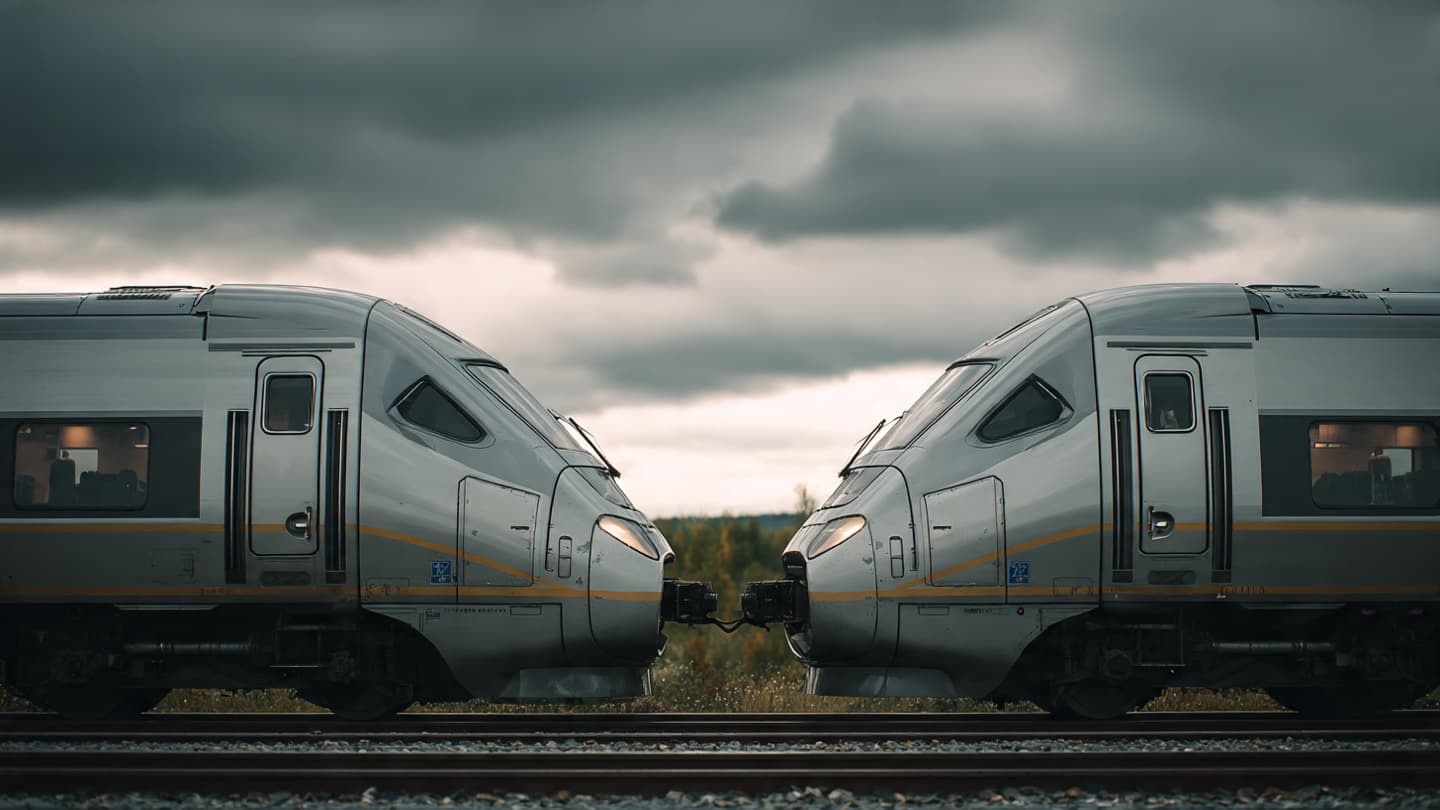
On a seemingly ordinary afternoon in Denmark, the tranquility of rail travel was shattered by an unexpected collision between two passenger trains near Kolding. This incident, which occurred during a scheduled maintenance period, has left 18 individuals injured and prompted an immediate investigation into the circumstances surrounding the crash.
The collision unfolded without warning, transforming the familiar rhythm of train travel into chaos. Passengers, who had settled in for a routine journey, were jolted by the violent impact of metal against metal. The serene landscape outside quickly became a backdrop to a scene of confusion and distress as emergency services rushed to the site. The swift response of rescue teams, characterized by their bright yellow vests, contrasted sharply with the muted colors of the Danish countryside, symbolizing the transition from crisis to recovery.
As emergency responders worked diligently to assist the injured, the investigation into the cause of the collision began almost immediately. Authorities are focusing on potential signaling errors and the protocols for manual overrides that may have contributed to the incident. The national rail operator, DSB, has temporarily suspended traffic on the affected line to conduct a thorough technical audit of the safety systems in place. This proactive measure underscores the importance of maintaining public trust in railway safety.
The aftermath of the collision reverberated through the local community, highlighting the railway's role as a vital connector within Danish society. For many, trains are not just a means of transportation; they represent a shared experience that binds the nation together. News of the collision sent ripples of concern through nearby towns, reminding residents of the inherent risks associated with rail travel, even in a system known for its reliability.
As investigations continue, the focus remains on understanding the factors that led to this incident. Was it a failure in the electronic communication between the trains, or a human error in the control room? These questions linger in the air, much like the scent of rain after a storm, as authorities sift through digital logs and physical evidence to piece together the narrative of what went wrong.
In the days following the collision, a sense of caution has settled over train stations across the region. Passengers boarding trains now glance at the tracks with a newfound awareness, acutely aware of the complexities involved in railway operations. This incident serves as a stark reminder of the delicate balance between technology and human oversight in ensuring safety on the rails.
Danish authorities have confirmed that while none of the injuries sustained were life-threatening, the incident has prompted a broader discussion about railway safety protocols. As the investigation unfolds, the hope is that lessons learned will lead to improvements that enhance the safety of all who travel by train in Denmark.
Published by Banx Network. This article is part of the Banx decentralized media programme, powered by the BXE token on the XRP Ledger.



