
Key Highlights
- New App:Extra aims to redefine email management.
- Design Focus:Prioritizes clarity and user experience.
- Industry Impact:Challenges traditional email norms.
The modern inbox often feels like a chaotic space, burdened by digital clutter that accumulates not just in unread messages but in the way we engage with communication. Emails flood in like overlapping voices in a crowded room, each vying for attention while few provide clarity. This overwhelming experience transforms checking email from a simple habit into a complex negotiation.
Amid this familiar tension emerges Extra, a new email application developed by a team of former Pinterest employees. Unlike traditional email clients that often bombard users with features, Extra takes a gentler approach, treating the inbox as a space that can be rearranged and softened, ultimately making it feel more human.
According to reporting from TechCrunch, Extra reimagines the email experience through a design-first lens, emphasizing readability and calm over speed and density. This approach is particularly noteworthy given Pinterest's foundation on visual clarity and emotional pacing—qualities that are often absent in conventional email applications.
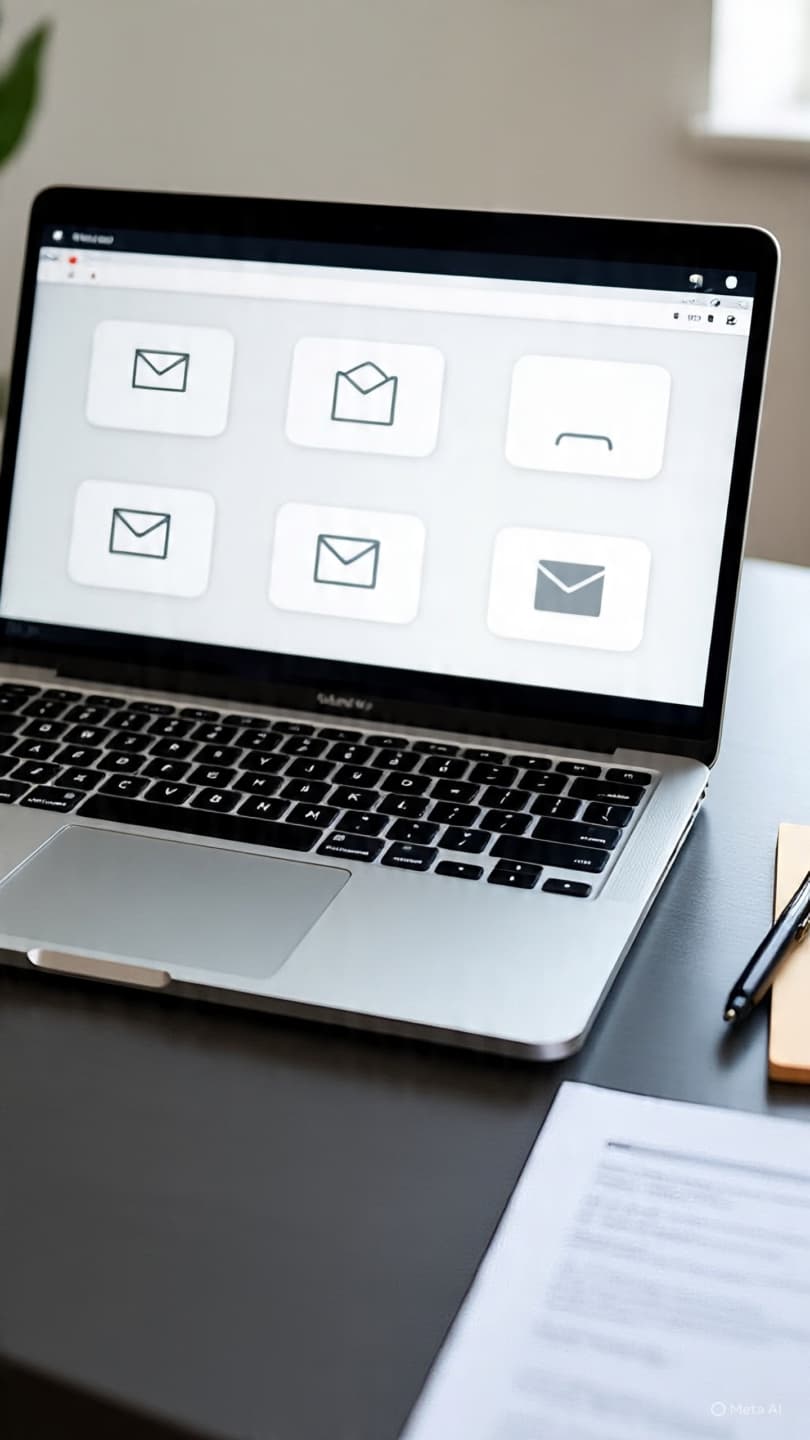
The design of Extra stands out by presenting messages in a spacious layout, allowing each email to feel less like a task and more like a moment to engage with. By focusing on typography, visual hierarchy, and subtle interaction cues, Extra shifts the user experience from one of mere efficiency to one of thoughtful engagement.
This transformation reflects a broader truth about email in 2026. The challenge is no longer merely about access or functionality; it is about the overall experience. With billions of emails sent daily and inboxes becoming increasingly crowded, the real question is how quickly and comfortably users can discern what matters most.
Extra's solution is not solely based on automation but rather on intention. By minimizing visual noise and enhancing clarity, the app suggests that productivity may stem not from doing more but from seeing better. This represents a subtle inversion of the typical approach, where features accumulate until the interface itself becomes part of the problem.
There is also a nostalgic element to this design philosophy. Early email was characterized by its simplicity and directness, serving as a medium for communication rather than a management tool. As workflows expanded and expectations grew, that simplicity faded, leading to tools that, while powerful, became increasingly demanding.
Extra does not dismiss this evolution but instead questions whether some of that original ease can be reclaimed. However, design alone cannot address every friction point. Email remains intertwined with established habits, ecosystems, and the inertia of platforms that have long defined communication. Applications like Outlook and Gmail continue to dominate not just due to their features but because of their entrenched presence in daily life.
Nevertheless, new ideas often emerge from the periphery. What Extra represents may not be a revolution but a reframing—a reminder that even the most familiar tools can be reconsidered. An inbox does not have to feel like a backlog; reading an email could feel less like processing and more like understanding.
Ultimately, the success of this approach will depend on users' willingness to adopt a different rhythm—one that is slower, more deliberate, and less crowded. For now, Extra offers a small yet significant proposition: that the inbox, long viewed as a space of urgency, might still have room for clarity.
Published by Banx Network. This article is part of the Banx decentralized media programme, powered by the BXE token on the XRP Ledger.



