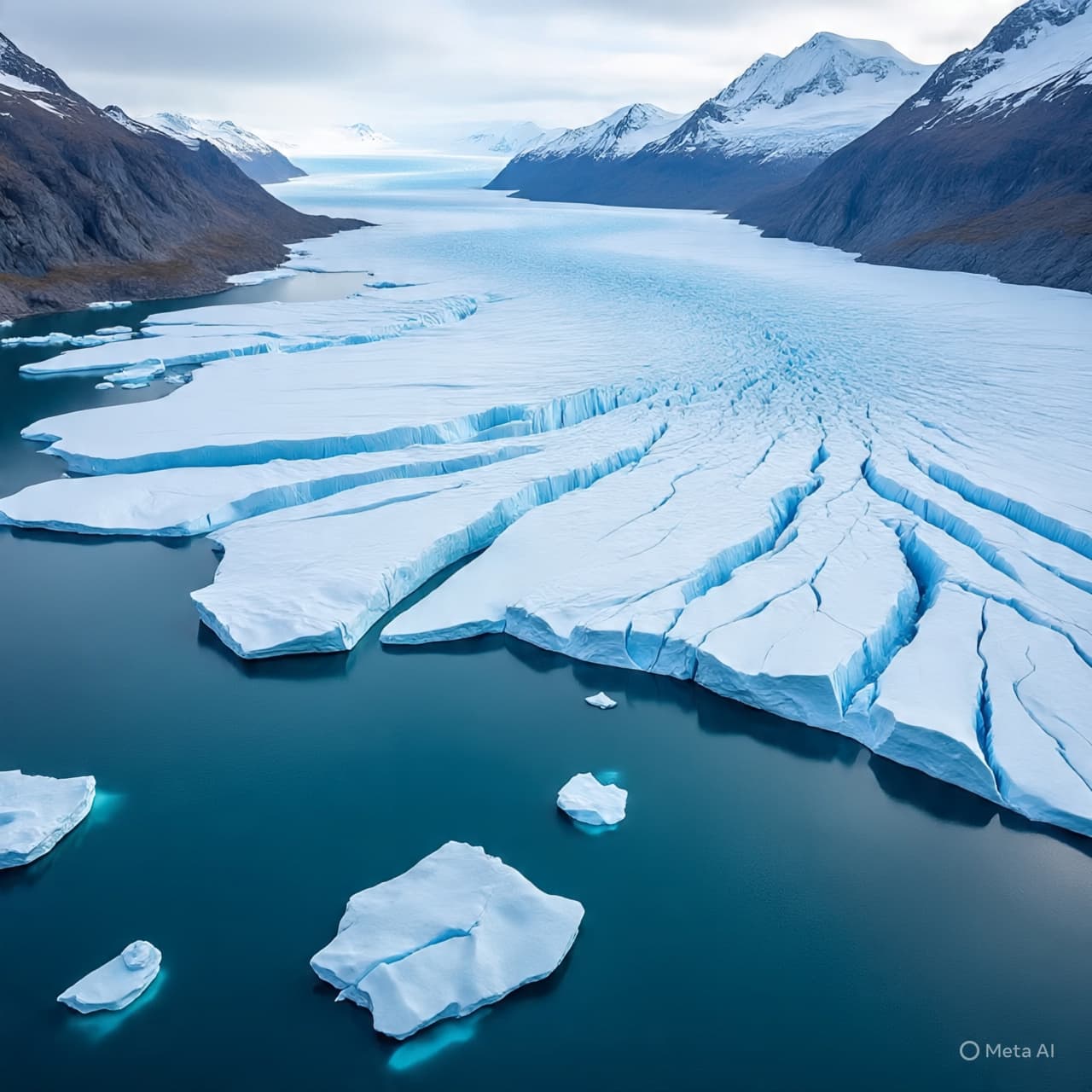
At the far edge of the world, where wind sculpts the snow into silent waves and the horizon dissolves into white, Antarctica has long felt like a distant guardian — immense, remote, and steady. For decades, scientists have watched its ice with a mixture of awe and apprehension, knowing that what happens there does not remain there. In the slow language of glaciers and ocean currents, the southern continent speaks to the entire planet.
For a time, a fragile hypothesis lingered in scientific circles: that melting Antarctic ice might, in some indirect way, help soften the pace of climate change. As vast ice shelves fracture and glaciers spill into the sea, they release freshwater into the surrounding ocean. Some researchers explored whether this influx could stimulate phytoplankton blooms — microscopic marine plants that absorb carbon dioxide through photosynthesis. If melting ice fed the ocean with iron and nutrients locked in glacial ice, perhaps it could enhance carbon uptake, offering a small, natural counterweight to warming.
But new research suggests that this hope, while scientifically intriguing, may be far too limited to meaningfully offset global emissions. Studies discussed in The Conversation and supported by findings in Nature Climate Change indicate that while meltwater can indeed influence local ecosystems, the scale of carbon drawdown is modest compared to the magnitude of human-produced greenhouse gases.
When glaciers melt, they release not only freshwater but also fine sediments rich in iron — a nutrient that can fertilize phytoplankton in iron-limited regions of the Southern Ocean. In controlled models and satellite observations, scientists have detected increased biological activity near some melting ice margins. Phytoplankton blooms can temporarily absorb carbon dioxide from the atmosphere, storing it in organic matter that may sink into deeper waters.
Yet the ocean is not a simple ledger. Enhanced productivity in one region does not necessarily translate into permanent carbon sequestration. Much of the absorbed carbon can return to the atmosphere through respiration and ocean circulation. Moreover, increased freshwater input can alter ocean stratification, potentially disrupting currents that regulate global heat distribution. The Southern Ocean plays a crucial role in absorbing excess heat and carbon, and shifts in its delicate balance could have complex, even destabilizing consequences.
Researchers emphasize that even under optimistic assumptions, the additional carbon captured by melt-driven phytoplankton growth would offset only a small fraction of annual global emissions. Human activities currently release tens of billions of tons of carbon dioxide each year. Against that scale, the contribution from enhanced Antarctic biological activity appears limited.
There is also the broader context to consider. Antarctic ice loss directly contributes to sea-level rise, threatening coastal communities worldwide. It alters ocean salinity patterns and may weaken key circulation systems over time. Any modest ecological benefit from nutrient release is overshadowed by the structural and climatic risks associated with large-scale ice sheet destabilization.
In this sense, the melting of Antarctica cannot be viewed as a hidden ally in the climate fight. The processes unfolding there are primarily symptoms of warming, not solutions to it. The idea that nature might quietly correct our excesses is comforting, but current evidence suggests that such corrective forces are neither strong nor predictable enough to counterbalance continued fossil fuel emissions.
Still, scientists approach the subject with careful nuance. The Southern Ocean remains one of the least understood components of the climate system. Ongoing research aims to refine models, measure nutrient flows more precisely, and understand how marine ecosystems will respond to accelerating change. The question is not closed, but its contours are becoming clearer.
For now, the message emerging from recent studies is measured rather than dramatic. Antarctic melting may influence local ocean biology, but it does not offer a meaningful climate remedy. The responsibility for reducing greenhouse gas emissions remains firmly within human hands.
In the quiet vastness of Antarctica, ice continues to shift and fracture. Its changes ripple outward across oceans and continents. What the latest research gently reminds us is that no hidden mechanism in the frozen south will solve the climate challenge on our behalf. The solutions, like the causes, begin much closer to home.
AI Image Disclaimer
Images in this article are AI-generated illustrations, meant for concept only.
---
Sources
The Conversation BBC News The Guardian Nature Climate Change National Geographic
Published by Banx Network. This article is part of the Banx decentralized media programme, powered by the BXE token on the XRP Ledger.