On the sprawling plains and forested ridges that mark the frontier between Cambodia and Thailand, a familiar landscape of villages and rice fields has once again become the stage for turmoil that reshapes lives. In this season of movement and harvest, families have packed up belongings, livestock, children in arms, and memories into the back of vehicles and on foot, seeking safety far from the roar of artillery and the whistle of wind‑borne shrapnel. What was once their home — the comforting rhythm of daily life — has been interrupted by the harsh cadence of gunfire and displacement.
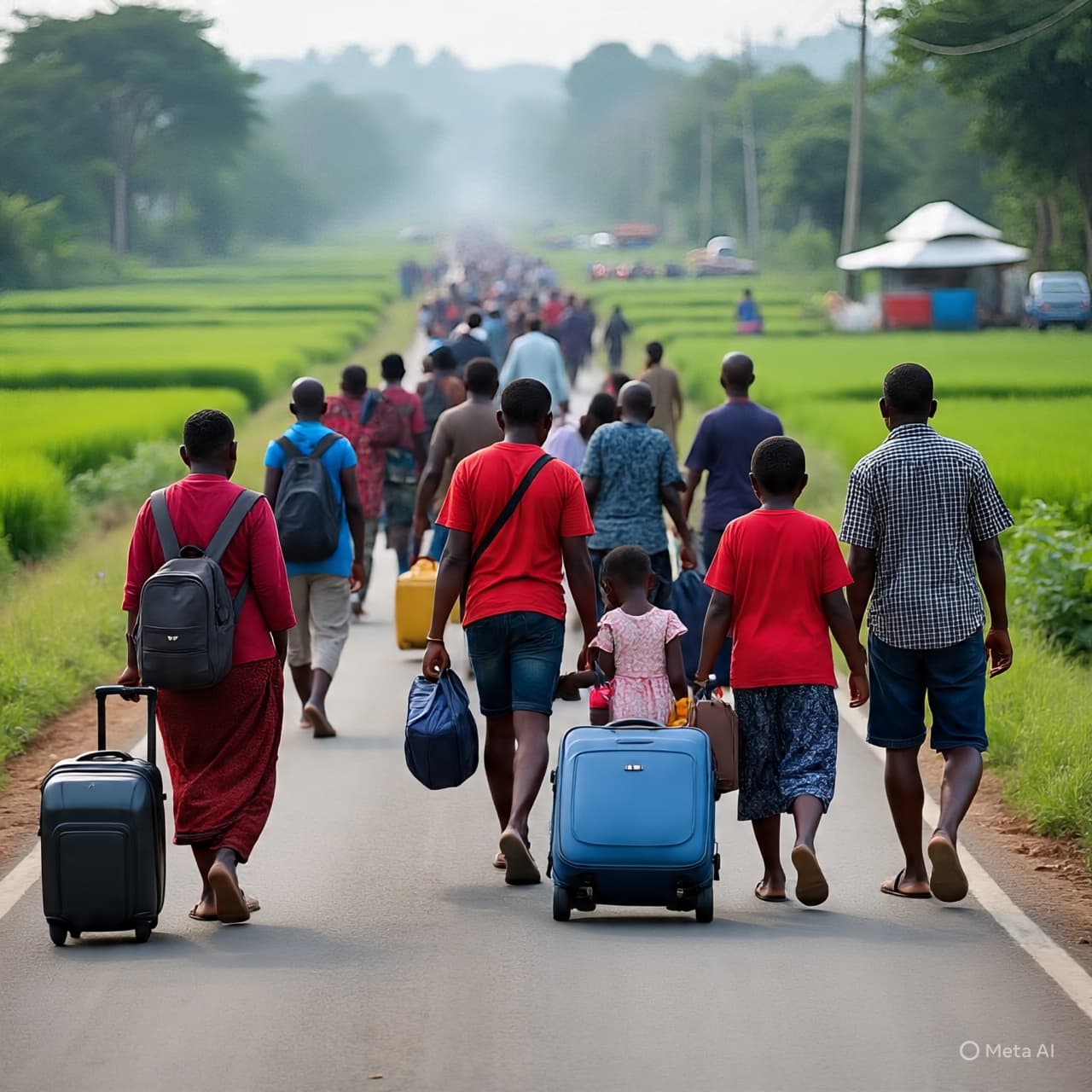
In the span of a few days, more than half a million people — men, women, and children — have fled exposed borderlands on both sides of the Cambodia–Thailand divide, leaving behind the small markets, temple grounds, and fields that formed the backdrop of their routines. Makeshift refugee camps have sprung up in pagodas, schools and open fields, their roofs of blue tarpaulin a stark contrast to the green rice paddies and brown dirt roads they once called home.
The renewed clashes began after a fragile peace that had followed months of tension dissipated in early December. Heavy weapons — artillery, drones, and even F‑16 fighter jets, according to official accounts — echoed across disputed villages and ancient temple sites, reigniting grievances that trace back to centuries‑old colonial border demarcations. Local officials from both Bangkok and Phnom Penh traded accusations about who initiated the latest hostilities, with each side asserting its own version of sovereignty and grievance.
For those fleeing, the conflict’s toll is felt in immediate terms: children too young to remember earlier violence yet old enough to absorb its fear, elderly relatives shielded under thin blankets, and young adults balancing fear with the instinct to protect their loved ones. Evacuees reel at the scale of displacement — across seven provinces in Thailand and several in Cambodia — and the uncertainty that each dawn brings.
Humanitarian shelters are strained, coping with shortages of clean water, food, and sanitation, even as local and international organizations strive to bring relief. Though some displaced persons cling to hope that calm will return soon, others are more wary, remembering how fragile previous pauses in conflict have been. Leaders from outside the region, including the United States’ former president who helped broker an earlier truce, have expressed intentions to intervene diplomatically — yet mistrust persists, and calls for peace echo alongside the distant blasts that keep families in motion.
In the face of uncertainty, there is resilience. Children share hurried meals in shaded corners of temples repurposed as refugee centers, elders exchange stories of past harvests to comfort worried grandchildren, and volunteers map routes to bring supplies to those recently displaced. Yet every departure from home is also a reminder of what has been lost, and how long — and how painfully — the journey toward peace must be.
AI Image Disclaimer Visuals are created with AI tools and are not real photographs, intended for representation only.
Sources The Guardian Al Jazeera Reuters AFP via VnExpress Associated Press
Published by Banx Network. This article is part of the Banx decentralized media programme, powered by the BXE token on the XRP Ledger.