
Key Highlights
- Punjab's winter air quality deteriorates, impacting health.
- Hospitals face influx of patients due to pollution-related issues.
- Residents adapt to environmental challenges with masks and caution.
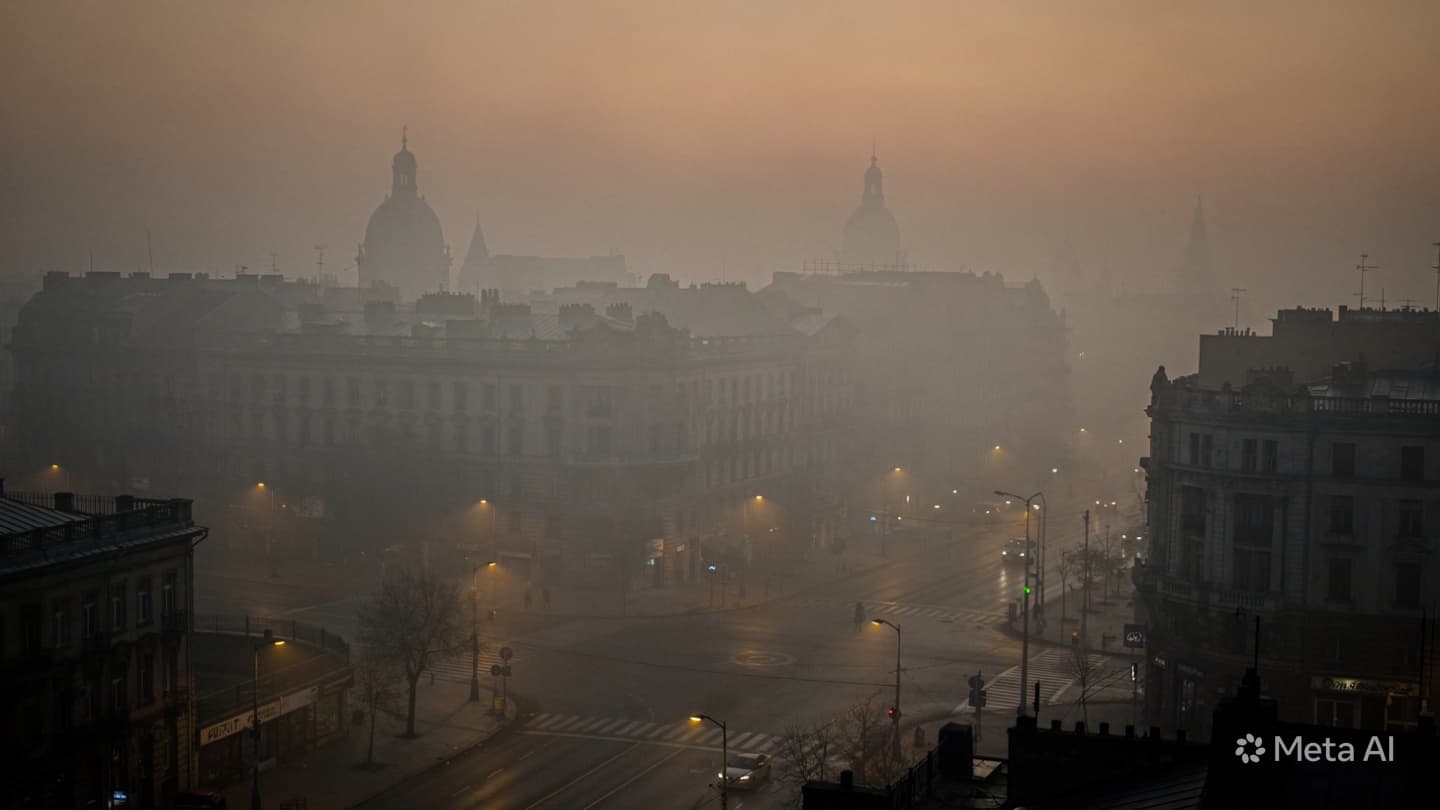
On a winter morning in Punjab, the sky transforms into a heavy, gray ceiling, obscuring the vibrant life below. The city, with its bustling streets and narrow alleys, becomes a landscape where time is dictated not by the sun's movement but by the oppressive density of the air. This season demands resilience, as familiar landmarks fade into a monochromatic backdrop, and the warmth of the earth is trapped beneath a cold, persistent layer of pollution.
As the day begins, an unusual metallic weight hangs in the atmosphere, settling over residential areas as commuters embark on their daily routines. The streets pulse with the rhythm of motorbikes, buses, and vendors, a predictable flow that has long supported the local economy. Yet, beneath this surface calm lies an unsettling truth: the air we breathe, once taken for granted, has become a source of vulnerability, transforming the act of breathing into a struggle.
Recent clinical data has unveiled a quiet crisis within local healthcare facilities. The stillness that often precedes an influx of patients is palpable, as the community grapples with the harsh reality of winter fog compounded by industrial emissions. In public clinics, the delicate balance of health is disrupted, revealing the fragility of human lungs against the backdrop of an indifferent urban environment.
When medical reports confirmed the grim reality, the echoes of loss resonated far beyond the confines of emergency wards. The rise in acute incidents within healthcare settings starkly contrasts with the city's ongoing hustle, prompting a collective reflection on how quickly our constructed environments can become sites of distress. As the city continues its daily rhythm, families face the quiet departure of loved ones, a poignant reminder of the hidden costs of pollution.
As evening descends, the streets grow still under the watchful eyes of environmental monitoring stations. Pale streetlights cast diffuse beams through the thick air, illuminating swirling dust particles caught in headlights. Pedestrians, donning cotton masks, navigate their way home, participating in a modern ritual that acknowledges the fracture in their once predictable outdoor lives.
As midnight approaches, medical staff navigate intensive care units with methodical precision, documenting the crisis that defies easy solutions. Each diagnostic chart becomes a testament to the environmental challenges reshaping lives across the region. Understanding these airborne phenomena requires a careful examination of meteorological patterns and industrial outputs, often feeling disconnected from the personal stories they affect.
In this ancient trading hub, the air itself becomes an obstacle, altering the texture of communal life. Historical monuments, symbols of resilience, observe the shrouded city with a cold detachment. In the broader context of global urbanization, seasonal spikes in pollution are often reduced to mere statistics, yet for those caring for the afflicted, the impact is profoundly personal and immediate. The struggle against environmental degradation continues, as residents and healthcare providers alike confront the realities of living in a city where the air can no longer be taken for granted.
Published by Banx Network. This article is part of the Banx decentralized media programme, powered by the BXE token on the XRP Ledger.



