
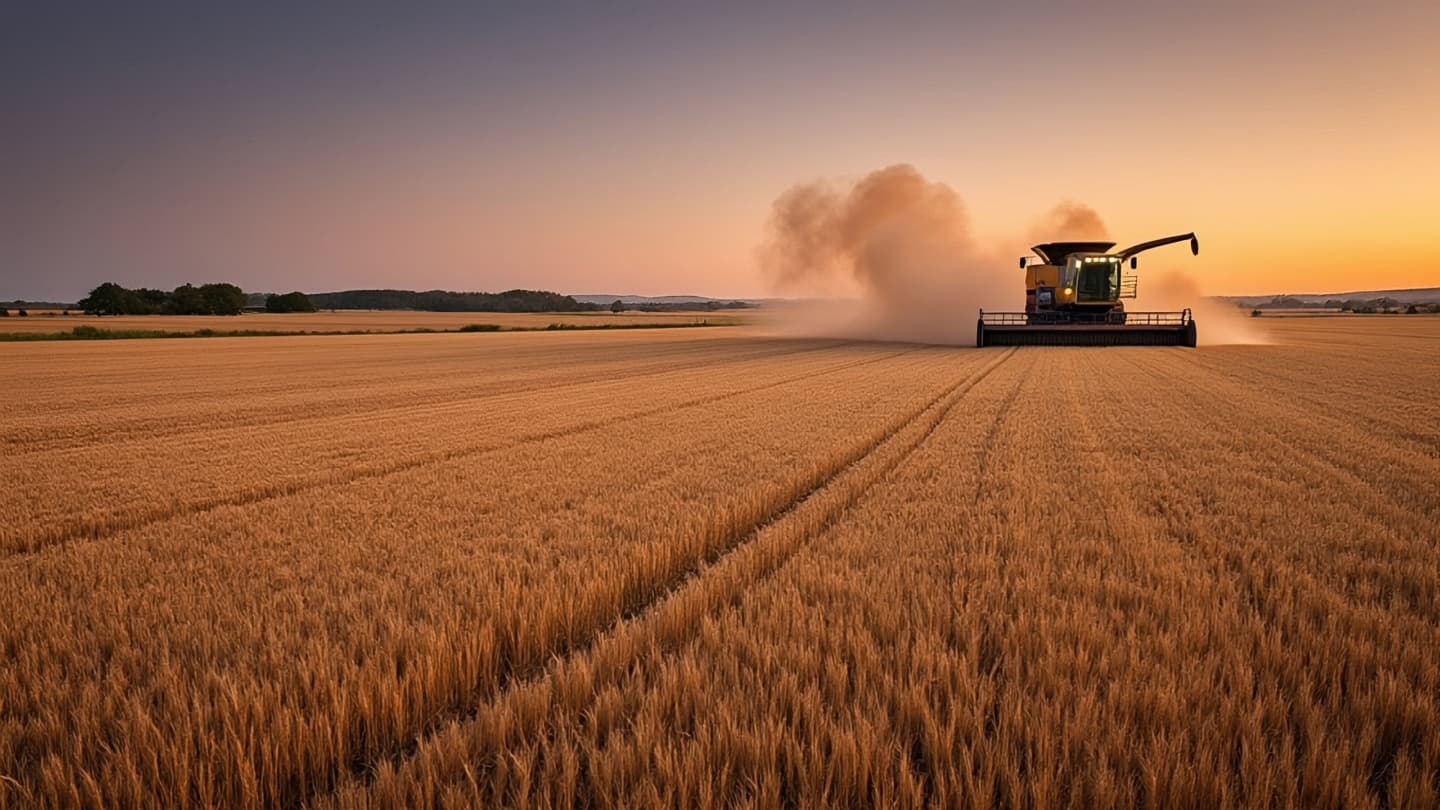
The story of the Mexican economy in this season is one of a house divided by the shifting winds of fortune. In the bright, air-conditioned spaces where services are rendered and digital dreams are spun, there is a rhythm of growth and a pulse of activity. Yet, in the open fields where the corn once stood tall and in the heavy shadows of the industrial zones, a different, more somber narrative is being written—one of contraction and a quiet, persistent struggle to find a foothold in a changing world.
To witness the decline of the industrial and agricultural sectors is to see the physical foundations of the nation feel the weight of global instability. The narrative is one of a cooling forge and a parched furrow, where the labor of the hands is no longer yielding the bounty of previous years. It is a story of external pressures—of tariffs that bite and weather that does not provide—converging to create a season of scarcity in the very places that have long fed and built the country.
The growth of the service economy acts as a fragile canopy, offering some protection from the storm, but it cannot fully replace the deep roots of the primary and secondary sectors. The narrative is one of imbalance, where the vibrancy of the city cafes and the tech hubs is tempered by the silence of the factory floor and the anxiety of the rural village. It is a reminder that a nation’s health is a tapestry woven from many threads, and that when the strongest are frayed, the whole begins to thin.
In the quiet offices of the policy makers, the data is viewed with a sense of gathering urgency. The contraction in industry is not merely a matter of numbers; it is the story of a workforce in transition, of machines that have slowed their pace, and of a competitive edge that is being tested by distant shores. The narrative is one of adaptation, a search for the resilience that will allow the Mexican forge to burn brightly once again in a more challenging global landscape.
The agricultural landscape, too, tells a story of vulnerability, where the ancient cycle of planting and harvest has been disrupted by forces beyond the farmer’s control. It is a reflective moment for a nation that takes deep pride in its connection to the soil, a realization that the security of the table is tied to the health of the earth and the stability of the climate. The contraction is a soft-spoken warning, a call to rethink the way we sustain ourselves in an era of uncertainty.
There is a certain irony in a world that is more connected than ever, yet where the local producer finds it harder to reach the market. The story of the current economy is one of navigation, of finding the paths that lead from the struggling field to the prosperous digital hub. It is a journey that requires both the strength of the old ways and the agility of the new, a synthesis of the tangible and the intangible that is still being forged in the heat of the present moment.
As the quarter closes, the hope remains that the gains in the service sector will eventually spill over into the rest of the economy, providing the spark needed to reignite the industrial heart. For now, the narrative is one of watchful waiting, a period of rest and recalibration for a nation that has always known how to endure the lean years. The economy, like the land itself, is a cycle of seasons, and the current chill is but a chapter in a much longer and more resilient story.
Mexico’s economic performance in early 2026 has been marked by a significant divergence between sectors, as a 1.3% contraction in industrial output and a 0.1% decline in agriculture offset the 0.7% growth in the service economy. The industrial sector faced headwinds from increased automotive tariffs and slowing foreign demand, while the agricultural sector struggled with adverse weather patterns. This sectoral imbalance has resulted in a nearly stagnant overall GDP growth of just 0.1% for the first quarter.
Published by Banx Network. This article is part of the Banx decentralized media programme, powered by the BXE token on the XRP Ledger.



