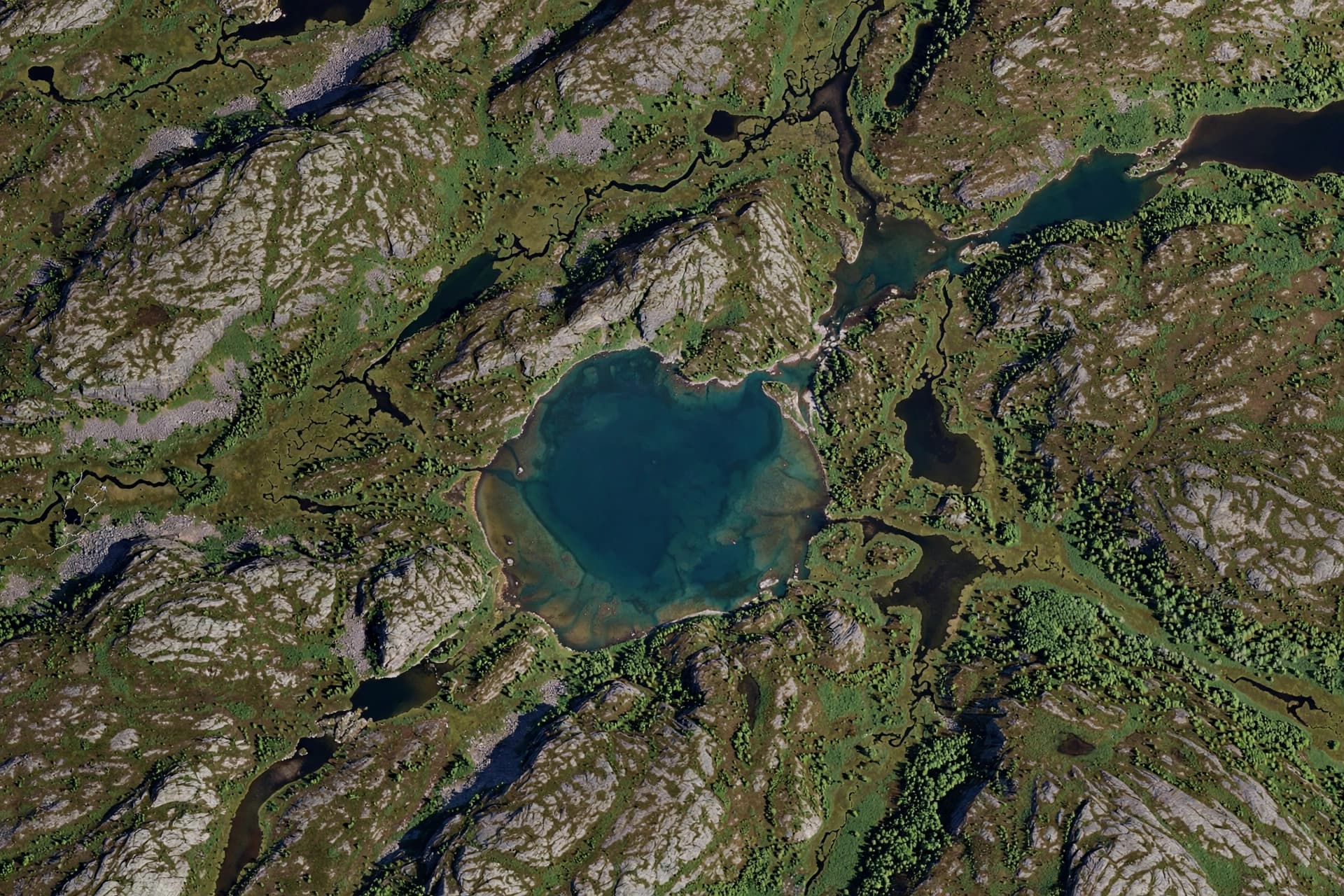
Islands often appear complete at the surface, defined by coastlines, cliffs, and horizons shaped by wind and water. Yet the real story of an island rarely ends where the eye stops. Far below one major Atlantic island, scientists have uncovered a vast and unexpected chapter — a rock layer stretching roughly 20 kilometers deep, hidden beneath everything known before.
The discovery emerged not from digging or drilling, but from listening. Using seismic data and advanced modeling, researchers detected a dense subsurface structure that does not fit neatly into existing geological assumptions about how the island formed. The layer appears distinct from surrounding material, suggesting a complex origin tied to ancient forces rather than gradual accumulation alone.
For decades, scientists believed the island’s foundation was relatively well understood, shaped primarily by volcanic activity and plate movement. The newly identified layer complicates that picture. Its thickness and composition hint at processes operating far deeper in Earth’s mantle, possibly dating back millions of years earlier than previously assumed.
Such a structure raises questions about how magma moved, cooled, and solidified during the island’s formation. It may represent remnants of ancient plume activity, compressed material from earlier tectonic episodes, or a hybrid of both. Each possibility challenges simplified models of island-building in the Atlantic.
The implications extend beyond one landmass. If similar hidden layers exist beneath other islands, current understandings of oceanic crust formation may need revision. What appears stable and uniform from above could be layered with unseen complexity below.
Researchers caution that the findings are still being refined. The layer’s precise makeup and boundaries remain subjects of ongoing analysis. But its scale alone suggests it played a significant role in shaping the island’s geological behavior, from volcanic patterns to long-term stability.
Discoveries like this underscore how incomplete surface knowledge can be. Even in regions studied for generations, the Earth retains secrets accessible only through new tools and patient interpretation. Progress comes not from spectacle, but from signals detected far beneath familiar ground.
As scientific methods continue to improve, more hidden structures may emerge, quietly altering long-held narratives. For now, the Atlantic island rests as it always has — unaware, perhaps, that its deepest foundation has only just begun to be understood.
Published by Banx Network. This article is part of the Banx decentralized media programme, powered by the BXE token on the XRP Ledger.