
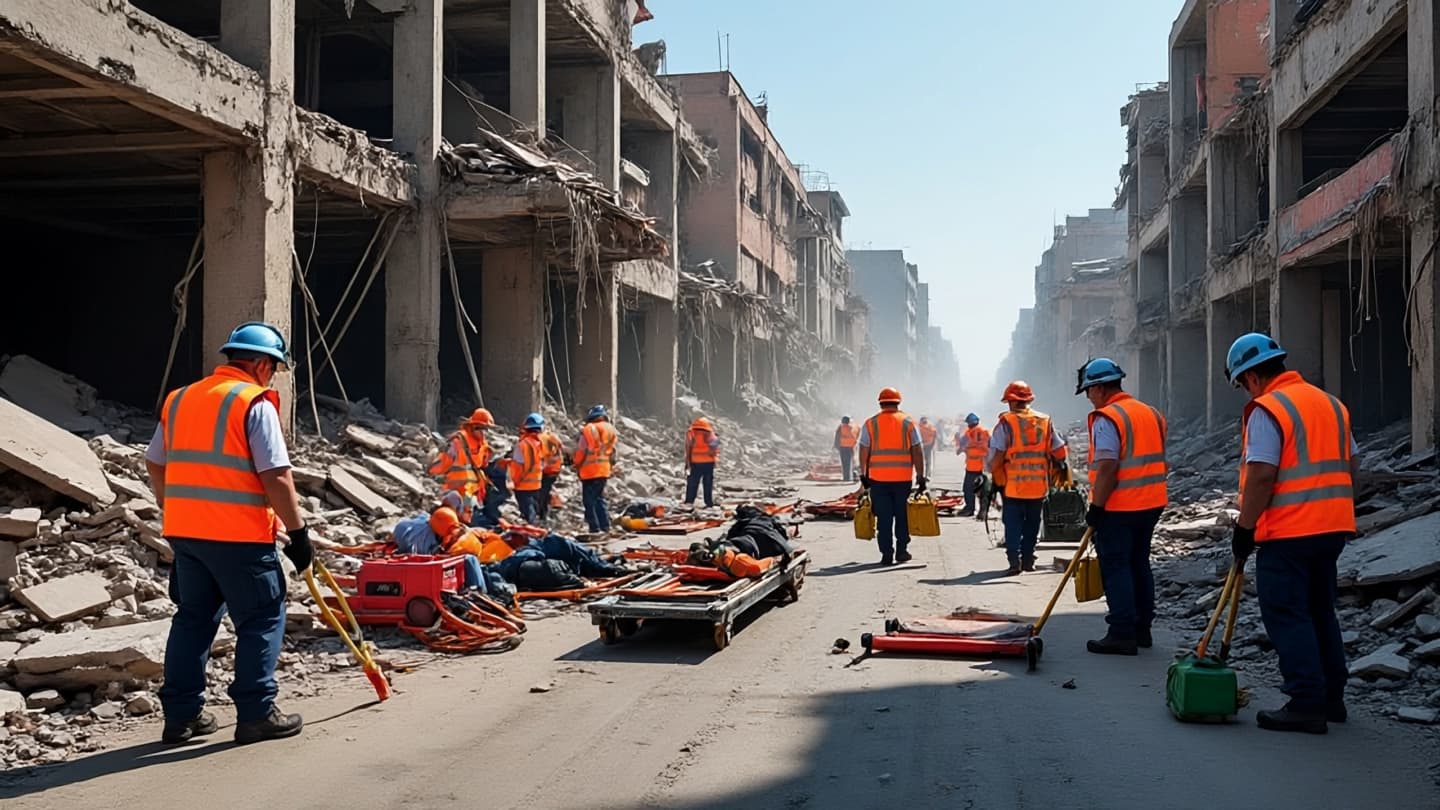
The Earth often moves silently beneath human feet, reminding societies of the powerful forces that shape the planet. Most days, these movements remain unnoticed, but when a major earthquake strikes, ordinary moments can quickly become emergencies. Buildings fall, communities are disrupted, and rescue teams begin the difficult task of searching for survivors while providing support to those affected.
A powerful earthquake struck Myanmar, causing widespread damage and prompting large-scale rescue operations. The disaster affected communities across several areas, with emergency responders, local authorities, and international organizations working together to assist people trapped beneath damaged structures and provide essential aid.
The earthquake caused significant destruction to buildings, roads, and public infrastructure. Many residents were forced to leave their homes as authorities assessed damage and worked to establish temporary shelters. Rescue teams used specialized equipment to search collapsed structures while medical workers treated those injured during the disaster.
Emergency response after an earthquake requires careful coordination. Search-and-rescue teams must work quickly while also ensuring their own safety in unstable environments. Engineers, medical personnel, and disaster specialists often collaborate to identify dangerous areas and prioritize locations where survivors may still be found.
Scientists explain that earthquakes occur when energy stored within the Earth’s crust is suddenly released along geological faults. While modern technology allows researchers to monitor seismic activity and identify areas with higher risks, earthquakes remain difficult to predict with precise timing.
The disaster has also highlighted the importance of earthquake preparedness. Building standards, public education, emergency planning, and early warning systems all contribute to reducing the impact of major seismic events. Countries located in earthquake-prone regions continue investing in these measures to protect communities.
Beyond the immediate rescue phase, recovery after an earthquake can become a long-term challenge. Rebuilding homes, restoring infrastructure, supporting affected families, and recovering local economies often require cooperation between governments, humanitarian organizations, and communities.
As rescue operations continue, attention remains focused on saving lives and supporting survivors. Earthquakes demonstrate the vulnerability of human communities in the face of natural forces, but they also reveal the strength of cooperation and compassion during moments of crisis.
AI Image Disclaimer: The illustrations accompanying this article are AI-generated editorial representations and do not show the actual earthquake location, victims, or rescue operations.
Source Verification: Verified.
Sources: Reuters, Associated Press, United Nations humanitarian agencies
Published by Banx Network. This article is part of the Banx decentralized media programme, powered by the BXE token on the XRP Ledger.


