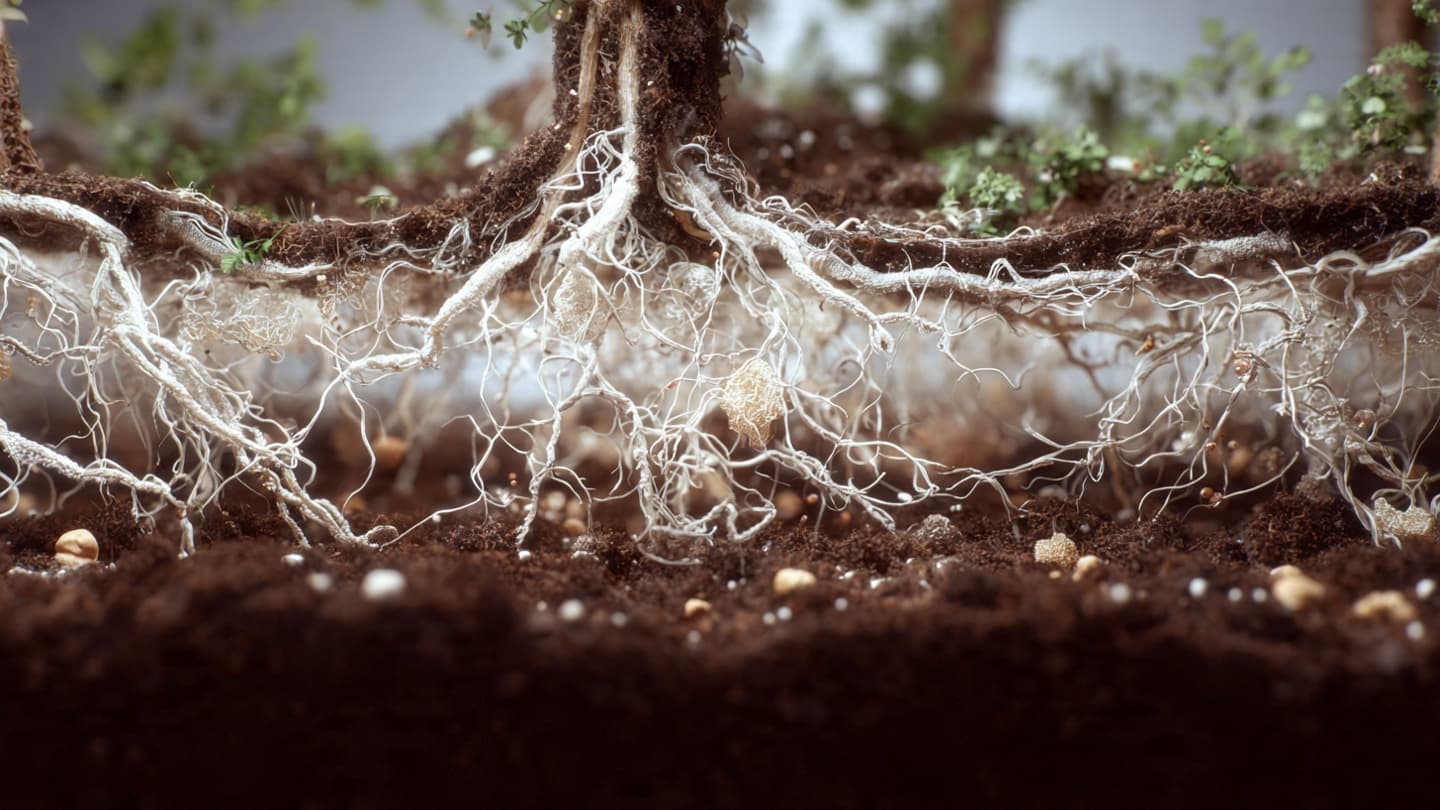
Beneath nearly every terrestrial ecosystem lies an intricate biological system that is largely invisible to human observation. This system is formed by fungi that interact closely with plant roots, creating extensive underground networks.
These fungal connections, known as mycorrhizal networks, allow for the exchange of nutrients, water, and chemical signals between plants. In this way, ecosystems function not only through individual organisms but through shared biological infrastructure.
Research in ecology suggests that these networks can span large forest regions, linking multiple species together in a complex web of interdependence. While not a single organism, the system behaves as a coordinated network of life.
Scientists often describe this structure as a “wood wide web,” emphasizing its role in facilitating communication and resource sharing among plants. This includes nutrient transfer that can support younger or weaker plants.
The fungi benefit from this relationship as well, receiving carbohydrates produced through photosynthesis. This mutual exchange forms a stable ecological partnership that supports biodiversity.
Environmental changes such as deforestation, soil degradation, and climate shifts may disrupt these networks, potentially affecting the health of entire ecosystems.
Understanding these underground systems is increasingly important in ecological science, especially in efforts to restore damaged environments and improve sustainable land management.
In closing, fungal networks represent one of nature’s most subtle yet essential systems, quietly sustaining life beneath the surface.
AI Image Disclaimer: Images are AI-generated ecological visualizations.
Sources: Nature Ecology & Evolution, National Geographic, ScienceDaily
Published by Banx Network. This article is part of the Banx decentralized media programme, powered by the BXE token on the XRP Ledger.