The monsoon has always arrived as both a benediction and a heavy burden for the communities that map their lives by the agricultural calendar. This season, however, the sky opened with an unrelenting intensity that quickly overwhelmed the earth's capacity to absorb the downpour, turning dry culverts into rushing torrents. The great river, which usually winds like a silver thread through the wide alluvial plains, began to swell beyond its historic margins, its waters turning a thick, opaque brown with the weight of upstream silt. It is a slow, majestic, and terrifying transformation, as a source of life gradually expands to alter the very boundaries of human geography.
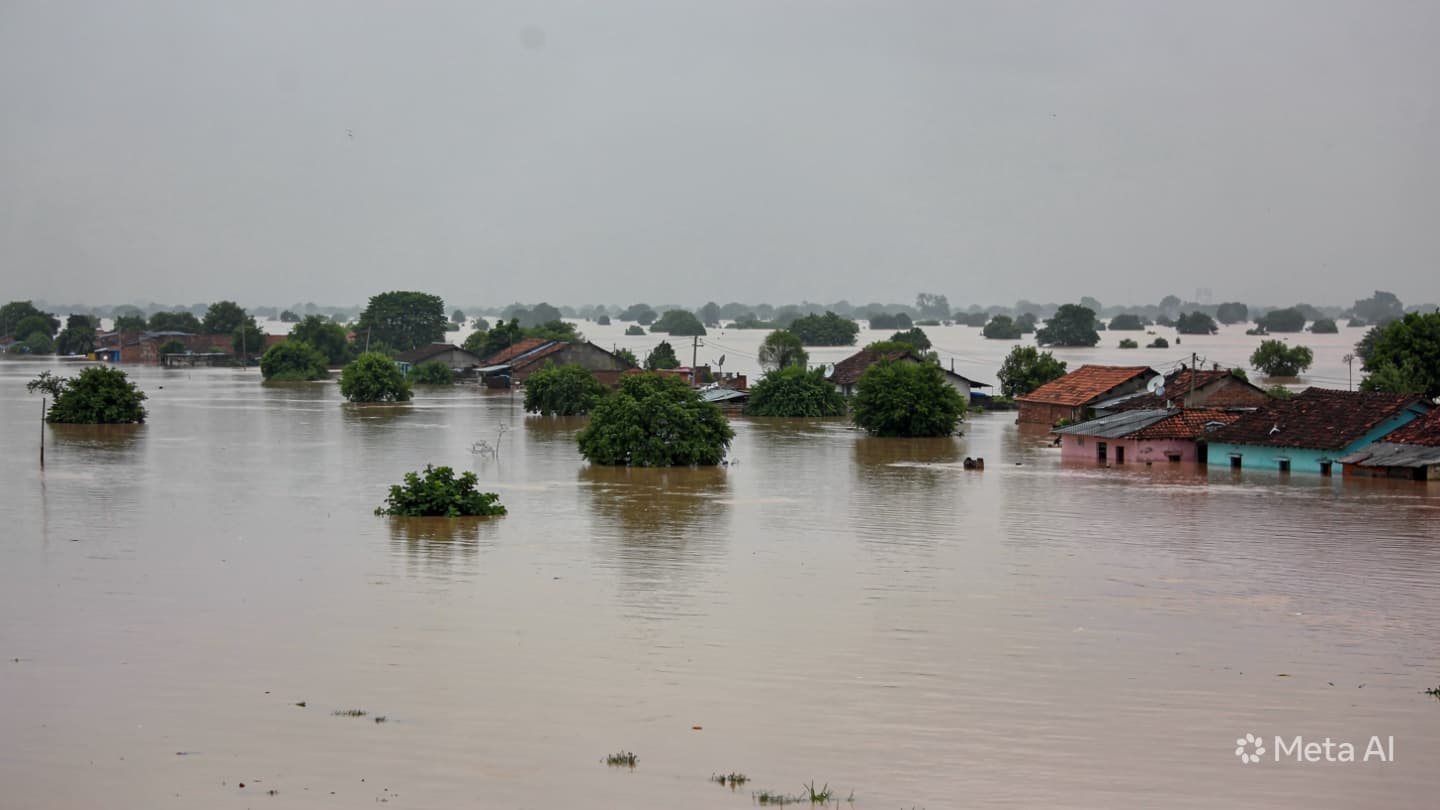
In the low-lying settlements that line the riverbanks, the water did not arrive with the sudden violence of a mountain flash flood, but rather as a persistent, creeping presence. It moved through the emerald expanse of paddy fields first, swallowing the young crops before pooling quietly at the doorsteps of mud and brick dwellings. For the villagers, the rising current represented a quiet displacement, forcing families to gather their most precious belongings and retreat toward the higher ground of embankments and school rooftops. The landscape quickly dissolved into an expansive, inland sea, where only the tops of mango trees and electrical poles remained to mark the submerged roads.
To look out over the flooded plains is to witness a profound suspension of daily life, where the traditional sounds of livestock and tractors have been replaced by the steady slosh of oars. Small wooden boats and makeshift rafts now navigate the thoroughfares of eighteen villages, guided by local youths and emergency personnel seeking those who stayed behind to guard their property. The air is thick with a heavy humidity and the persistent, gray drizzle that continues to fall from a monolithic sky, blurring the horizon into a single, watercolor wash of moisture and earth.
The true sorrow of the season is found not just in the ruin of the harvest, but in the quiet spaces left by those who did not survive the water’s passage. Fifteen lives have been claimed by the rising currents, individuals whose stories were intimately bound to these fields and who were overtaken by the unexpected depth of the inundation. Their loss is a silent underscoring of the vulnerability that defines life on the margins of the great river systems, where the balance between survival and catastrophe is dictated by a few inches of water.
As night begins to drape itself over the flooded province, small fires flicker along the high embankments where displaced families have constructed temporary lean-tos. The smell of woodsmoke mixes with the dampness of the evening, a fragile sign of human resilience against an overwhelming elemental landscape. Below them, the river continues its deep, resonant murmur, a reminder that the waters will take weeks to recede back into their proper channels, leaving behind a thick layer of mud and a long, arduous process of reclamation.
The National Disaster Management Authority has confirmed that eighteen villages remain extensively inundated following the severe overflow of the primary river system due to torrential monsoon rains. Relief operations are currently underway to distribute clean drinking water, dry rations, and medical supplies to the thousands of residents currently marooned or displaced by the high waters. Hydrologists report that while the river has reached its peak crest, downstream sectors must remain on high alert for the next forty-eight hours.
Published by Banx Network. This article is part of the Banx decentralized media programme, powered by the BXE token on the XRP Ledger.