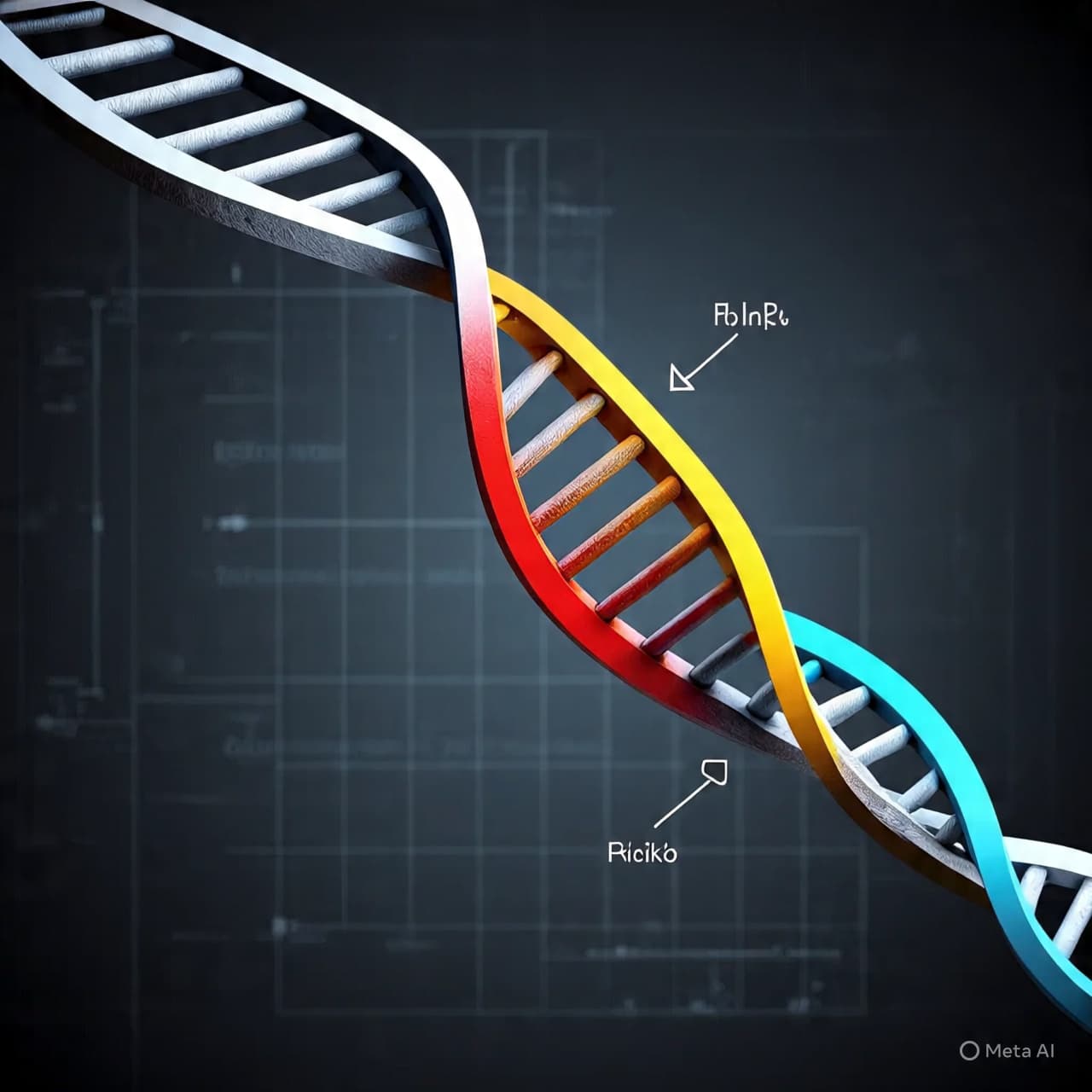
In every living cell, a quiet script unfolds.
It lies folded within the delicate structure of DNA, a molecule so small it can only be seen through powerful instruments, yet vast enough to contain the instructions for life itself. For generations, scientists have read this script like historians studying a long and intricate chronicle, searching for clues about how species change, adapt, and slowly diverge across time.
Most of that story has been understood as gradual. Mutations appear here and there, small alterations in the genetic code. Over thousands or millions of years, these tiny edits accumulate, shaping new traits and guiding the path of evolution.
But sometimes the genome behaves less like a line of text and more like a page that can turn.
Researchers studying large collections of genetic data have recently identified a mechanism that may allow evolution to move more swiftly than previously imagined. Certain stretches of DNA, they found, can flip their orientation within a chromosome. Known as chromosomal inversions, these flips occur when a segment of DNA breaks away, rotates, and reinserts itself in the opposite direction.
The sequence of genes remains present, but its position within the chromosome changes in a way that alters how those genes are inherited together.
In normal reproduction, DNA from two parents mixes through a process known as recombination, shuffling genes and creating new combinations in offspring. But within an inverted region, that shuffling becomes far more limited. Genes caught inside the flipped segment tend to travel together through generations, forming stable packages of traits.
Scientists sometimes describe these packages as “supergenes,” clusters of genes that remain linked and function as a coordinated unit.
This phenomenon may help explain certain bursts of diversity seen in nature. One example appears in the remarkable fish communities of Lake Malawi in East Africa, where hundreds of closely related cichlid species have evolved in a relatively short span of evolutionary time. Each species has developed unique feeding strategies, colors, and ecological roles, often within the same waters.
Genetic analysis suggests that several large DNA inversions helped preserve combinations of genes that favored particular adaptations. By keeping these gene clusters intact, the flips may have allowed natural selection to act more quickly and more efficiently.
In this way, evolution sometimes proceeds not only through the creation of new genes, but through the rearrangement of those already present.
The genome, it seems, is less like a fixed blueprint and more like a flexible architecture. Sections can turn, align differently, and reshape how traits are expressed across generations.
Similar processes have been observed in microorganisms as well. In bacteria, researchers have found that pieces of DNA can flip within single genes, effectively switching certain functions on or off and helping organisms respond to changing environments.
These discoveries suggest that the mechanisms of evolution are more varied—and perhaps more dynamic—than once assumed.
Yet the deeper lesson remains familiar. Life changes through countless quiet events occurring beyond ordinary sight. A mutation here, a recombination there, and sometimes a simple inversion—a piece of DNA turning upon itself like a compass needle finding a new direction.
Over time, those small turns may guide the unfolding of entirely new branches of life.
Published by Banx Network. This article is part of the Banx decentralized media programme, powered by the BXE token on the XRP Ledger.