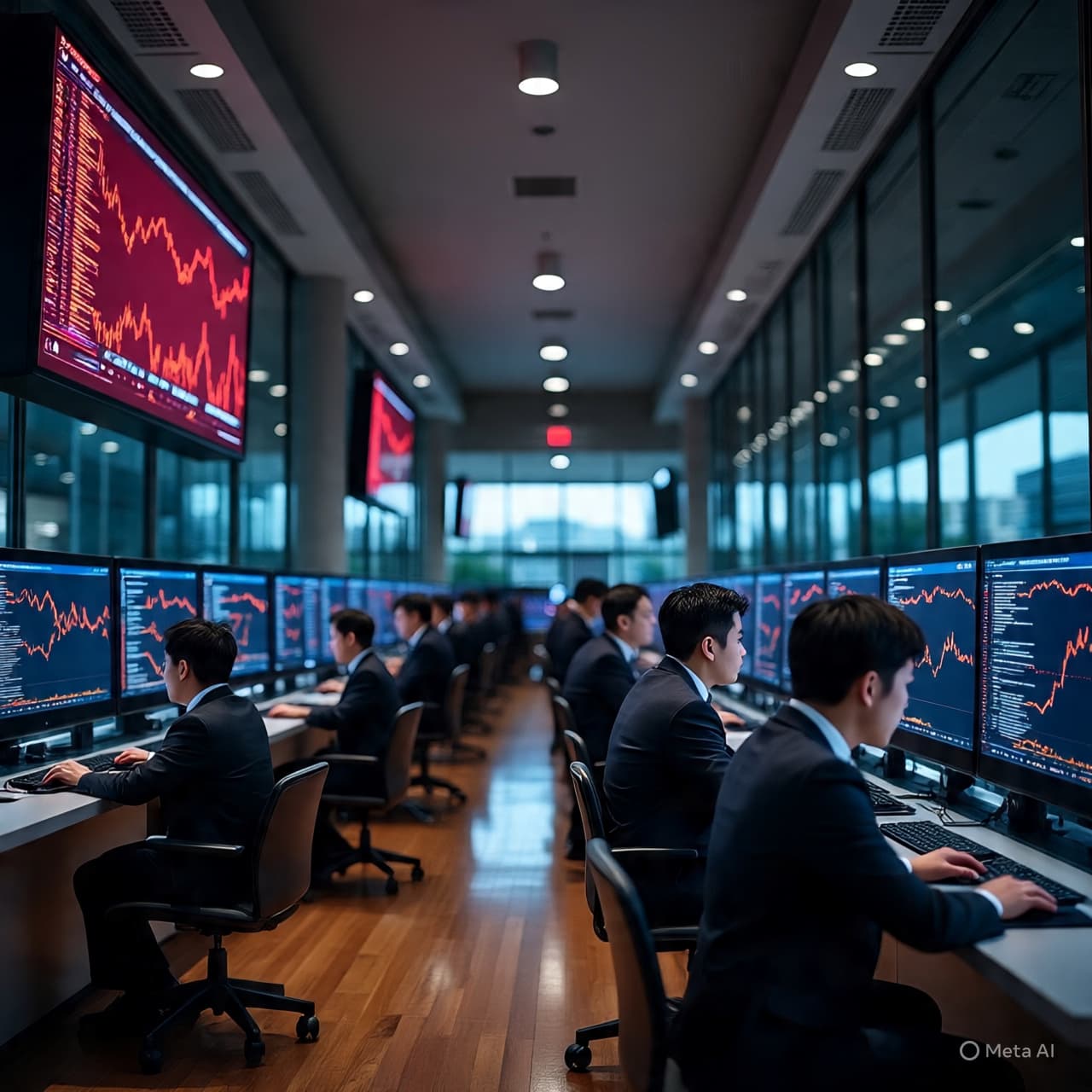
The market, like a quiet harbor before a storm, often senses change before it can explain it. In Tokyo, the trading floor opened to a subdued rhythm, as if investors were listening for something unsaid. Numbers moved, screens flickered, yet beneath the surface there was a shared pause a moment of collective restraint shaped not by drama, but by caution.
Japan’s stock market edged lower as new data revealed a sharp decline in machinery orders, a metric often read as a soft whisper of future industrial intent. These orders, usually a forward-looking signal of corporate confidence, appeared thinner than expected, suggesting that businesses may be stepping back, if only temporarily, from large capital commitments. The market responded not with alarm, but with a measured withdrawal, reflecting an environment where certainty feels increasingly fragile.
Risk aversion, already present in global markets, seemed to deepen. International concerns ranging from slowing global growth to persistent geopolitical unease cast long shadows over export-reliant economies like Japan. Investors appeared to favor safety, gently rotating away from equities tied closely to manufacturing and capital investment, and toward more defensive positions.
Machinery makers and industrial firms bore the weight of the day’s sentiment. Their shares slipped as the data reinforced a narrative of caution rather than collapse. Analysts noted that while one month’s figures do not define a trend, they do contribute to a broader story in which companies are carefully reassessing demand, costs, and timing.
The yen’s movements added another layer to the mood. Currency fluctuations, often subtle yet influential, shaped expectations for exporters’ earnings, further tempering enthusiasm. Meanwhile, policymakers remained watchful, aware that confidence, once shaken, can be slow to return.
By the close, Japan’s market had not unraveled, but it had clearly exhaled. The decline was less a reaction of fear and more a reflection of patience an acknowledgment that in uncertain times, waiting can feel wiser than rushing forward.
Closing Japan’s stock market finished lower after weaker machinery orders data reinforced cautious investor sentiment, with risk aversion continuing to influence trading decisions across industrial and manufacturing shares.
AI Image Disclaimer (rotated wording) Illustrations were produced using AI tools and are intended as conceptual representations rather than real-world photographs.
Source Check (before writing)
Reuters Nikkei Asia Bloomberg Financial Times The Wall Street Journal
Published by Banx Network. This article is part of the Banx decentralized media programme, powered by the BXE token on the XRP Ledger.