
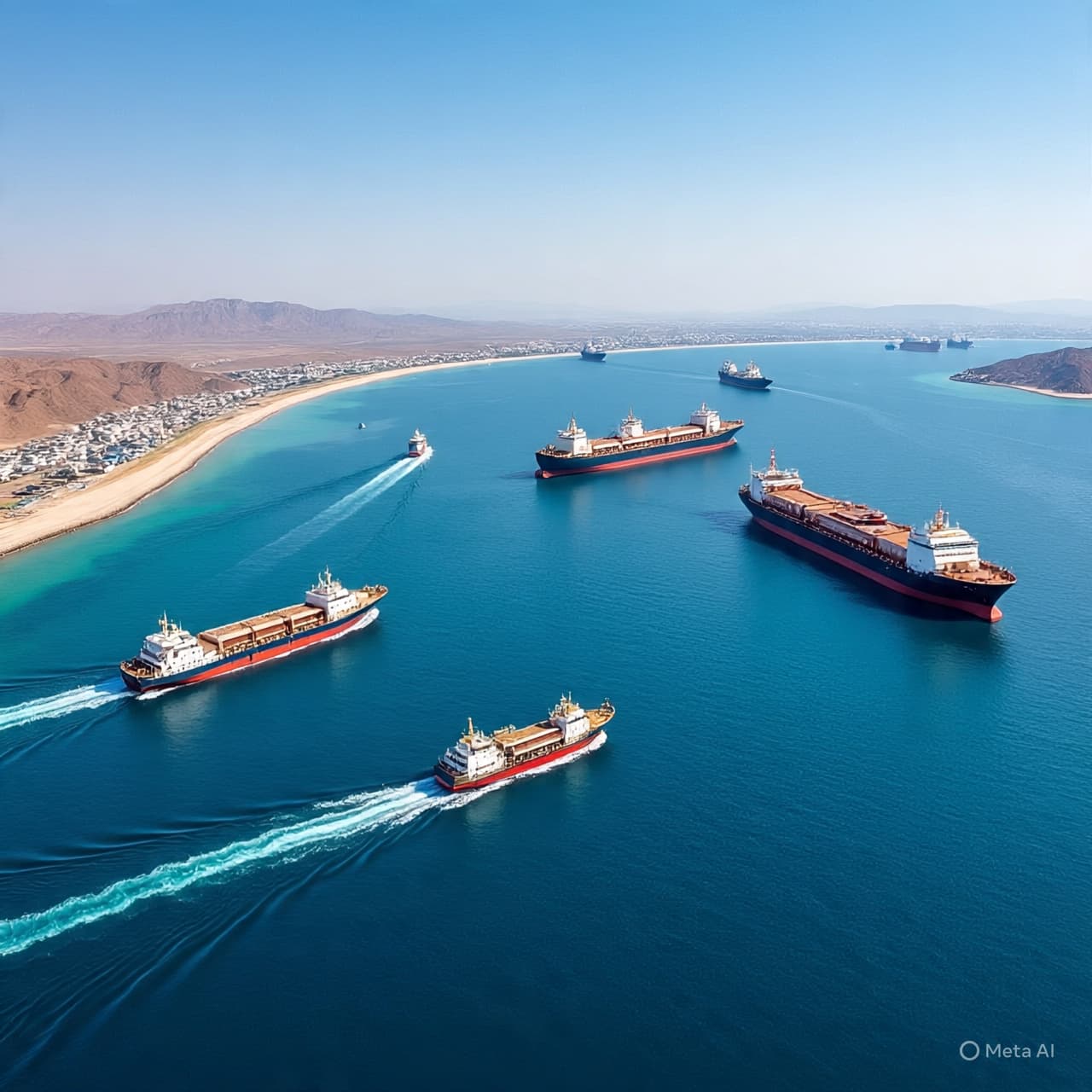
Key Highlights
- Iran claims the Strait of Hormuz is open for international shipping.
- U.S. and Israeli vessels face restrictions amid rising tensions.
- Global shipping companies are adjusting routes due to uncertainty.
The Strait of Hormuz, a vital maritime corridor for global oil trade, has recently become a focal point of geopolitical tension. Iranian officials have declared that the strait remains open for international shipping, but with significant caveats. Iranian Foreign Minister Abbas Araghchi has made it clear that while the gates of the strait are open, vessels associated with the United States and Israel will not be welcomed. This selective restriction raises questions about the implications for global shipping and international relations.
Historically, the Strait of Hormuz has been a critical artery for the world’s energy supply, with a substantial percentage of oil passing through its waters daily. However, the current geopolitical climate, marked by airstrikes linked to the U.S. and Israel on Iranian targets, has heightened tensions in the region. The airstrikes have particularly targeted facilities around Kharg Island, a key hub for Iran's oil exports, making it a significant point of vulnerability.
Iran's framing of the situation is strategic. By asserting that the strait is open, Tehran avoids the international backlash that would accompany a full closure. However, the exclusion of U.S. and Israeli vessels indicates a calculated move to assert control over this crucial maritime passage. This nuanced approach allows Iran to maintain a semblance of openness while simultaneously exerting pressure on its adversaries.
The atmosphere surrounding the Strait of Hormuz has become increasingly tense. Shipping companies and insurers are closely monitoring the situation, aware that even minor disruptions could have significant repercussions for global energy markets. Reports indicate that some tankers are altering their routes or delaying voyages as uncertainty looms over the corridor. The potential for conflict in such a strategically important area raises alarms for global commerce.
In response to the situation, U.S. officials have called on allies to assist in safeguarding navigation through the strait. The emphasis on maintaining open sea lanes underscores the importance of this route for international trade. Discussions about multinational naval deployments reflect the precarious nature of the situation, where a commercial route could quickly become a geopolitical battleground.
Despite the tensions, vessels from various nations continue to navigate the strait, albeit with caution. The delicate balance of power in the region means that the waters are neither fully closed nor entirely secure. The ongoing situation serves as a reminder of how geopolitical dynamics can shape even the most fundamental aspects of global trade.
Ultimately, the narrative surrounding the Strait of Hormuz is complex. It highlights the intersection of diplomacy, conflict, and commerce, illustrating how a passage can be declared open to some while remaining closed to others. As the tides of international relations continue to shift, the Strait of Hormuz remains a critical point of contention in the global arena.
Published by Banx Network. This article is part of the Banx decentralized media programme, powered by the BXE token on the XRP Ledger.



