
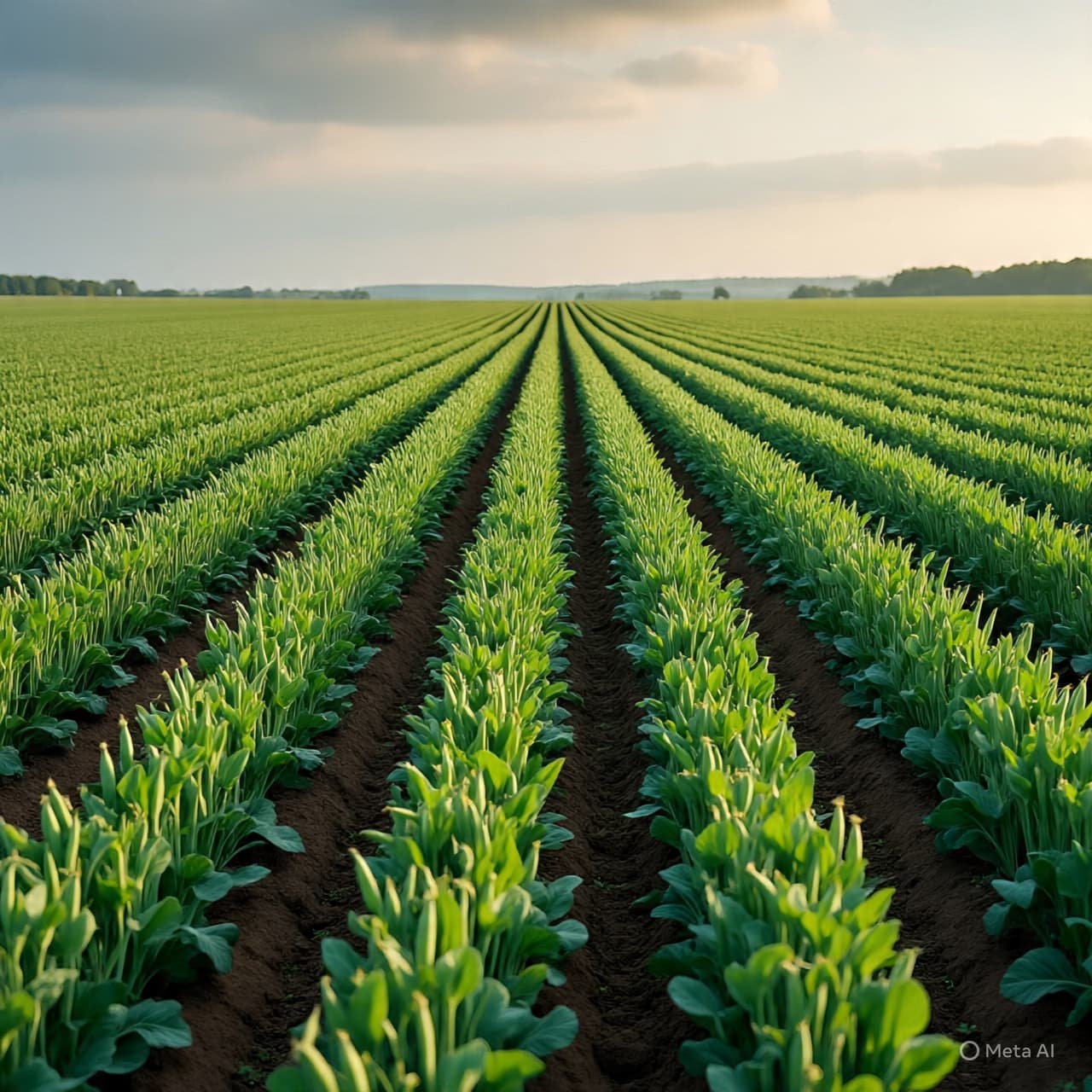
In the wide, open fields of Canterbury, where rows of peas and carrots follow the rhythm of seasons rather than headlines, change rarely arrives all at once. It settles instead—like a shift in wind—felt first in conversations, in contracts not renewed, in questions that linger longer than usual at the edge of a growing season.
The proposed exit of frozen vegetable production by Wattie’s, one of New Zealand’s most established food processors, carries that kind of quiet disruption. It is not only the absence of a product on supermarket shelves, but the loosening of an entire chain that begins far from the freezer aisle.
At the center of that chain are growers—around 220 in Canterbury alone—many of whom have long relied on contracts to supply crops such as peas, corn, and carrots for processing. These agreements have offered something rare in agriculture: predictability. A known buyer, a defined volume, a price that allows planning beyond a single season.
Without that anchor, the ground becomes less certain.
For arable farmers, the impact is layered. Many do not simply grow vegetables for consumption, but also produce seed—particularly for crops like peas, where seed production and vegetable supply are closely intertwined. If demand from processors falls, it does not only remove a harvest market; it reduces the need for seed itself. The effect moves backward through the system, from factory to field to the earliest stages of planting.
It is, as industry groups describe it, a “double hit.” Farmers may lose income from both the crops they grow for processing and the seed they produce for future planting.
The challenge is not simply one of replacement, but of fit. Crop rotations—carefully balanced over years—depend on specific combinations of plants to maintain soil health and manage disease. Removing a major crop like processing peas leaves a gap that cannot always be easily filled. Alternatives exist, but they may not offer the same returns, nor align as neatly with existing systems.
Beyond the farm gate, the uncertainty extends into the broader structure of New Zealand’s vegetable sector. Growers cannot continue producing at scale without reliable buyers. Over time, fewer contracts can lead to fewer hectares planted, and ultimately, a reduction in domestic production.
This arrives at a moment when the sector is already under strain. Rising fuel and fertilizer costs—linked in part to global geopolitical tensions—have tightened margins. Weather disruptions have compounded the difficulty. For many, the proposed exit does not begin a downturn, but deepens one already underway.
There is also a quieter structural shift beneath the surface. As local processing recedes, imported frozen and canned vegetables are likely to fill the space, sourced from countries where production costs are lower. This introduces a different kind of risk—not immediate, but cumulative—where domestic capability gradually gives way to external supply.
The consequences are not confined to economics alone. Seed production in regions like Canterbury holds global significance, contributing a substantial share of the world’s supply for certain crops. A contraction here may ripple outward, affecting not only local growers but international agricultural networks tied to these seeds.
Still, the transition will not be immediate. Existing contracts and current harvests will carry through the present season, delaying the full effect until the next cycle begins. But agriculture is a forward-looking enterprise; decisions made now shape fields months and years ahead.
In that sense, the real impact is already unfolding—not in what is harvested today, but in what may not be planted tomorrow.
Heinz Wattie’s has proposed discontinuing its frozen vegetable operations in New Zealand, with consultation ongoing and changes expected to affect growers, seed producers, and processing facilities across multiple regions.
AI Image Disclaimer
These visuals are AI-generated and intended as illustrative interpretations, not real-world photographs.
Sources
Radio New Zealand The Spinoff 1News FreshPlaza Farmers Weekly
Published by Banx Network. This article is part of the Banx decentralized media programme, powered by the BXE token on the XRP Ledger.



