In times of rising tension, the sea often becomes a stage where nations quietly prepare their next steps. Harbors grow busier, radar screens glow longer into the night, and ships that once rested peacefully begin to stir again.
Along the southern coast of England, such a moment has begun to unfold.
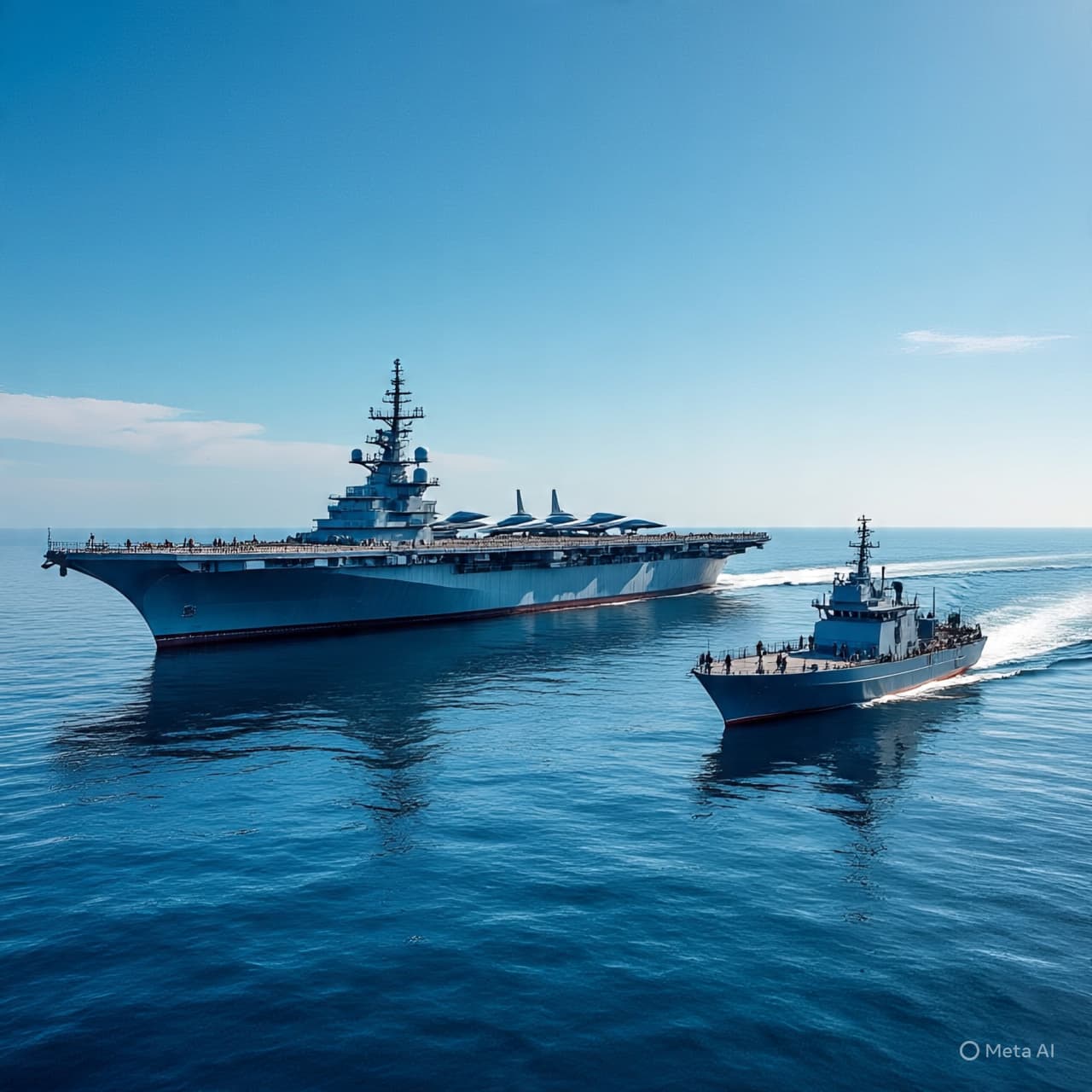
At the naval base in Portsmouth, the United Kingdom has placed its flagship aircraft carrier, HMS Prince of Wales, on heightened readiness as the conflict involving the United States, Iran, and regional actors continues to intensify. Defense officials have shortened the vessel’s deployment notice, meaning the carrier and its crew could be ordered to sail within a matter of days should the government decide the situation requires it.
The move does not automatically mean the warship will be sent to the Middle East. Yet reducing the readiness timeline—from around ten days to roughly five—signals that British planners want the option of rapid deployment if conditions deteriorate further.
HMS Prince of Wales represents one of the most powerful assets in the Royal Navy. The massive vessel, part of the Queen Elizabeth–class carriers, is capable of carrying advanced F-35B stealth fighter jets along with helicopters and support aircraft. When operating as part of a full carrier strike group, the ship would typically sail alongside destroyers, frigates, and possibly a submarine, forming a mobile platform capable of projecting air power far from Britain’s shores.
The decision to increase readiness comes amid a rapidly evolving security situation across the Middle East. In recent weeks, military strikes and counter-strikes between Iran and its adversaries have spread across several countries, drawing regional powers and international allies into a tense and uncertain environment.
Iran has launched waves of missiles and drones toward targets linked to U.S. and allied forces, while American and Israeli strikes have targeted military facilities across Iranian territory. Cities across the Gulf region have activated air-defense systems, and shipping lanes in nearby waters have faced new warnings and disruptions.
For Britain, the stakes are both strategic and practical. The Persian Gulf and nearby waters remain one of the world’s most important energy corridors, with a significant share of global oil shipments passing through the narrow Strait of Hormuz. Any disruption there can ripple quickly through global markets and international diplomacy.
British forces already maintain a presence in the wider region. Fighter jets, surveillance aircraft, and additional personnel have been positioned at bases such as RAF Akrotiri in Cyprus as part of a broader effort to support allies and monitor developments. Evacuation operations have also been underway to help British citizens leave areas affected by the conflict.
Within this wider framework, the aircraft carrier serves as both a practical military tool and a signal of readiness. Carriers provide governments with flexibility: they can launch aircraft, gather intelligence, defend shipping routes, or support allied operations without relying entirely on land bases.
Yet the decision to deploy such a vessel is rarely simple. A carrier strike group represents not just a ship but a substantial commitment of personnel, escorts, aircraft, and logistics. Sending it into a conflict zone would mark a significant step in Britain’s involvement.
For now, officials emphasize that no final decision has been taken. Preparations continue quietly behind the gates of the naval base, while diplomats and military planners watch developments across the Middle East.
And so the carrier waits—its deck ready, its crew alert—while the wider world listens for the next signal in a conflict whose direction remains uncertain.
AI Image Disclaimer Visuals are created with AI tools and are not real photographs.
Sources (media names only, as requested):
The Guardian The Times ITV News The Independent Sky News
Published by Banx Network. This article is part of the Banx decentralized media programme, powered by the BXE token on the XRP Ledger.