
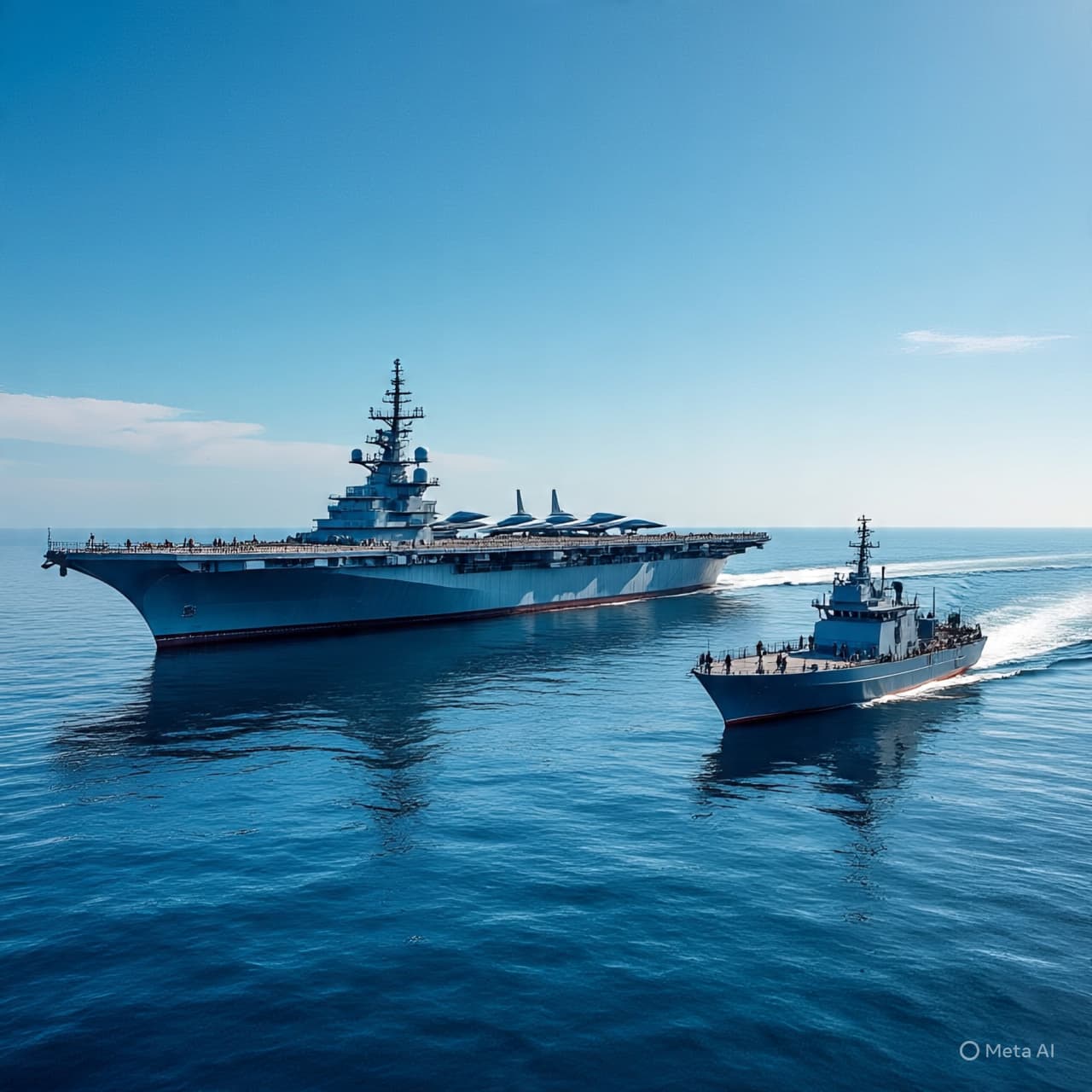
Key Highlights
- HMS Prince of Wales:UK aircraft carrier on heightened readiness.
- Middle East Tensions:Ongoing military strikes involving Iran and allies.
- Strategic Importance:Persian Gulf remains a critical energy corridor.
The sea often becomes a stage for nations preparing their next steps during times of rising tension. As the situation escalates in the Middle East, the United Kingdom has taken significant measures to ensure its naval capabilities are ready for rapid deployment. At the naval base in Portsmouth, the HMS Prince of Wales, the UK's flagship aircraft carrier, has been placed on heightened readiness. This decision comes as conflicts involving the United States, Iran, and regional actors intensify, prompting British defense officials to shorten the vessel's deployment notice from ten days to approximately five.
While this adjustment does not guarantee that the HMS Prince of Wales will be dispatched to the Middle East, it does indicate that British military planners are preparing for the possibility of rapid action should the situation deteriorate further. The HMS Prince of Wales is a formidable asset in the Royal Navy, capable of carrying advanced F-35B stealth fighter jets, helicopters, and support aircraft. When deployed as part of a carrier strike group, it can project air power far beyond British shores, enhancing the UK's military presence in critical regions.
The decision to increase the readiness of the HMS Prince of Wales comes amid a rapidly evolving security landscape in the Middle East. Recent weeks have seen a series of military strikes and counter-strikes between Iran and its adversaries, drawing in regional powers and international allies. Iran has launched missiles and drones targeting U.S. and allied forces, while American and Israeli military operations have targeted Iranian facilities. This escalation has led to heightened tensions across the Gulf region, with cities activating air-defense systems and shipping lanes facing disruptions.
For the UK, the stakes are both strategic and practical. The Persian Gulf is one of the world's most vital energy corridors, with a significant portion of global oil shipments passing through the Strait of Hormuz. Any disruption in this area could have immediate repercussions on global markets and international relations. British forces already maintain a presence in the region, with fighter jets and surveillance aircraft stationed at bases like RAF Akrotiri in Cyprus, part of a broader effort to support allies and monitor developments.
The HMS Prince of Wales serves not only as a military asset but also as a symbol of readiness. Aircraft carriers provide governments with flexibility, allowing them to launch operations, gather intelligence, and defend shipping routes without relying solely on land bases. However, the decision to deploy such a vessel is complex, involving substantial commitments of personnel, escorts, aircraft, and logistics. Sending the carrier into a conflict zone would signify a significant escalation in Britain's involvement.
As of now, officials stress that no final decision has been made regarding deployment. Preparations continue quietly at the naval base, while diplomats and military planners closely monitor developments in the Middle East. The HMS Prince of Wales remains poised, its crew alert, as the world awaits the next signal in a conflict whose trajectory remains uncertain.
Published by Banx Network. This article is part of the Banx decentralized media programme, powered by the BXE token on the XRP Ledger.



