
Key Highlights
- The Darvaza Gas Crater, known as the 'Gates to Hell,' is dimming due to environmental efforts.
- The crater has burned since a Soviet-era drilling accident, becoming a tourist attraction.
- Turkmenistan aims to reduce methane emissions and manage natural gas resources more efficiently.
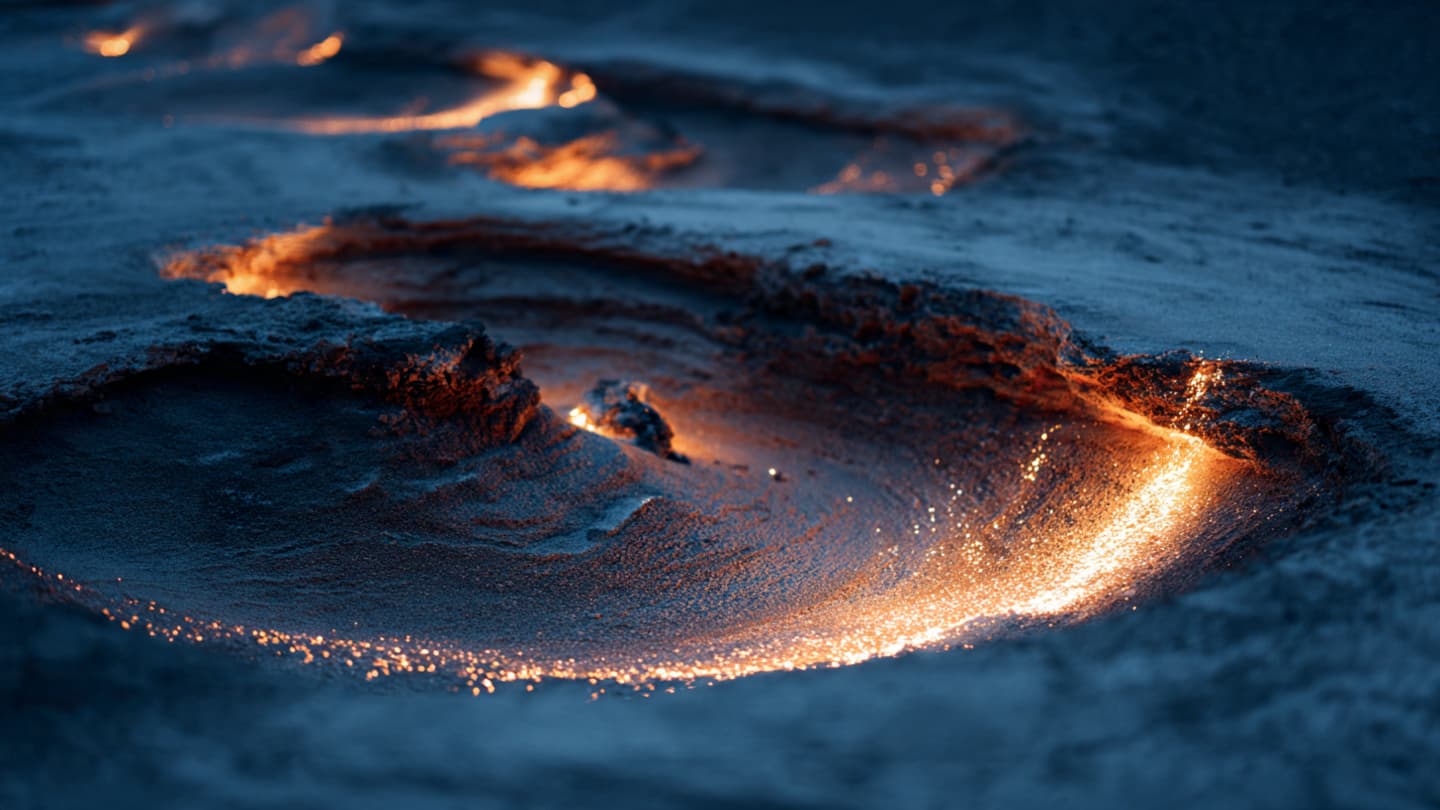
In the quiet vastness of the Karakum Desert, where the horizon often dissolves into heat and distance, a glow that has long resisted the night is now flickering. The Darvaza Gas Crater, commonly referred to as the 'Gates to Hell,' has burned for decades, a man-made flame resulting from a Soviet-era drilling accident. Engineers ignited a pocket of natural gas to prevent the spread of methane, expecting the fire to extinguish itself within days. Instead, it persisted year after year, becoming an accidental landmark that intertwines geology, industry, and time in a continuous flame.
Recently, authorities in Turkmenistan have indicated that the fire is gradually diminishing. This change is part of a broader initiative to reduce methane emissions and manage natural gas resources more efficiently. What once burned unchecked is now subject to intervention, as the country seeks to mitigate the environmental impact of a site that has released greenhouse gases into the atmosphere for years.
The dimming of the crater may initially appear to be a quiet victory for environmental stewardship. Methane, a potent contributor to climate change, has been escaping continuously from the site, and its reduction aligns with global efforts to limit emissions. However, the story is layered, much like the crater itself.
The Darvaza site has become a symbol of curiosity and unintended consequence, drawing tourists from around the world to witness its steady blaze. Visitors are captivated not only by the visual spectacle but also by the narrative it embodies—a reminder of a time when human control over nature seemed certain, only to extend far beyond expectations.
As the flames recede, the significance of the crater shifts subtly. Its fading light signifies not only the potential closure of an environmental concern but also the quiet disappearance of a phenomenon that has connected people to the landscape. The desert, once illuminated by its glow, may return to a deeper darkness—one that feels more natural yet less marked by this singular presence.
Scientists and officials are closely monitoring the site, assessing how best to manage the remaining gas and ensure that emissions are minimized. This process is gradual and largely unseen, echoing the forces that created the crater in the first place. There is no single moment when the flame will cease; rather, it is a slow diminishing, a lessening of intensity over time.
In this context, the 'Gates to Hell' are not closing but quieting. Their dimming reflects a convergence of environmental awareness and resource management, set against the backdrop of a place that has long existed outside ordinary timelines. The practical outcome is clear: the fire at the Darvaza Gas Crater is weakening as efforts to curb methane emissions take effect. Yet beyond this clarity lies a more reflective question—what is lost when something so unusual and enduring begins to fade?
In the desert, where change often arrives slowly, the light still burns—for now. But it does so with less certainty, its future no longer defined by endless flame, but by a gradual return to stillness.
Published by Banx Network. This article is part of the Banx decentralized media programme, powered by the BXE token on the XRP Ledger.



