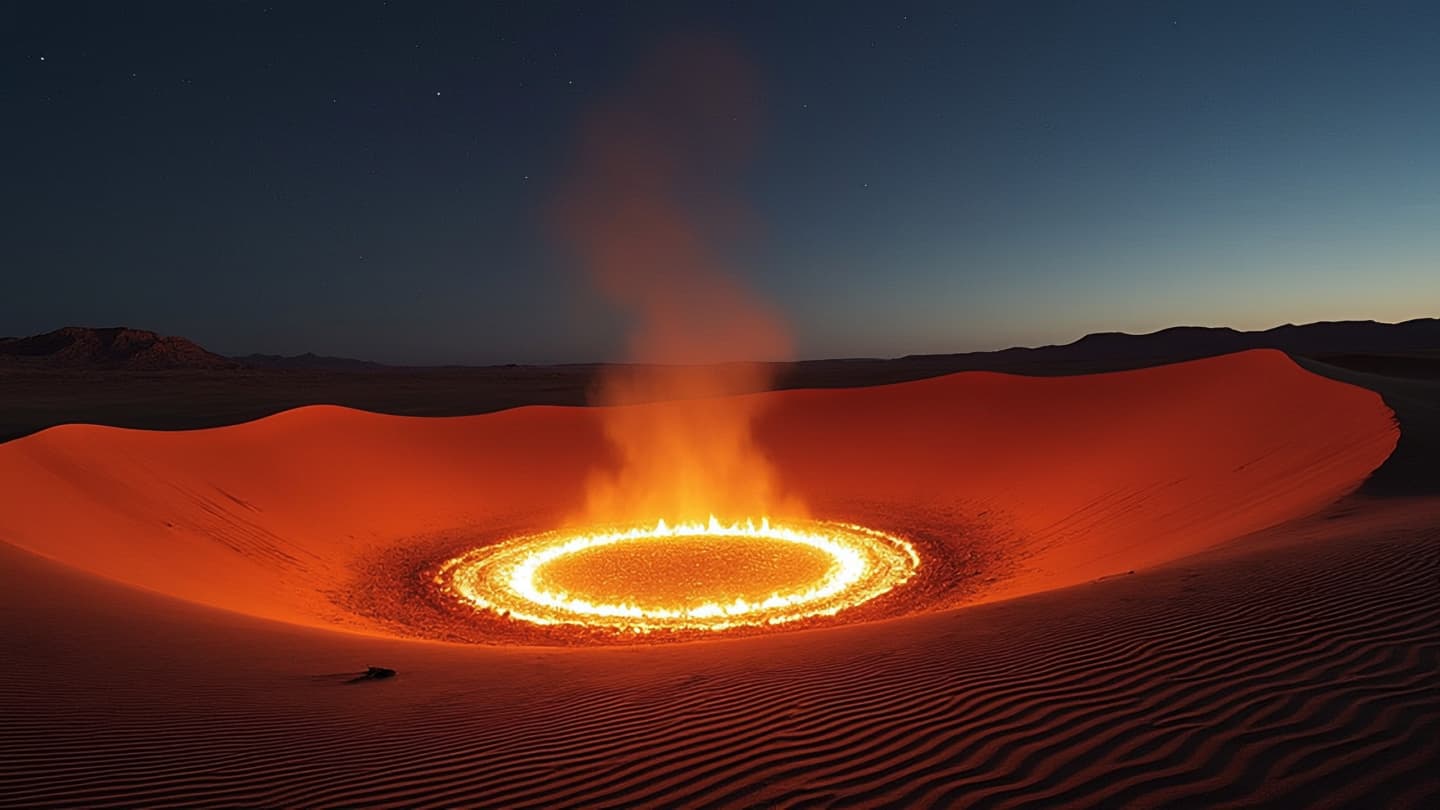
In the heart of a remote desert, a fiery crater has long burned as both a curiosity and a warning—a flicker of human intervention meeting the persistence of nature. Known informally as the “Gates to Hell,” its glow has been a constant presence, a reminder of choices made decades ago.
Located in , the Darvaza gas crater has burned continuously since the early 1970s. Originally ignited by Soviet engineers attempting to prevent the spread of methane gas, the site has since become an enduring symbol of industrial legacy.
Recent reports indicate that the intensity of the flames has begun to diminish. While this may appear to signal a natural resolution, scientists suggest the change could reflect shifting underground gas dynamics rather than a simple extinguishing of the fire.
Methane, a potent greenhouse gas, plays a central role in this development. The crater’s ongoing combustion has effectively converted methane into carbon dioxide, which, while still harmful, has a lower short-term warming potential. A reduction in burning could therefore alter the environmental balance.
Authorities in Turkmenistan have previously expressed interest in extinguishing the fire, citing both environmental and economic considerations. The region holds significant natural gas reserves, and managing these resources remains a national priority.
Environmental experts caution that the dimming flames should be interpreted carefully. A decrease in visible fire does not necessarily mean emissions have stopped; in some cases, it may indicate gas escaping without combustion.
The crater has also held cultural and tourism significance, drawing visitors intrigued by its dramatic presence. Its potential transformation raises questions about how such sites evolve over time.
In a broader sense, the situation reflects the complex interplay between human activity and natural systems—where solutions from one era may carry consequences into the next.
As the flames of the Darvaza crater shift, scientists and policymakers alike continue to monitor what its changing glow may quietly reveal.
AI Image Disclaimer: Images used in this article are AI-generated visualizations intended to represent the described scene.
Sources: BBC News Reuters National Geographic The Guardian
Published by Banx Network. This article is part of the Banx decentralized media programme, powered by the BXE token on the XRP Ledger.