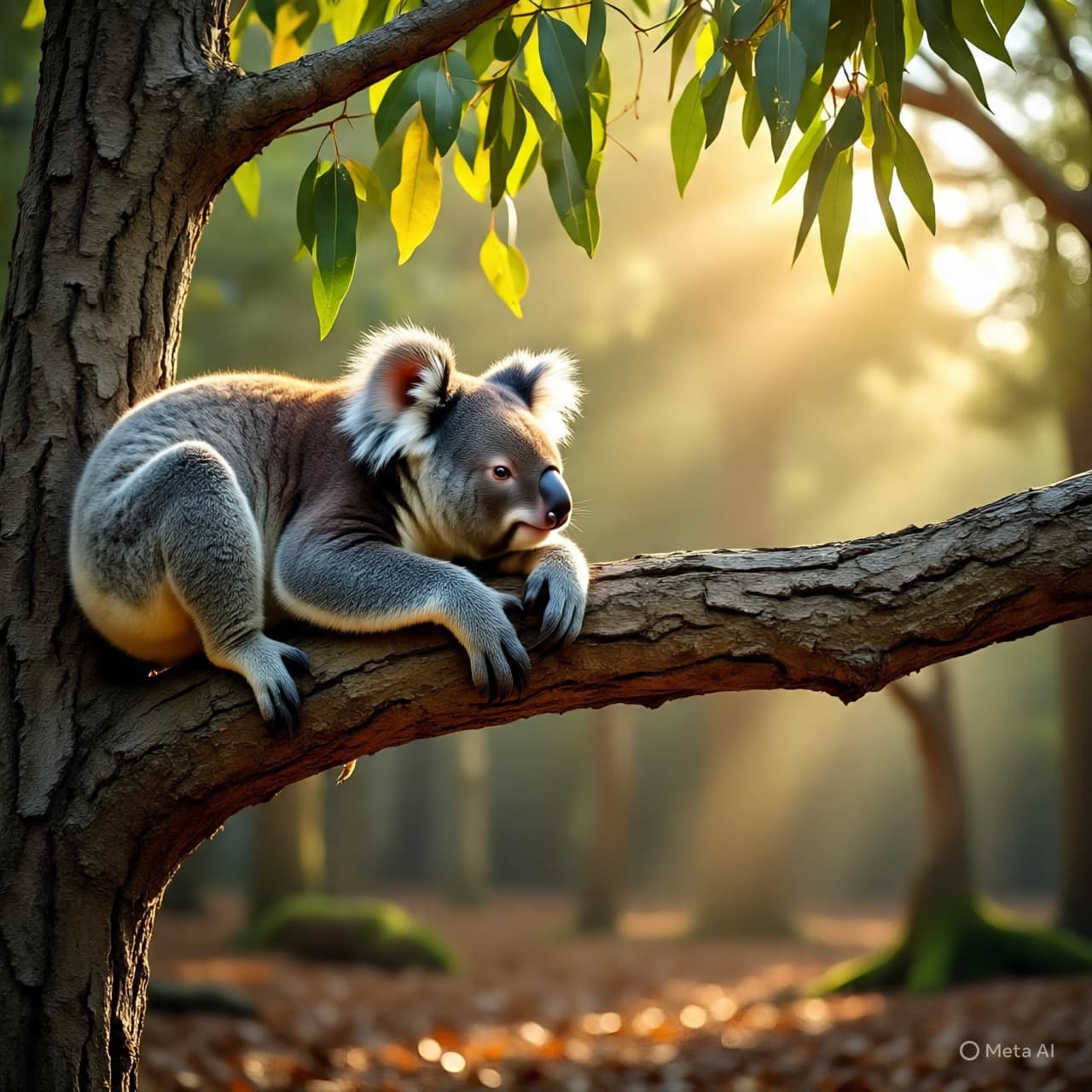
There are mornings in Australia when the eucalyptus trees seem to breathe a little more softly, as if holding their own quiet vigil. In the filtered light of Queensland’s forests, the silhouette of a koala resting high in the branches feels less like a common sight and more like a fragile promise. For years, that promise has trembled under the weight of bulldozers, bushfires, drought, and disease. Now, with new conservation signals emerging in south-east Queensland, hope flickers once again—gentle, cautious, and not without concern.
Recent assessments suggest there may be signs of stabilization, even modest recovery, in parts of the south-east Queensland koala population. After devastating bushfires and accelerating urban expansion pushed the species to alarming lows, renewed conservation measures appear to be offering a measure of relief. Habitat protections have expanded in certain corridors, land-clearing regulations have tightened in some areas, and investment in wildlife hospitals and monitoring programs has increased.
Yet recovery, in ecological terms, is rarely a dramatic ascent. It is incremental, fragile, and often uneven. South-east Queensland has long been one of the nation’s fastest-growing regions. As suburbs stretch outward and infrastructure projects multiply, koala habitats have become fragmented, isolating populations and increasing vulnerability to vehicle strikes and dog attacks. Conservationists acknowledge that while recent data offers encouragement, the broader trajectory remains uncertain.
Disease, particularly chlamydia, continues to affect koala populations across Queensland and New South Wales. Veterinary research and vaccination trials have shown promise, but widespread application remains complex. At the same time, climate variability—marked by hotter summers and unpredictable rainfall—places additional stress on eucalyptus forests, the primary food source for koalas. Trees that struggle to thrive cannot fully nourish the wildlife that depends on them.
Federal and state governments have, in recent years, recognized the koala as an endangered species in eastern Australia. Funding initiatives and habitat restoration projects have followed, accompanied by mapping programs designed to better identify critical koala territories. In south-east Queensland specifically, local councils and environmental groups have collaborated on wildlife corridors intended to reconnect fragmented landscapes.
Still, advocacy groups remain measured in their optimism. They argue that recovery cannot rely solely on policy announcements but must be anchored in enforceable protections and consistent oversight. Some warn that land-clearing approvals continue in areas considered essential for long-term population resilience. Others stress that data transparency and independent monitoring are vital to ensure that reported improvements reflect genuine ecological recovery rather than short-term fluctuations.
Communities across Queensland have also played a role. Volunteer wildlife carers, rescue networks, and local environmental organizations have sustained much of the hands-on effort. From rehabilitating injured animals to planting native trees, these grassroots initiatives reflect a broader cultural attachment to the koala—a species woven into Australia’s national identity.
The question, perhaps, is not only whether the population can recover, but whether the pace of human development can harmonize with ecological preservation. Recovery requires patience. It requires sustained funding beyond election cycles. It demands land-use planning that accounts not only for present needs but for the quiet rhythms of forests that take decades to mature.
For now, the data offers a careful note of encouragement. There are indications that, in certain monitored zones of south-east Queensland, numbers are no longer declining as sharply as feared. That is not yet a triumph, but it is not despair either. It is a reminder that environmental decline, while powerful, is not always irreversible.
In the end, the koala’s future in south-east Queensland remains a work in progress. Authorities continue to assess population trends, and conservation measures remain under review. The coming years will likely determine whether current protections are sufficient to sustain a lasting recovery.
AI Image Disclaimer: Visuals are created with AI tools and are not real photographs.
Source Check — Credible Coverage Identified:
ABC News Australia The Guardian Australia SBS News Brisbane Times Reuters
Published by Banx Network. This article is part of the Banx decentralized media programme, powered by the BXE token on the XRP Ledger.