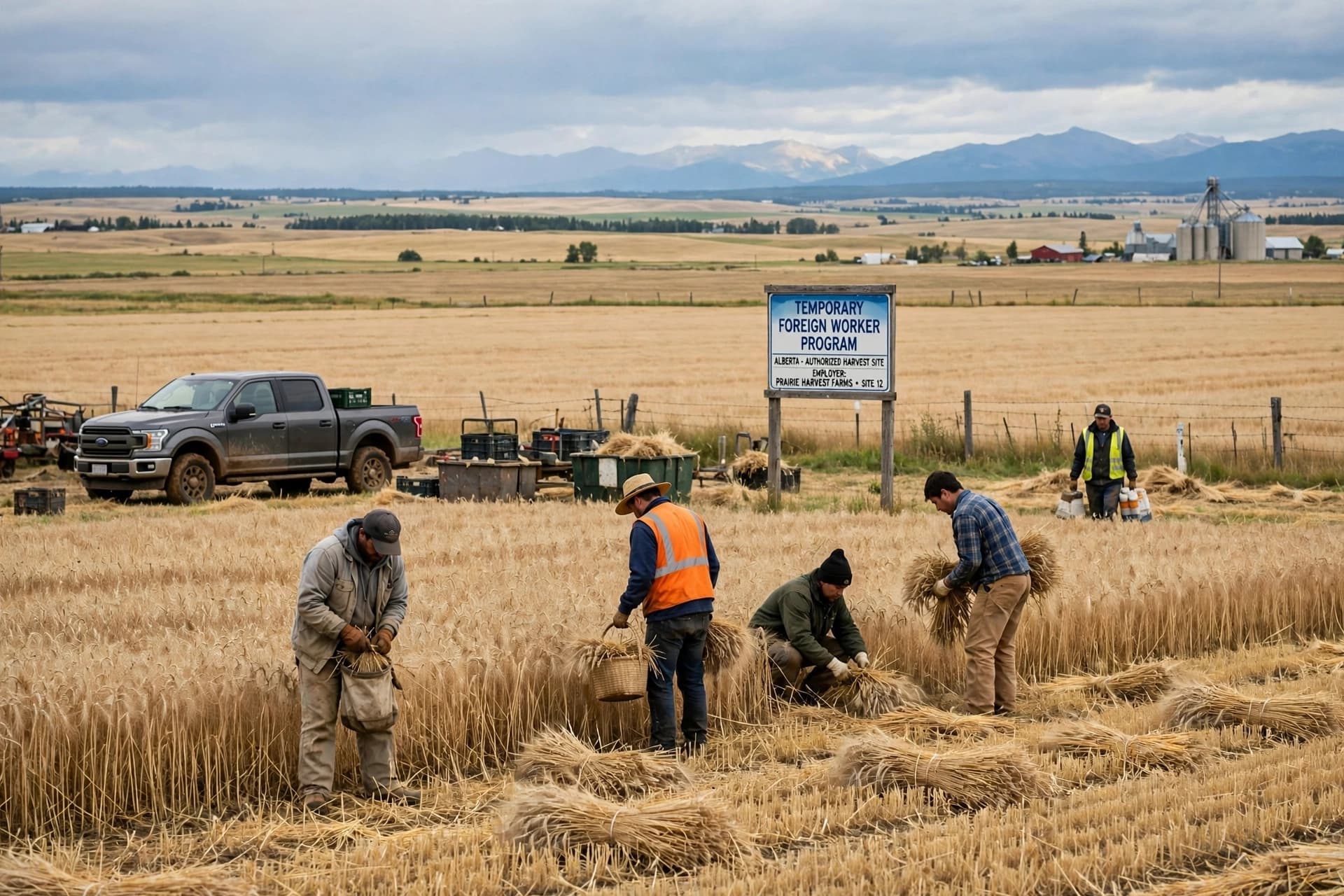
There is a particular irony in a door that is opened for workers and then narrowed for the people who walk through it. Alberta has spent years recruiting temporary foreign workers to fill jobs that employers could not otherwise staff: farms, food processing plants, restaurants, hotels, hospitals in rural communities. The province's economy depends on them. And yet this week, in a referendum that drew attention mostly for rejecting separation, Albertans voted in favor of a set of questions that would restrict those same workers' access to healthcare, education, and social supports .
The questions were non-binding, but their message was clear. One asked whether only Canadian citizens, permanent residents, and those with an "Alberta-approved immigration status" should be eligible for provincially funded services. Another asked whether temporary residents should live in Alberta for twelve months before qualifying for social programs, and whether the province should charge them fees for healthcare and education . Unofficial results showed majorities supporting all of them . Premier Danielle Smith has argued that temporary residents cost the province more in services than they contribute in taxes, saying that for every dollar a guest worker pays, taxpayers cover ten dollars in services .
The numbers, as economists have pointed out, are more complicated. Gillian Petit, an economist, noted that temporary residents also remit taxes to the federal government, which helps fund Alberta's healthcare, meaning their total contribution is likely higher than the province acknowledges. They are also less likely to use healthcare and education resources than the average Albertian, in part because they are younger and healthier and because many, particularly farm workers, do not have access to the services they are being accused of burdening . Senator Paula Simons, speaking in the Senate, was blunter: Alberta is not in the midst of an immigration crisis. In the first quarter of 2026, the province actually saw negative immigration. There are roughly 63,000 vacant jobs .
For the workers themselves, the referendum has produced a particular kind of anxiety. Vanesa Ortiz, a teacher who came to Calgary a decade ago, now works with the Asociación de Mexicanos en Calgary. She worries that the rhetoric will push workers into the shadows and make them more vulnerable to exploitation. "Scapegoating non-permanent residents is not going to lower the cost of living. That's not going to fix our classrooms. They keep essential services open. In many cases, they are front line workers. And now they're being treated as disposable" . Marco Luciano of Migrante Alberta said the immediate reaction from temporary foreign workers was deep concern that they will have to start paying for healthcare. "Even though Alberta voted to stay in Canada, for foreign workers, there's nothing to celebrate today" .
The business community has also expressed unease. The Calgary Chamber of Commerce and the Canadian Federation of Independent Business have both warned that restricting access to services for temporary residents could worsen labor shortages. A poll conducted by the Calgary Chamber with Abacus Data found that 52 percent of businesses were not in favor of changes to current immigration policy . Keyli Loeppky of the CFIB said small business owners are looking for a balance between addressing concerns and maintaining access to a reliable workforce .
There is a legal question beneath the political one. Immigration is a shared jurisdiction, with Ottawa controlling admission and processing criteria. Alberta can govern its own healthcare and education systems, and it could introduce bills that make it harder or more expensive for temporary residents to access them. But the province cannot unilaterally restrict immigration itself . What it can do is make life harder for the people already here, and the referendum has given the government a mandate, of sorts, to try.
For now, the questions have been answered, and the government has signaled its intentions. What remains is the work of turning a plebiscite into policy, and the lives of the workers who will be affected by whatever comes next. They came because Alberta asked them to. Whether they stay, and whether they are treated as people rather than line items in a fiscal calculation, is a question the province has not yet answered.
Image Disclaimer: All images in this article are AI-generated and are not photographs of the individuals or locations mentioned.
Sources: The Guardian, The Globe and Mail, Senate of Canada, National Post
Published by Banx Network. This article is part of the Banx decentralized media programme, powered by the BXE token on the XRP Ledger.