
Key Highlights
- Recent violence in Niger State, Nigeria, resulted in dozens of deaths.
- Armed gunmen attacked remote villages shortly after U.S.-supported airstrikes.
- The ongoing conflict raises concerns about civilian safety amid military operations.
In northern Nigeria, violence rarely arrives without warning. It moves in waves—sometimes announced by distant aircraft, sometimes by the sudden crack of gunfire in the dark. In recent days, that pattern repeated itself with brutal clarity as armed gunmen launched a deadly assault on remote communities in Niger State, resulting in the deaths of dozens of villagers, according to local authorities and eyewitness accounts.
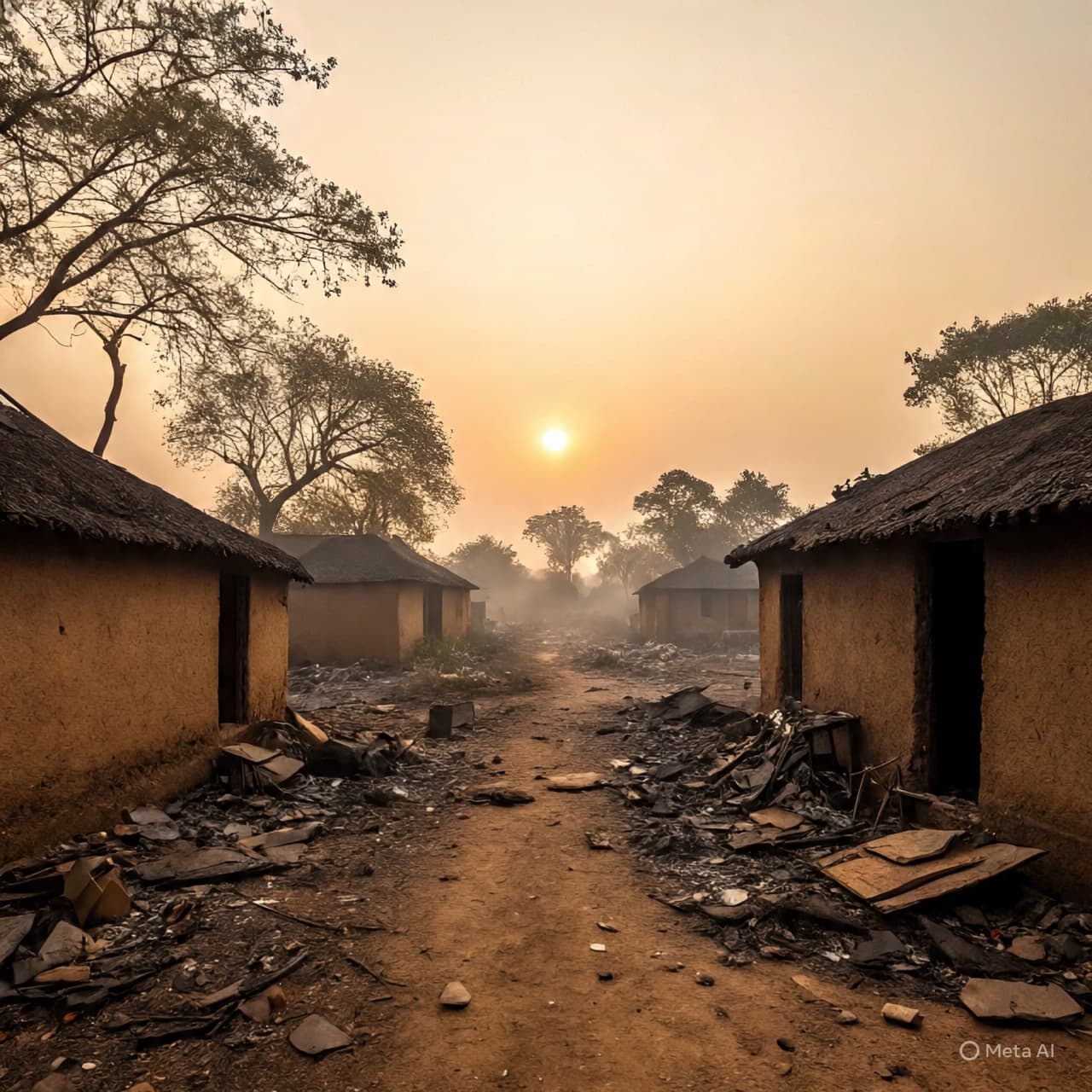
The attack occurred just days after U.S.-supported airstrikes targeted militant positions in the region, raising unsettling questions about the timing of the violence and the precarious situation civilians face between military actions and retaliatory strikes. Survivors recounted the harrowing experience of the assault, describing how the attackers stormed the villages at night, firing indiscriminately, burning homes, and abducting residents as they fled in terror. By morning, the aftermath was grim, with bodies strewn across compounds and farmland, and entire families reported missing.
Northern Nigeria has long been a battleground for armed groups operating in forests and rural corridors. Some of these groups are linked to extremist movements, while others are part of loosely organized criminal networks that engage in kidnapping, extortion, and territorial control. Although military operations have succeeded in pushing these groups from certain strongholds, the consequences for nearby civilian populations are often dire.
The recent airstrikes aimed to disrupt militant activity and degrade their operational capacity. However, Nigerian officials have cautioned civilians to avoid unexploded ordnance and debris left in the wake of these strikes. For communities situated far from the immediate strike zones, the greater danger often arises later—when armed groups retaliate or exploit the chaos created by military actions.
Residents in the affected villages reported that the gunmen arrived with alarming speed and coordination, suggesting they had prior knowledge of escape routes and the local terrain. As of now, no group has claimed responsibility for the attack, and investigators are urging caution against drawing direct conclusions while inquiries are ongoing. Nevertheless, the timing of the assault has intensified fears that military pressure may have merely shifted the violence rather than extinguished it.
For families in Niger State, the broader geopolitical strategies offer little solace. The immediate concern is the void left behind: empty houses, abandoned fields, and an increasing number of rural Nigerians faced with the grim choice between fleeing or risking their lives. Aid organizations have warned that such repeated attacks are accelerating displacement and exacerbating the humanitarian crisis in already vulnerable regions.
As security forces pursue the attackers, villagers are left to bury their dead and count those who have not returned. In this part of Nigeria, peace is not measured by official announcements or military operations, but rather by the nights that pass without the sound of gunfire. For now, that silence remains elusive, leaving communities in a state of fear and uncertainty.
Published by Banx Network. This article is part of the Banx decentralized media programme, powered by the BXE token on the XRP Ledger.



