
Key Highlights
- Recent Earthquake:Japan experienced a significant earthquake, prompting immediate tsunami warnings.
- Preparedness Measures:The nation’s infrastructure and public awareness campaigns showcase its readiness for seismic events.
- Ongoing Monitoring:Scientists are closely observing aftershocks and tectonic patterns to predict future activity.
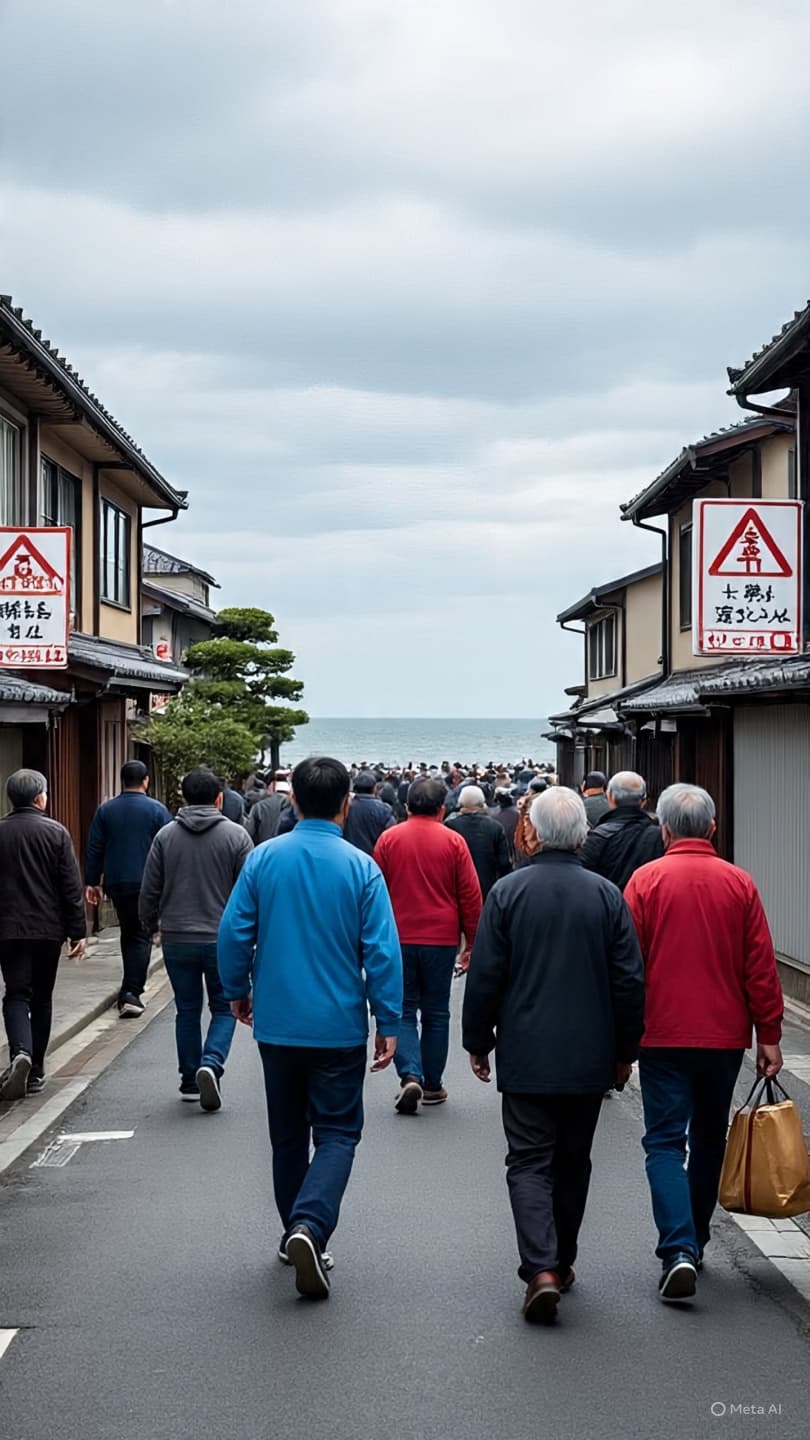
Japan, a nation accustomed to the tremors of its geological reality, recently faced a significant earthquake that has left many on edge. The initial quake triggered a swift response from authorities, who issued tsunami warnings that echoed through coastal communities. Sirens blared, cutting through the daily routine, as residents prepared for potential danger. Some sought higher ground, while others scanned the horizon, waiting for signs of what might come next.
The unease in Japan is not solely rooted in the tremors that have already occurred but in the looming possibility of a second, potentially more powerful quake. Officials have communicated this risk carefully, balancing the need for public safety with the desire to avoid unnecessary panic. Seismic events often occur in sequences, and the earth's tensions rarely resolve in a single motion, making vigilance essential.
Japan's preparedness for such natural disasters is a testament to years of planning and public education. The country has invested heavily in infrastructure designed to withstand earthquakes, and its early warning systems are among the most advanced in the world. When the ground shakes, trains halt, schools adapt, and families reconnect to ensure safety. This choreography of resilience is a hallmark of Japanese society, reflecting a deep-seated understanding of the risks posed by their environment.
However, beneath this surface calm lies a current of anxiety. The memories of past disasters, such as the 2011 Tōhoku earthquake and tsunami, linger in the collective consciousness. Each warning is not merely a notification; it serves as a reminder of the unpredictable nature of seismic activity. As life attempts to return to normalcy, there is a palpable sense of attentiveness, a collective listening for the next tremor.
Scientists are diligently monitoring the situation, analyzing aftershocks and tectonic patterns for insights into future activity. Their work involves interpreting complex data streams and developing probability models to forecast seismic events. Despite these advancements, the inherent uncertainty surrounding earthquakes remains a challenge that even the most sophisticated systems cannot fully mitigate.
As Japan navigates this period of uncertainty, the nation remains in a state of watchful pause. The sea has not risen beyond expectations, and the ground has settled for now. Yet, the specter of a second quake persists—not as a certainty, but as a reminder of the delicate balance between preparedness and unpredictability. Authorities are expected to maintain vigilance while encouraging calm, reflecting the nation’s enduring relationship with the forces that lie beneath.
In the coming hours, updates will continue to shape the narrative, driven by both observation and restraint. Whether the anticipated aftershocks materialize or fade into mere possibility, the response itself tells a story of caution, memory, and a quiet readiness that characterizes Japan's approach to its seismic reality.
Published by Banx Network. This article is part of the Banx decentralized media programme, powered by the BXE token on the XRP Ledger.



