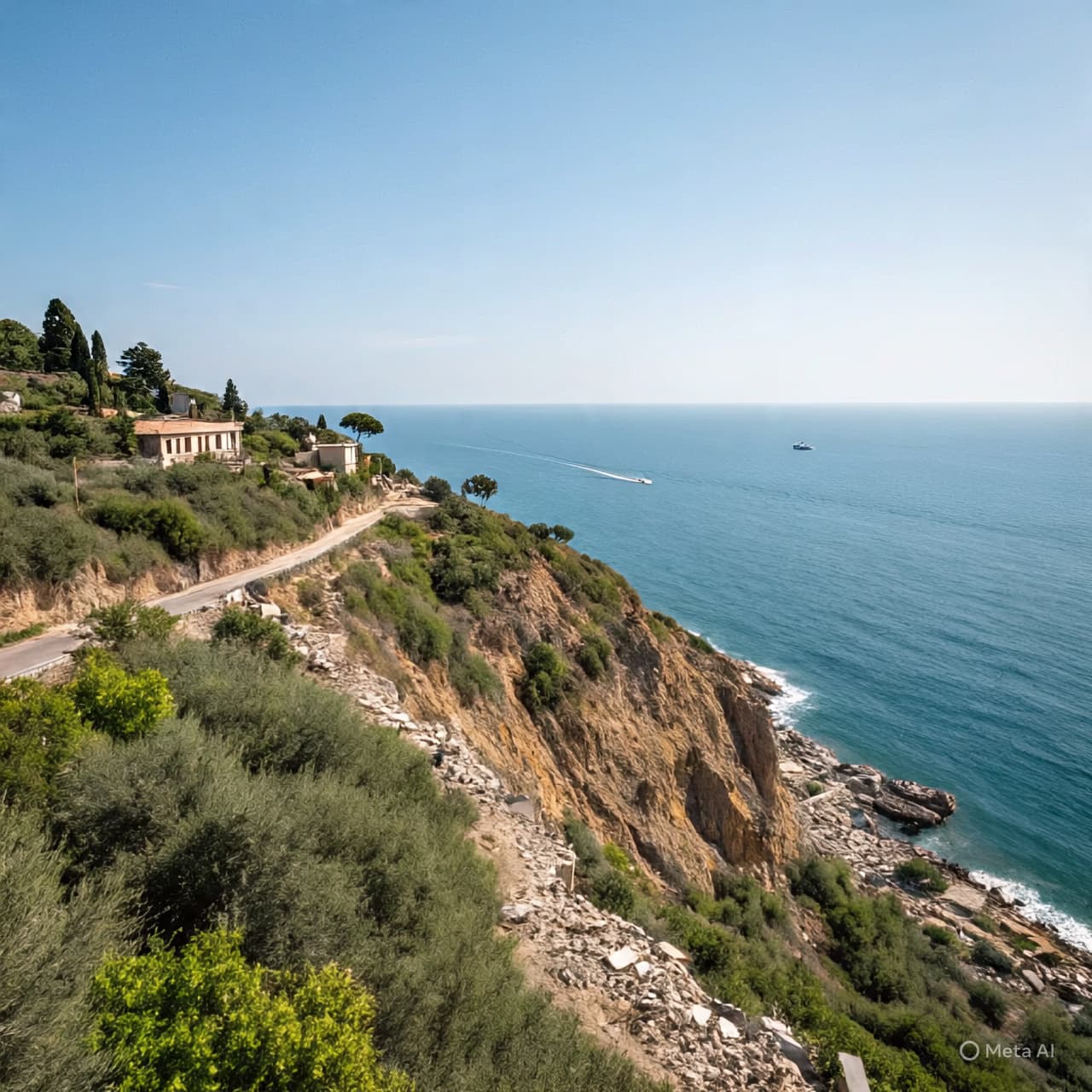
In the soft light before sunrise, when shadows stretch over terraced hills and narrow lanes, the Sicilian countryside usually feels timeless — as though it has endured centuries of history with patient grace. But in the southern town of Niscemi, a quiet morning’s promise was broken by the slow, inexorable groan of earth giving way. What once was solid beneath feet now slips toward the plain, and a community’s rhythms have been unsettled in a way that feels both abrupt and ancient, like memory resurfacing in cracking stone.
Late last week, heavy rains brought by Storm Cyclone Harry struck Sicily with unusual force, saturating soil and unraveling the stability of the hillside that cradles Niscemi. By Sunday, the ground began to move — at first in subtle shifts, then with dramatic effect, forming a chasm more than four kilometres long that now threatens to swallow homes and streets alike.
By mid‑week, more than 1,500 residents had been evacuated from their houses as officials warned that some buildings now teeter precariously on the brink of collapse. A car abandoned in a hurry sits with its front end dangling over a yawning gap, a stark testament to the fragility of what was once firm ground.
Officials describe the situation as active and unpredictable. Fabio Ciciliano, head of Italy’s civil protection authority, has stated that several homes in the most affected zones are uninhabitable and that residents displaced by the landslide may require permanent relocation.
Mayor Massimiliano Conti has repeatedly called conditions “dire.” With rain still falling and the earth continuing to shift, technical surveys and relief operations face ongoing challenges. Roads leading into and out of the town remain closed, complicating access. Schools have been suspended, and families now find themselves sheltering with relatives or in emergency centres as they grapple with an uncertain future.
The national government has declared a state of emergency for Sicily and neighbouring regions including Sardinia and Calabria, releasing initial emergency funding to assist those affected and begin the process of response.
Beyond the immediate crisis lie quieter questions about geological vulnerability and climate patterns that may be intensifying extreme weather events. In a region shaped by hills and sea, the land that has sustained generations can also, when pushed by relentless rain, reveal its weakness.
For the people of Niscemi, the coming days will be defined by careful, practical work: assessing damage, ensuring safety, and beginning the long, quiet task of rebuilding. There are no simple answers in the shadow of a widening chasm, but in the resolve of neighbours helping one another and the measured march of technical response, there is a form of hope. In landscapes both human and geological, stability can be fragile — and the work of restoration is as much about community as it is about soil and stone.
AI Image Disclaimer “Visuals are created with AI tools and are not real photographs.”
Sources (Media Names Only) Reuters The Guardian ANSA AFP Euro Weekly News
Published by Banx Network. This article is part of the Banx decentralized media programme, powered by the BXE token on the XRP Ledger.