The hills that overlook the coastal province of Esmeraldas have long stood as green, silent sentinels above the communities nestled at their feet. They are part of a landscape shaped by tropical humidity and frequent seasonal storms, where the soil is bound together by a thick web of roots and vegetation. Yet this apparent stability is always a delicate balance, a structural equilibrium that can be quietly undermined when days of unceasing rain saturate the ground far below the surface.
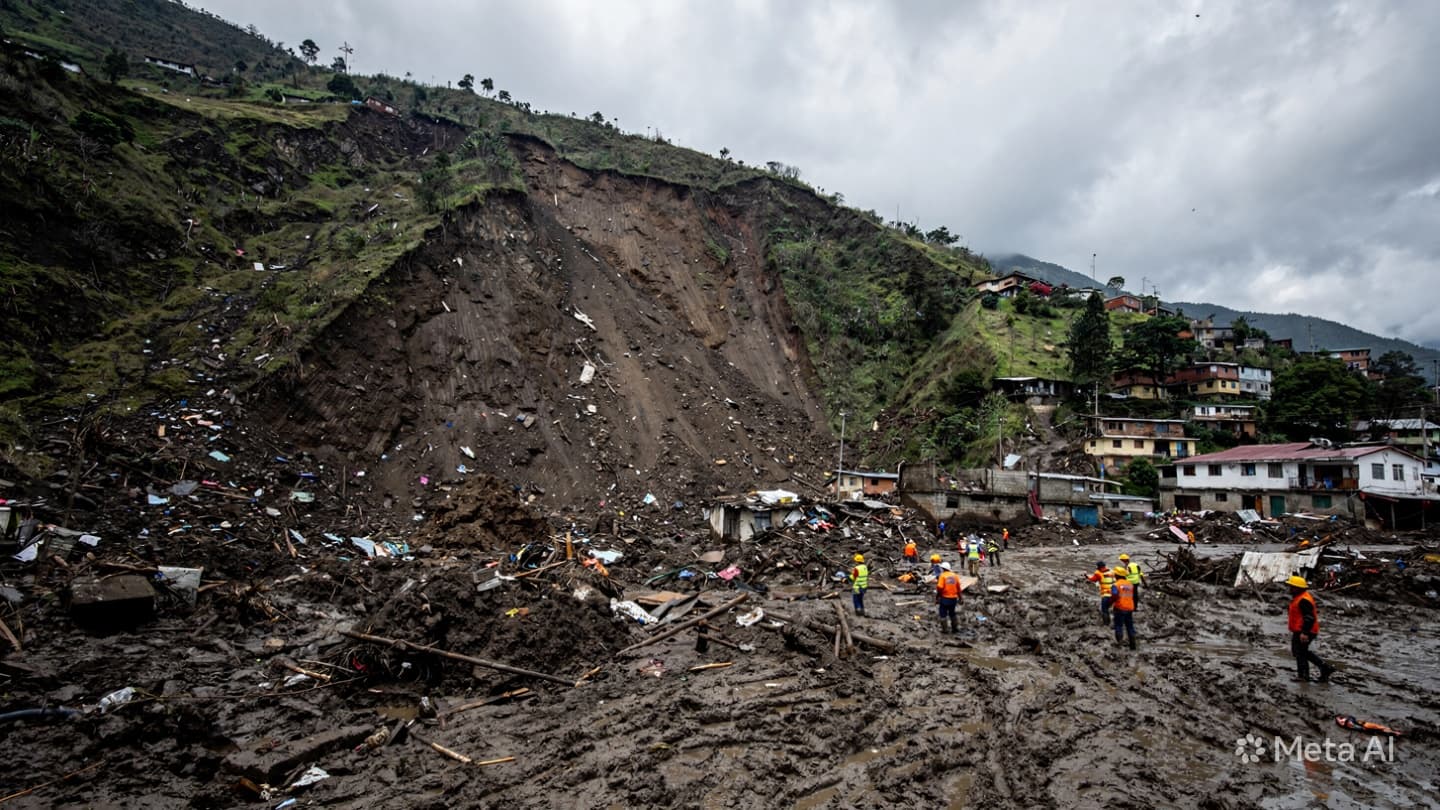
When the earth finally reaches its saturation point, it no longer behaves like solid ground; instead, it turns into a heavy, uncontrollable liquid that obeys only gravity. In a brief, terrifying moment, a large section of a prominent hillside gave way, sliding downward with a dull roar that gave residents little time to react. The descending mass of mud, stone, and torn vegetation tore through a quiet residential neighborhood, completely burying several homes beneath meters of dense debris.
According to initial updates carried by El Comercio Ecuador, the disaster triggered an immediate, desperate mobilization of local emergency services and neighbors. The scene that met the first responders was one of profound disorientation, with familiar landmarks completely erased by a smooth, brown expanse of mud. The primary challenge was not just navigating the unstable terrain, but determining exactly where the buried structures had stood only moments before.
The search and rescue operation began under the constant, exhausting threat of secondary collapses, as the upper slopes remained visibly unstable under the ongoing rain. Firefighters, civil defense volunteers, and specialized search dog teams worked shoulder to shoulder, using simple shovels and their bare hands to dig through the heavy sludge. Every movement was careful and deliberate, guided by the slim hope of finding pockets of air within the crushed timbers of the homes.
For the community of Esmeraldas, a disaster of this scale leaves a deep, lasting scar on the collective memory of the neighborhood. Families gathered at the perimeter of the slide zone, wrapped in blankets and staring into the gray mist as the rescue workers continued their grueling, rhythmic digging. The silence of the crowd was broken only by the sound of shifting mud and the occasional whistle from a team supervisor calling for quiet to listen for buried voices.
As night fell over the disaster site, heavy floodlights were brought in to illuminate the muddy crater, casting long, dramatic shadows across the rescue crews. The transition from day to night brought an added layer of danger, as drop-offs and unstable mud pools became harder to spot in the wet gloom. Yet the operations continued without a pause, driven by a quiet understanding that time is the most critical factor in survival.
The systemic issues exposed by the landslide extend far beyond the immediate hillside, touching upon the precarious nature of urban planning in vulnerable informal settlements. Across the region, thousands of families build their homes on steep slopes due to a lack of affordable land in safer, flat areas, leaving them exposed to the changing weather. This tragedy serves as a stark, unyielding reminder of the urgent need for comprehensive risk assessment and relocation programs.
Ultimately, the event in Esmeraldas is a human tragedy written in the mud and rain of the coastal lowlands, a reminder of our vulnerability to the elements. The immediate rescue phase will eventually give way to recovery and clearing, but the lives altered by the slide will never truly return to their old configurations. For now, the province remains focused on the earth before them, searching for those lost in the sudden descent.
Emergency response coordinators in Esmeraldas confirmed that four residential structures were completely buried by the mudslide, with rescue teams working continuously to locate several individuals reported missing by their families. Temporary shelters have been established in nearby schools to house residents evacuated from neighboring homes deemed at risk of further collapse.
Published by Banx Network. This article is part of the Banx decentralized media programme, powered by the BXE token on the XRP Ledger.