The earth beneath western Turkey shifted in the darkness, reminding us that even in modern times we remain guests of the tectonic realm. Late on October 27 in the town of Sindirgi, within the province of Balıkesir, a magnitude 6.1 earthquake broke the night’s stillness. According to the nation’s disaster-agency AFAD, the tremor struck at 22:48 local time and at a shallow depth of about 6 kilometres—circumstances that amplify the intensity of ground shaking.
Across nearby provinces—İstanbul, Bursa, Manisa and İzmir—people felt the catalog of rumble and urgency that only an earthquake can write.
In Sindirgi, already scarred by previous quakes, at least three damaged buildings and a two-storey shop collapsed. Thankfully, officials say no fatalities have yet been confirmed, though 22 people sustained injuries, mostly from panic-related falls.
The tremor came not as an isolated footnote but as a reprise of strain in a region under constant seismic threat. Western Turkey lies atop major fault lines—so the land remembers, and we are reminded.
As rain began to fall on the shaken town, many residents refused to return indoors, preferring temporary shelter in mosques, sports halls and school buildings. They listened for aftershocks, weighed each groan of the earth, and waited.
In a world where we often assume stability, the ground’s whisper becomes a roar reminding us of fragility and resilience. The buildings that collapsed remind us of what happens when the memory of past quakes isn’t fully translated into stronger walls. The night-watch of residents staying outside speaks to the silent courage of communities confronting the unpredictable.
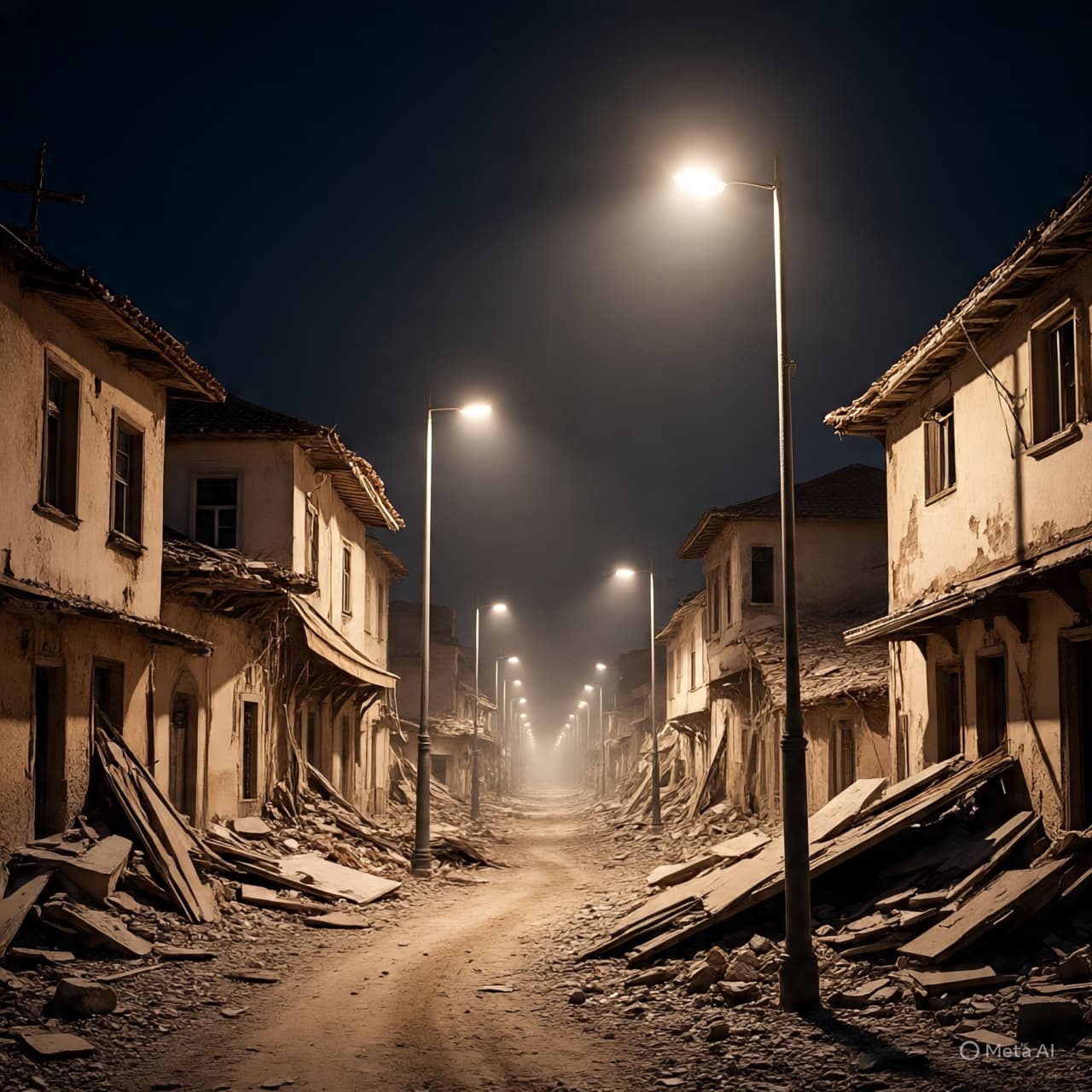
AI image disclaimer: Images generated by AI may not depict real people, places or events with perfect accuracy.
Source : Google news
Published by Banx Network. This article is part of the Banx decentralized media programme, powered by the BXE token on the XRP Ledger.