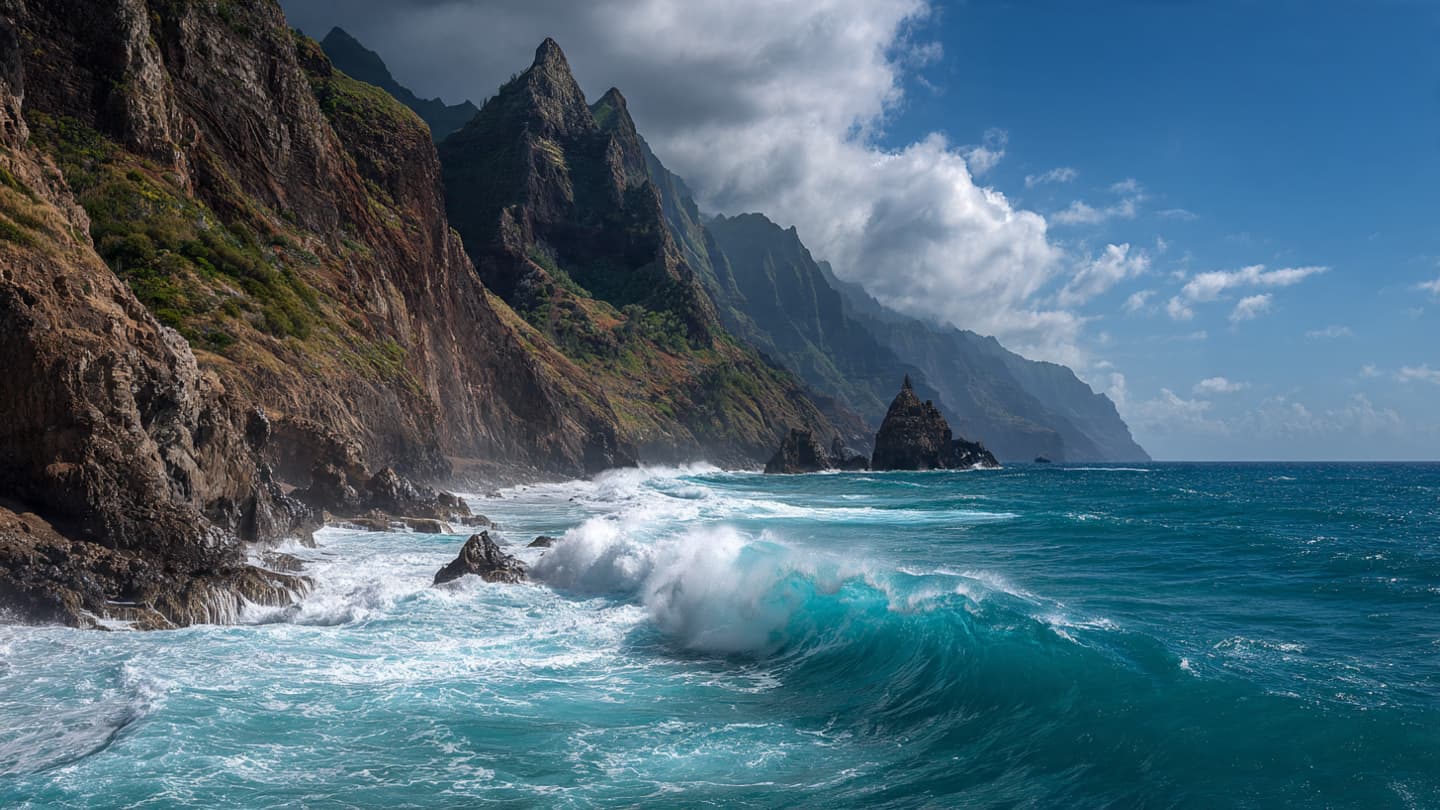
Nature often speaks in quiet rhythms, but at times it reveals its power in sudden and overwhelming ways. Along remote coastlines, where land and sea meet in fragile balance, events can unfold that reshape the landscape in moments, leaving behind stories written in water and stone.
Scientists have confirmed that a massive megatsunami in Alaska ranks as the second largest ever recorded, based on recent analysis of geological and observational data. The event, triggered by a landslide, generated waves of extraordinary height.
Megatsunamis differ from typical tsunamis in both cause and scale. While many tsunamis result from seismic activity, megatsunamis are often linked to large landslides or other sudden displacements of material into water bodies.
In this case, researchers found that the wave reached significant elevations, leaving clear markers along the surrounding terrain. These markers, including stripped vegetation and sediment deposits, have helped scientists reconstruct the event.
The remote location limited immediate human impact, though the scale of the wave has drawn attention to the potential risks in similar environments. Understanding such events is essential for assessing hazards in coastal regions.
Advances in satellite imagery and field studies have allowed researchers to analyze the event in greater detail. These tools provide insight into both the triggering mechanisms and the resulting wave behavior.
Experts note that climate factors, including glacial retreat, may influence the stability of slopes in certain regions, potentially increasing the likelihood of landslides. However, each event remains shaped by a unique combination of conditions.
The findings contribute to a growing body of knowledge about extreme natural phenomena, offering data that can inform future monitoring and preparedness efforts.
As research continues, scientists aim to refine models that can better predict how such events might unfold under different scenarios.
The study of this megatsunami offers a clearer view of nature’s capacity for sudden change, underscoring the importance of ongoing observation and understanding.
AI Image Disclaimer: Images included may be AI-generated visualizations of natural events and are intended for illustrative purposes.
Published by Banx Network. This article is part of the Banx decentralized media programme, powered by the BXE token on the XRP Ledger.