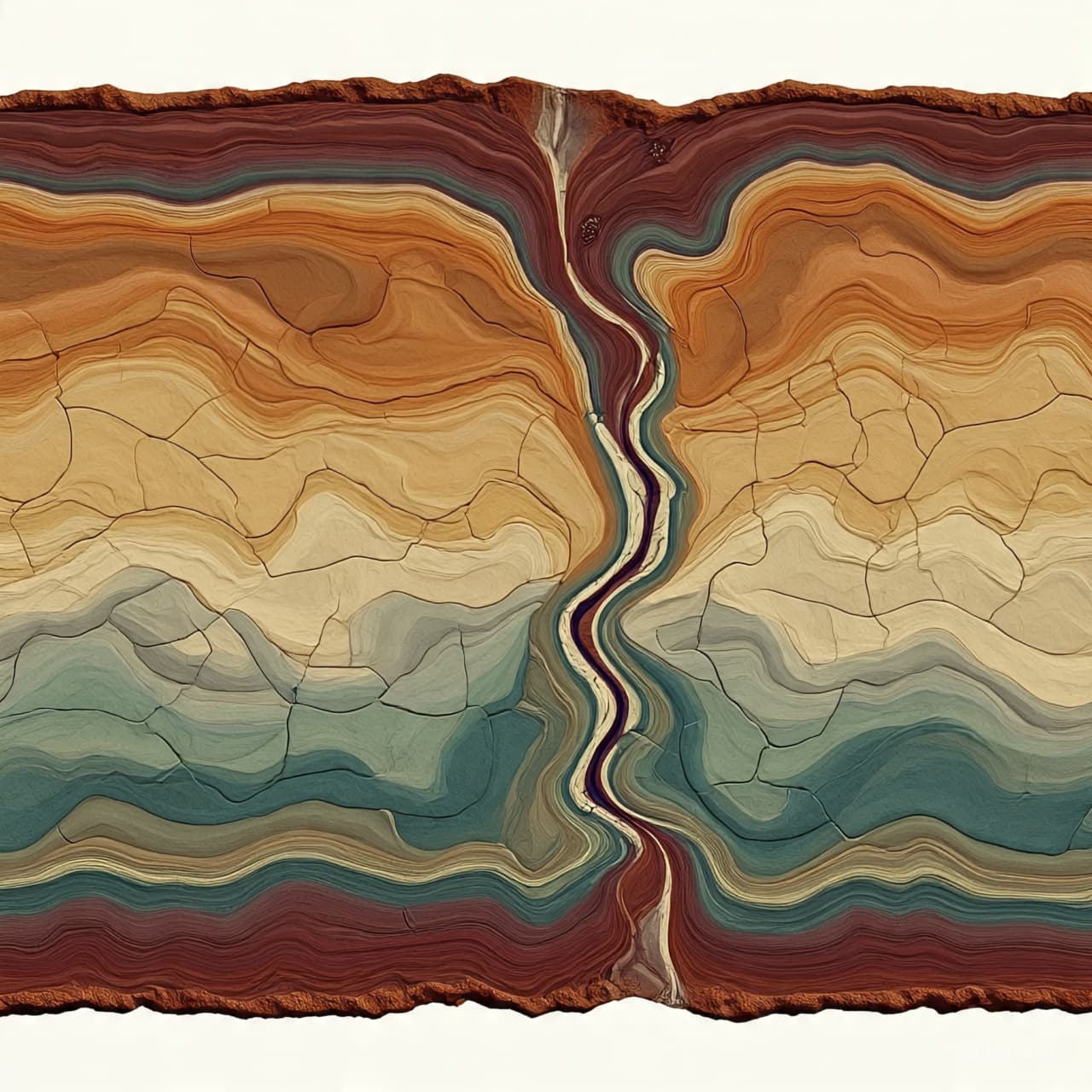
There are moments when the land feels still, as if holding its breath beneath an open sky. In California, that stillness has always carried a quiet tension—an understanding that beneath the surface, the earth is never entirely at rest. Yet what is less visible, less immediately felt, is that even this restlessness may follow a rhythm, shaped not only by tectonic forces but by the slow turning of the seasons.
In recent years, scientists studying seismic patterns across the state have begun to trace a subtle correlation between the timing of earthquakes and the changing environmental conditions that accompany the calendar year. It is not a dramatic shift, nor a simple cause-and-effect, but rather a delicate interplay—one where water, temperature, and pressure move in concert with the deep architecture of faults.
During wetter months, particularly in winter, the ground absorbs rainfall and, in some regions, snowmelt. This added water does more than settle into reservoirs or nourish landscapes; it seeps into the earth, altering the stress conditions along fault lines. In certain geological settings, the increased weight of water and its infiltration into porous rock can slightly change the forces acting on faults, at times making them more prone to small, detectable seismic movements.
Conversely, in the dry stretch of late summer and early autumn, when the soil contracts and groundwater levels fall, the stresses shift again. The absence of water reduces pressure in some layers while redistributing it in others, creating conditions that may either suppress or subtly encourage fault activity depending on location and fault structure. The effect is not uniform across the state, but it is measurable enough to invite deeper inquiry.
Researchers working in fields such as seismology and geophysics emphasize that these seasonal variations do not override the fundamental drivers of earthquakes. The primary forces remain tectonic—the immense, slow motion of Earth’s plates. However, seasonal factors may act as a kind of environmental tuning, influencing the timing and frequency of smaller seismic events and, in rare cases, nudging faults closer to or further from critical thresholds.
The data supporting these observations comes from long-term monitoring networks that record even the faintest tremors. Over time, patterns emerge: slight increases in microseismicity during certain periods, subtle lulls during others. These patterns are often tied to regional conditions—snowpack in mountainous areas, groundwater extraction in agricultural zones, or prolonged drought followed by intense rainfall.
What makes this research compelling is not that it predicts large earthquakes—scientists are careful to stress that such events remain largely unpredictable—but that it reveals how interconnected Earth’s systems are. Weather, water, and rock are not isolated elements but participants in a continuous exchange of force and balance.
It is a reminder that the ground beneath our feet is part of a broader cycle, one that includes clouds gathering over distant ranges, rain falling onto parched soil, and water finding its way into fractures deep below. Each of these movements, however small, contributes to a shifting equilibrium that we rarely perceive in daily life.
Studies indicate that seismic activity in California shows measurable seasonal variation linked to environmental factors such as rainfall, groundwater levels, and surface loading. Scientists note that while these influences can affect the timing and frequency of smaller earthquakes, they do not provide reliable prediction of major seismic events. Research in this area is ongoing as experts continue to refine their understanding of how seasonal processes interact with tectonic forces.
AI Image Disclaimer
Visuals are AI-generated and serve as conceptual representations.
Sources
Nature Science US Geological Survey Los Angeles Times Scientific American
Published by Banx Network. This article is part of the Banx decentralized media programme, powered by the BXE token on the XRP Ledger.