
Key Highlights
- Incident:A severe dust storm caused a multi-vehicle pileup on a southern highway.
- Response:Emergency services faced challenges navigating the storm to assist stranded drivers.
- Impact:The event underscores the dangers of desert weather on transportation networks.
A severe dust storm swept across the southern highway network, leading to a multi-vehicle pileup that caught many drivers off guard. The storm transformed the clear desert air into a thick, orange haze, drastically reducing visibility and creating hazardous driving conditions. As the winds picked up, travelers found themselves navigating through a blinding wall of dust, where even the headlights of their vehicles struggled to penetrate the dense screen of airborne sand.
The sudden loss of visibility resulted in a chain-reaction collision on a primary commercial route. Drivers, who had been traveling at normal speeds, were forced to slow down as they instinctively reacted to the invisible hazards ahead. Unfortunately, those following closely behind were unable to react in time, leading to a cacophony of crumpling metal and shattering glass, quickly absorbed by the howling wind.
Emergency response teams from the Tunisia Civil Defense were dispatched immediately, but their efforts were hampered by the very conditions that necessitated their intervention. Navigating through the blinding dust, rescue vehicles had to proceed with extreme caution to avoid becoming part of the accident themselves. Upon arrival, emergency personnel found stranded travelers seeking refuge in their vehicles, protected from the abrasive winds while awaiting assistance.
Witnessing a rescue operation in such extreme conditions is a testament to the challenges faced by emergency responders. The sand infiltrated every crease of clothing, fouled equipment, and made breathing a conscious effort. Civil Defense workers, equipped with heavy scarves and protective goggles, moved methodically from vehicle to vehicle, assessing injuries and ensuring that passengers were safely transported to larger units. The flickering orange glow of emergency beacons struggled to cut through the haze, providing a fragile point of focus amid the chaos.
This incident highlights the ongoing challenges of managing transportation networks in arid regions, where the transition from safety to danger can occur in mere seconds. The highways in the southern provinces are vital for the movement of goods, including phosphate and agricultural products, and their sudden closure can disrupt local economies. The dust storm serves as a reminder of the desert's unpredictable nature and its impact on human activities.
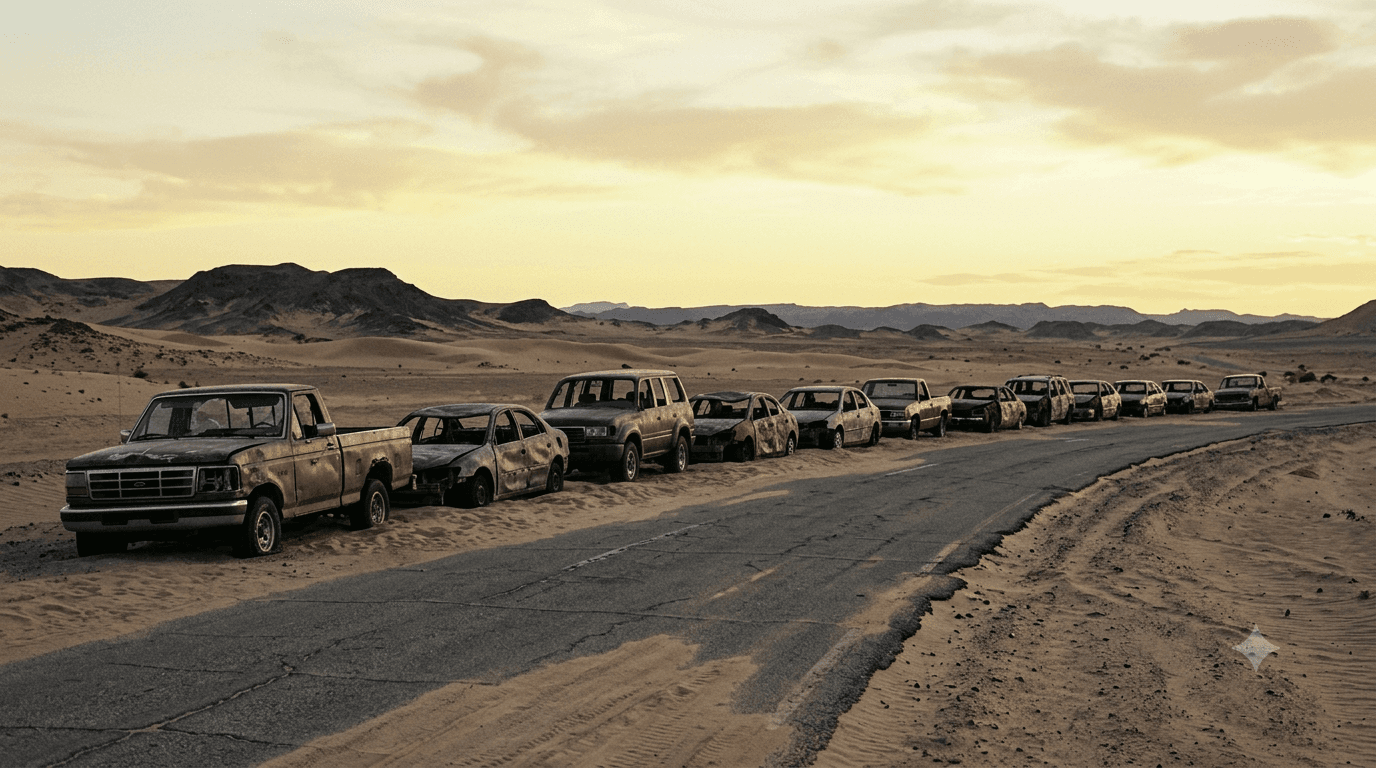
As the storm began to subside, the suspended sand slowly settled back onto the parched earth, revealing the full extent of the pileup. Heavy tow trucks and clearance crews arrived to begin the laborious task of clearing the wreckage, their efforts accompanied by the persistent hiss of shifting sands that continued to drift across the asphalt.
The reopening of the highway marked a return to normalcy, allowing commerce to resume its flow. Damaged vehicles would be repaired, and the long-distance transports would once again traverse the open plains. However, for those caught in the storm, the memory of the blinding wall of dust would linger, a stark reminder of the desert's power and unpredictability.
Published by Banx Network. This article is part of the Banx decentralized media programme, powered by the BXE token on the XRP Ledger.



