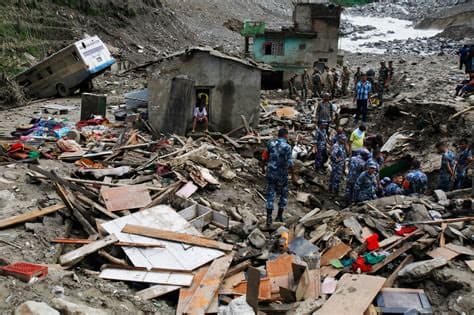
In the low light before dawn settles across Jonglei’s wide clay plains, the breeze that usually carries the laughter of children now carries uncertainty. Dust stirs on paths once trodden by families heading to markets and schools, and the horizon seems quieter than it ought to be. Here in South Sudan’s eastern reaches, where the landscape breathes wide and the Nile’s tributaries trace gentle arcs, life has often felt fragile, shaped as much by seasonal rhythms as by human resolve. But now, that quiet vastness is the stage for an unfolding chapter that has drawn civilians and international workers into a new kind of movement — not toward gathering and rebuilding, but toward distance and safety.
Orders from the South Sudan People’s Defence Forces (SSPDF) have reached deep into Jonglei State, telling all civilians, United Nations personnel, and aid workers to evacuate the counties of Nyirol, Uror, and Akobo within 48 hours. The directive, issued ahead of an impending military operation against opposition forces, reflects a stark moment in a conflict that has seen waves of displacement rise and fall like ripples on a tidal flat.
For many here, mobility has always been linked to survival. But this is a different kind of movement — one driven not by the search for grazing land or water, but by the pressures of war. Families who once moved seasonally to plant and harvest now find themselves packing whatever fits in a sack, following the instruction to head toward government‑controlled areas as fighting looms. The military frames the evacuation as necessary for safety and for “Operation Enduring Peace,” a campaign aimed at halting advances by forces loyal to the Sudan People’s Liberation Army‑in‑Opposition (SPLA‑IO).
The presence of United Nations peacekeepers and humanitarian agencies in Jonglei has long been a quiet testament to years of fragile post‑war recovery, providing clinics, food distributions, and protection for those displaced by recurrent clashes. But the recent instruction asks those same workers to withdraw, even as the needs of civilians grow — an irony not lost on communities already strained by repeated waves of conflict and displacement.
In parts of Jonglei, the conflict has already reshaped daily life. Reports from local and international sources suggest that more than 180,000 people have been forced from their homes, many seeking refuge in neighbouring counties or across borders. In dusty camps and makeshift settlements, mothers cradle infants under stark skies, elders sit beside remnants of what once were homes, and the silence of fields once green with sorghum now hangs heavy.
The United Nations Mission in South Sudan (UNMISS) has underscored its concern, stressing that peacekeepers continue efforts to mitigate tensions where possible, even as staff preparation for relocation unfolds. Leaders from UN agencies have called for restraint and dialogue, urging South Sudanese parties to recommit to peace agreements that have, until now, offered the hope of stability in a country that remains young and deeply tested.
This moment in Jonglei carries echoes of earlier chapters, when hopes for peace were sealed with accords and the promise of shared governance. But the refrain of conflict has returned, and with it the difficult decision for civilians and international staff alike: to stay and risk becoming caught in the crossfire, or to depart in search of safety that feels too distant. What unfolds in the coming days may well shape not just the geography of displacement, but the contours of lives defined long enough by uncertainty and loss.
AI Image Disclaimer
Visuals are created with AI tools and are not real photographs.
Sources (Mainstream / Credible)
1. Reuters 2. Democracy Now 3. Anadolu Agency 4. Radio Tamazuj 5. The Jerusalem Post
Published by Banx Network. This article is part of the Banx decentralized media programme, powered by the BXE token on the XRP Ledger.