In the early hours before the sun fully brushes the horizon with light, there is a quiet that wraps around cities and plains alike — an interlude between the night’s hush and the busy hum of morning. It is in such pauses that we often explore paths not taken and contemplate the space between hope and reality. So it is with the widening conflict between the United States, Israel and Iran: a moment where the echoes of diplomacy seem distant, and the reverberations of military action loom large. Decisions once framed as possibilities now rest in the realm of hard choice, and the words whispered between leaders carry the weight of lives and landscapes beyond their capitals.
President Donald Trump, in the midst of a series of joint U.S.–Israeli airstrikes on Iranian targets, has delivered a clear and unmistakable message: it is “too late” for talks to defuse the conflict. Speaking in tones that meshed strategic resolve with blunt finality, Mr. Trump dismissed the idea that negotiations might still play a role now that major elements of Iran’s military infrastructure — its air defense, air force, navy, and leadership — have been substantially degraded. His words, shared on social media and echoed in public remarks, mark a shift from earlier suggestions of openness to dialogue toward a focus on the prosecution of military objectives.
Only days earlier — before the current campaign erupted — there had been glimpses of a different posture. In an interview with The Atlantic, Mr. Trump had acknowledged willingness to engage in talks with Tehran’s newly constituted leadership, suggesting that earlier diplomatic overtures might have been useful. Yet, as events overtook those intentions, the tone hardened, closing the chapter on near-term diplomacy and reinforcing the sense that the momentum of war has supplanted the cadence of negotiation.
For many observers, this evolution underscores not only the unpredictability of geopolitics but also the fragility of diplomatic windows when conflict escalates swiftly. Iran’s own representatives, including its ambassador to the United Nations in Geneva, have signaled that no contact has been made with Washington about peace talks since the onset of military operations — a development that reinforces the president’s refrain and highlights the absence of a diplomatic bridge between the capitals at this stage.
In Tehran, as air defense systems and strategic centers remain under pressure from continued U.S.–Israeli air campaigns, explosions and blaring alerts have become part of daily soundscapes. The physical toll on infrastructure and the psychological strain on civilians have been palpable, prompting international concern and underscoring the broader human dimensions of a conflict that shows little sign of early resolution.
The shift from a tentative sense of possible dialogue toward an emphasis on military action is not merely semantic. It shapes the expectations of allies, adversaries, and citizens across the globe. Nations that once hoped for quick de-escalation surveys now brace for extended campaigns, and families — both in the United States and across the Middle East — navigate daily life with an awareness that the horizon ahead is clouded by uncertainty.
Yet even in the midst of this immensity, there is a tapestry of voices advocating for every conceivable outcome — some urging restraint, others calling for resolute defense of allied interests, and still others imploring leaders to preserve the possibility of future dialogue once hostilities settle. These perspectives remind us that, in times of conflict, human hopes and concerns swirl just beneath statements of strategy and policy, lending richness to the way we understand choices made at the highest levels.
For now, as the day unfolds and the conflict widens, the chapter of immediate diplomacy appears to have closed. Leaders on both sides have voiced positions that suggest little room for compromise in the current phase, even as international efforts at de-escalation continue in other forms.
In continued developments, President Trump has reiterated that it is too late for Iran to seek talks to avert or pause the ongoing hostilities, following a series of vigorous military strikes by U.S. and Israeli forces on Iranian military infrastructure. Tehran’s leadership has not directly sought out renewed negotiations, even as missiles and drones continue to be exchanged across the region.
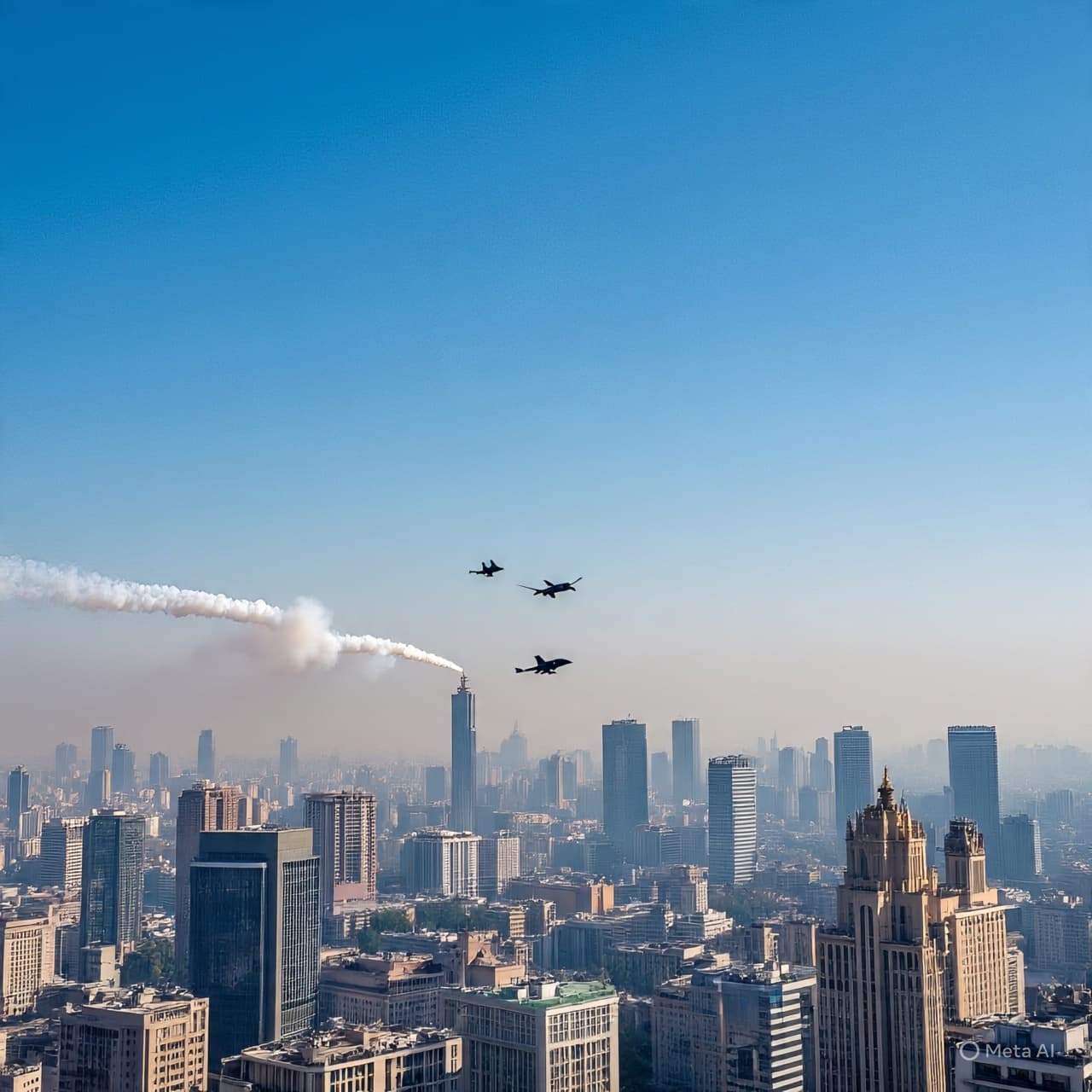
AI Image Disclaimer Illustrations were produced with AI and serve as conceptual depictions.
Sources The Guardian Reuters (via related coverage) Times of India AFP reporting (via Aaj English TV) Associated Press (via expanded updates)
Published by Banx Network. This article is part of the Banx decentralized media programme, powered by the BXE token on the XRP Ledger.