
Opening
There are lights in the universe that feel constant—not because they never change, but because their changes unfold over spans far beyond human time. Galaxies glow across millions, even billions of years, their brightness a steady presence in the vast dark.
And yet, every so often, something shifts. A light that once seemed unwavering begins to fade—not gradually across ages, but within a single human lifetime. In such moments, the universe feels closer, not in distance, but in immediacy.
---
Body
Astronomers have observed a distant galaxy whose brightness has diminished by nearly twentyfold over just two decades, a change that is prompting new questions about the behavior of supermassive black holes and the galaxies they inhabit.
Galactic brightness is often influenced by activity at its core, where supermassive black holes reside. These immense objects, millions to billions of times the mass of the Sun, can power active galactic nuclei when they consume surrounding matter. As material falls inward, it heats up and emits vast amounts of energy, causing the galaxy’s center to shine intensely.
What makes this recent observation unusual is the speed of the change. Typically, such processes unfold over long timescales, making noticeable variations rare within a few decades. The observed fading suggests that the flow of matter into the black hole may have slowed dramatically—or altered in ways not yet fully understood.
The discovery was made through long-term monitoring, combining observations taken years apart. By comparing these data points, researchers were able to trace the decline in brightness with a level of clarity that would not have been possible in shorter studies.
This raises broader questions about how stable these galactic processes truly are. If a galaxy’s central engine can dim so quickly, it suggests that the mechanisms driving black hole growth and energy output may be more dynamic than previously assumed.
Scientists are now considering several possibilities. Changes in the accretion disk—the swirling material around the black hole—could alter how energy is emitted. Alternatively, obscuring material such as dust could temporarily block the light, creating the appearance of fading.
Each explanation carries different implications for how galaxies evolve over time. Understanding which is correct may help refine models of cosmic development, offering insight into how galaxies grow, change, and interact with their environments.
What remains clear is that the universe continues to challenge expectations. Observations like this remind researchers that even well-established theories must remain open to revision when new evidence emerges.
---
Closing
Further observations are expected to monitor the galaxy and determine whether its brightness stabilizes, continues to decline, or perhaps even returns. The findings will contribute to ongoing efforts to better understand the behavior of supermassive black holes.
For now, the fading light stands as an open question—one that will be explored not in haste, but through continued observation and careful study.
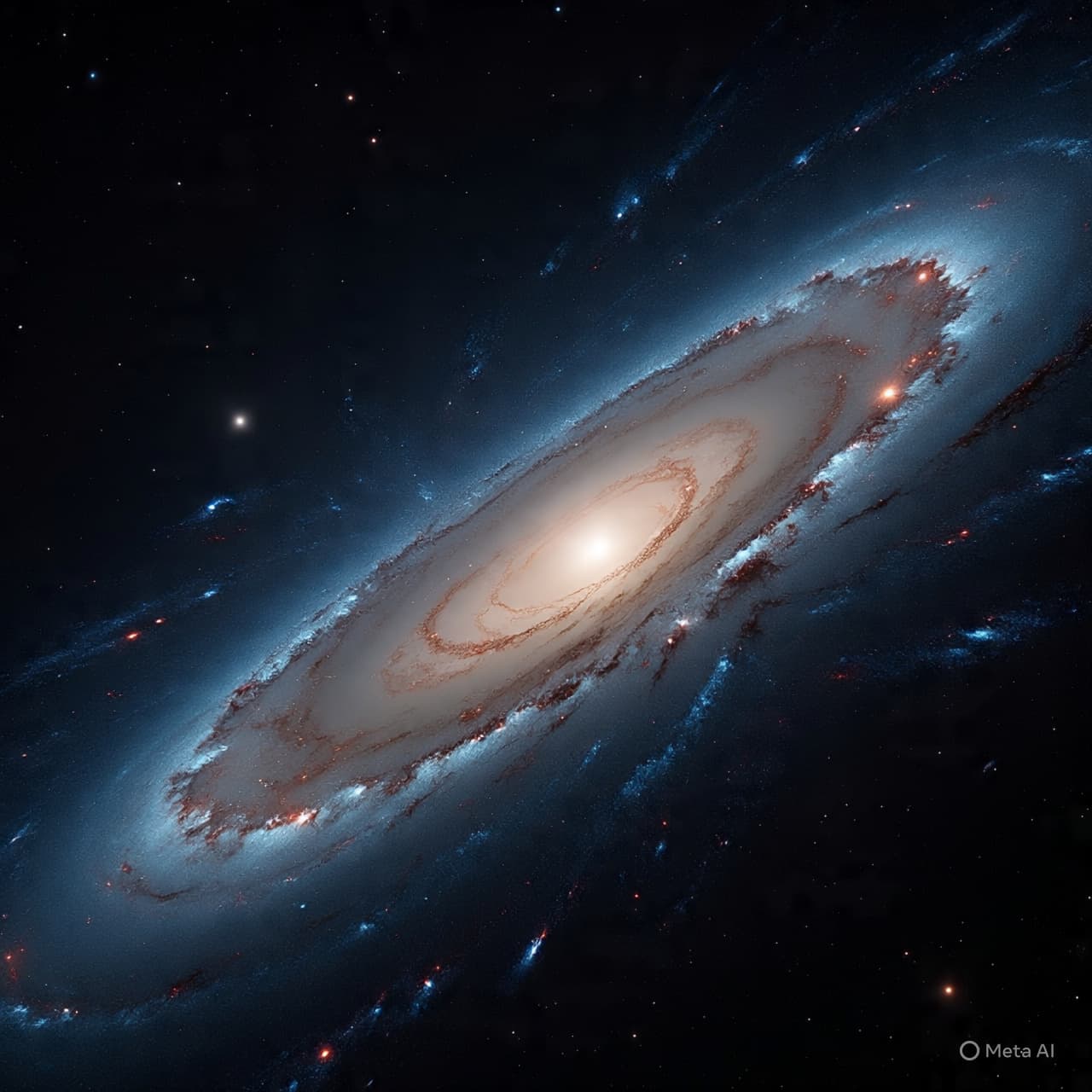
AI Image Disclaimer Illustrations were produced with AI and serve as conceptual depictions.
Source Check
Here are credible sources available for this topic:
1. NASA 2. Reuters 3. BBC News 4. Space.com 5. Scientific American
Published by Banx Network. This article is part of the Banx decentralized media programme, powered by the BXE token on the XRP Ledger.



