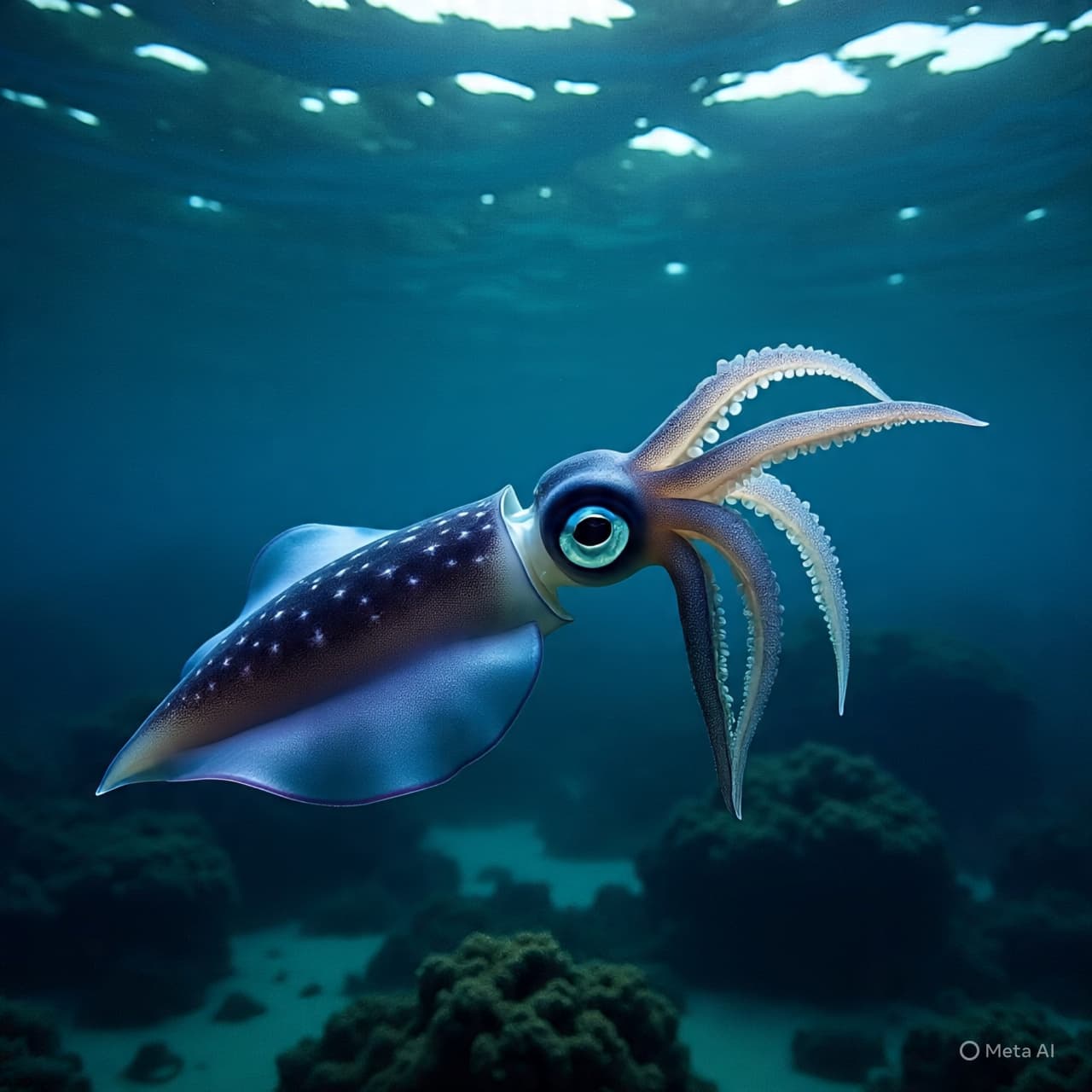
Far below the surface, where sunlight dissolves into blackness and pressure reshapes biology itself, the vampire squid has survived for millions of years largely unchanged. It drifts rather than hunts, glows rather than flees, and thrives where oxygen is scarce. Until now, much of what made this creature possible remained a mystery.
That mystery has begun to lift.
Scientists have successfully sequenced the genome of the vampire squid for the first time, opening a rare genetic window into one of the ocean’s most enigmatic animals. Neither a true squid nor an octopus, the species occupies a lonely branch on the evolutionary tree, preserving traits that date back to some of the earliest cephalopods.
The genome reveals how the vampire squid adapted to life in extreme environments known as oxygen minimum zones. Unlike its faster, more aggressive relatives, it relies on slow metabolism, efficient energy use, and unique proteins that allow it to function where many marine animals cannot survive. Its DNA carries instructions for resilience rather than speed.
Researchers were particularly struck by genes linked to bioluminescence and sensory perception. In a world without light, the vampire squid produces soft blue glows not for spectacle, but for defense. Its genome shows how those light-producing systems evolved alongside heightened sensitivity to faint environmental cues.
The sequencing also helps clarify long-standing questions about cephalopod evolution. The vampire squid’s genetic makeup bridges a gap between ancient shelled ancestors and modern soft-bodied species. In evolutionary terms, it is less an oddity and more a living archive.
What makes this breakthrough notable is not just what was found, but how rarely such data becomes available. Deep-sea animals are notoriously difficult to study, let alone sample at the genetic level. Each genome sequenced from these depths adds a missing chapter to Earth’s biological history.
Scientists say the findings could have broader implications, from understanding how life adapts to low-oxygen conditions to informing future studies of climate change as oxygen-poor zones expand in modern oceans. The vampire squid’s survival strategy may soon feel less exotic — and more instructive.
For decades, this animal was known mainly for its name and its silhouette. Now, line by line, its genetic story is being read for the first time.
In the deep sea, secrets are not given freely. But occasionally, evolution allows one to surface.
Published by Banx Network. This article is part of the Banx decentralized media programme, powered by the BXE token on the XRP Ledger.