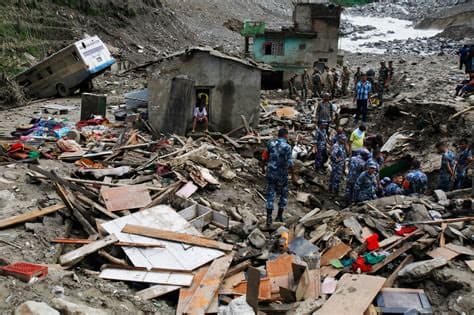
In the hush before dawn, where the horizon meets the promise of another day, the reverberations of explosive conflict can shift the arc of distant lives and global relations alike. A war that once seemed confined to strategic calculation and geopolitical rhetoric now ripples outward, touching the far reaches of societies and the quiet certainty with which communities plan their futures.
What began as a remarkable escalation in military pressure — a joint U.S.–Israeli air campaign striking multiple Iranian nuclear and military targets — has unfolded into open conflict across the Middle East. In the aftermath of strikes that reportedly resulted in casualties among Iran’s leadership and damage to key facilities, Tehran responded in force, launching a wave of missiles and drones at U.S. military bases stationed in Bahrain, Kuwait, Qatar, Iraq, Jordan and beyond.
The genesis of the confrontation was starkly articulated by U.S. President Donald Trump, who framed the offensive as “major combat operations” aimed at obliterating Iran’s missile systems, naval assets and other capabilities — language that resonated with an almost visceral rhetoric of destruction. Trump’s address urged not only military victory but also a call for the Iranian people to rise up against their government, casting the campaign as both strategic and ideological.
From Tehran’s perspective, the counteroffensive was declared necessary “to defend the country,” a stark but familiar refrain in the theatre of global conflict. Iran’s leadership framed its missile strikes as responses to what they described as violations of its sovereignty and violations of international law — a window into how nations interpret their responsibilities when under attack.
For servicemembers stationed at U.S. bases across the Gulf, the impact of Iran’s retaliation was felt in the thunder of incoming missiles and the activation of air defenses. While exact figures on casualties and damage vary across reports, the escalation has brought renewed urgency to concerns about regional stability and global security.
In capitals and capitals’ embassies alike, diplomats are treading a careful path through this storm of action and reaction. Global leaders called for restraint even as military commanders prepared for the possibility of a prolonged confrontation. Civilians far from the theatre of war watched economic markets — particularly energy and travel — fluctuate in response to the uncertainty that conflict invariably brings.
In more human terms, families and communities on both sides of the conflict find themselves adjusting to a new normal where the distant rumble of war enters the everyday lexicon. For some, evacuation orders and advisories have replaced routine plans for work or school; for others, the presence of foreign troops and the threat of aerial activity are stark reminders that geopolitical shifts can swiftly reshape life on the ground.
The unfolding situation demonstrates the complex calculus of modern conflict: military force as deterrence, rhetoric as justification, and response as strategy. Each action begets another reaction, and what begins as a battle over strategic targets can quickly extend into a broader narrative about national identity, alliances, and the limits of power.
In clear terms, U.S. and Israeli forces launched a major military operation against Iran’s nuclear and military infrastructure. In retaliation, Iran conducted missile and drone strikes targeting U.S. military bases across the region. The conflict has heightened regional tensions and prompted global calls for de-escalation even as military dynamics continue to unfold.
AI Image Disclaimer Visuals are created with AI tools and are not real photographs.
Sources Reuters BBC News The Guardian CNN The New York Times
Published by Banx Network. This article is part of the Banx decentralized media programme, powered by the BXE token on the XRP Ledger.