Some of science's most enduring questions resemble distant stars—visible for generations yet never fully reached. Each discovery does not erase the mystery but gently redraws its outline, inviting another generation of researchers to look again. That spirit continues to shape the study of black holes, where a newly proposed theory offers fresh insight into a puzzle that has challenged physicists for nearly fifty years.
The research builds upon Stephen Hawking's groundbreaking work from the 1970s, when he proposed that black holes are not entirely black but emit tiny amounts of thermal radiation. Known today as Hawking radiation, the theory transformed modern physics by connecting gravity, quantum mechanics, and thermodynamics. Yet Hawking's original mathematical framework primarily described black holes that remained in equilibrium rather than those constantly changing through growth, mergers, or evaporation.
Researchers led by physicist Abhay Ashtekar at Penn State University have introduced a revised theoretical framework that extends black hole thermodynamics to evolving, or dynamic, black holes. Instead of relying solely on the traditional concept of an event horizon, the new model centers on a "dynamical horizon," allowing scientists to describe black holes as they naturally change over time.
According to the researchers, this updated approach better reflects how black holes behave throughout the universe. Black holes frequently gain mass by absorbing surrounding material, merge with other black holes, and may gradually lose energy through Hawking radiation. The revised model incorporates these changing conditions while remaining consistent with the established laws of thermodynamics.
The work also addresses a longstanding limitation that has challenged physicists since Hawking introduced his original theory. By describing evolving black holes rather than only idealized static ones, the framework provides scientists with a broader mathematical tool for studying some of the universe's most extreme environments. Although it does not completely resolve the black hole information paradox, it represents meaningful progress toward understanding the relationship between gravity and quantum physics.
The findings arrive during a period of rapid advances in black hole research. Recent observations from gravitational-wave detectors and space telescopes have provided increasingly detailed evidence about black hole mergers, magnetic fields, and surrounding environments, giving theorists new opportunities to compare mathematical predictions with astronomical observations.
Scientists emphasize that the proposal remains a theoretical development published in the peer-reviewed journal Physical Review Letters. Future studies and observational evidence will continue testing how well the framework explains the behavior of real black holes across different cosmic conditions.
As the study of black holes continues to bridge the worlds of relativity and quantum mechanics, each advance reminds researchers that even the universe's darkest regions can illuminate fundamental questions about nature. The new theory adds another carefully examined step toward understanding phenomena that have fascinated physicists for decades.
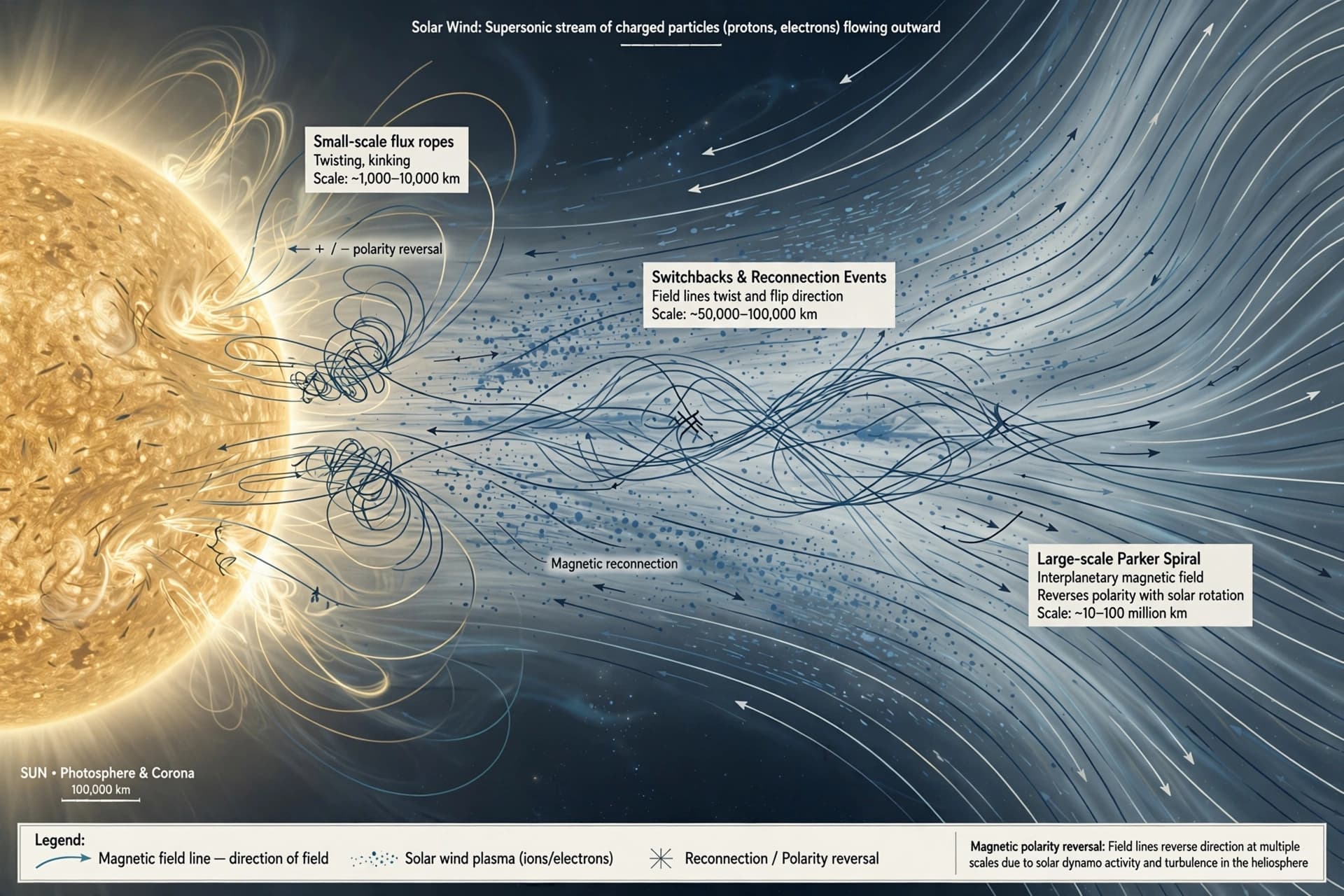
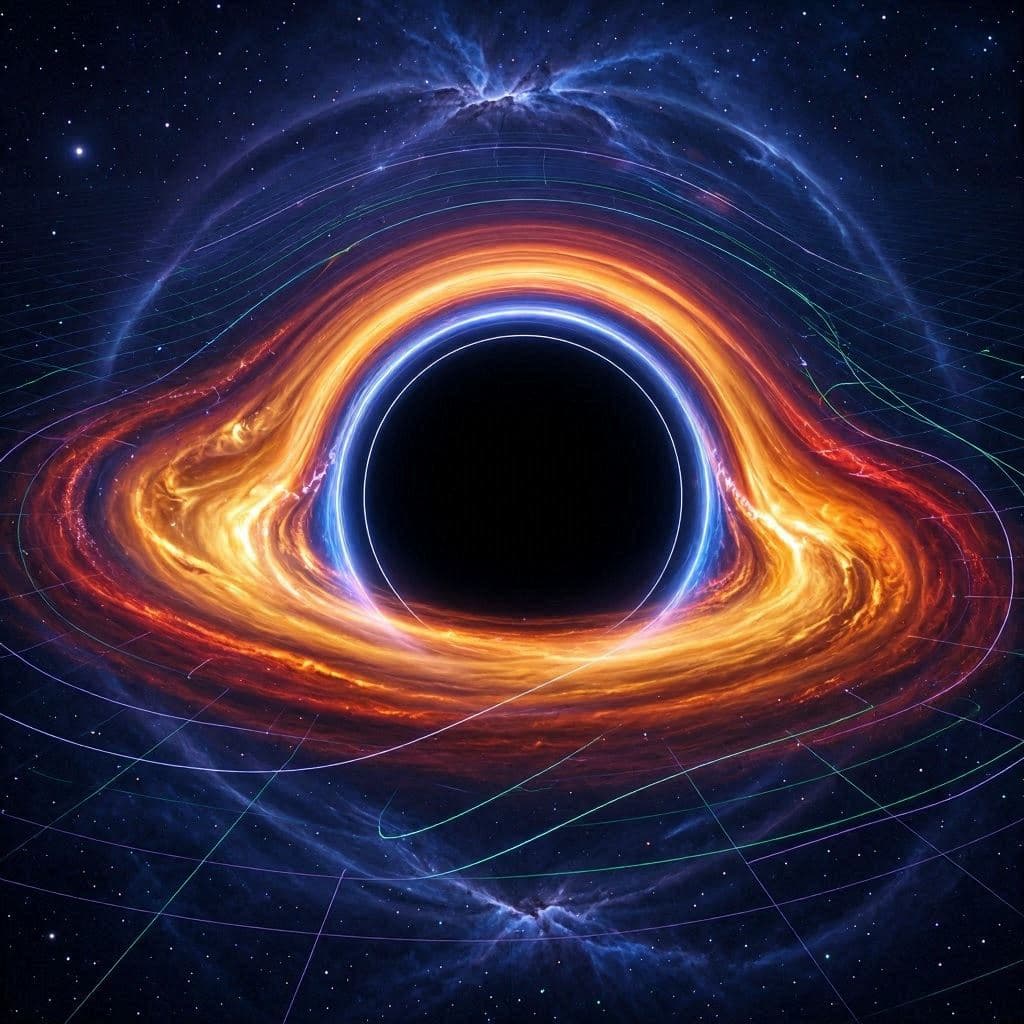
AI Image Disclaimer: The accompanying illustrations are AI-generated visual representations inspired by the scientific topic and are not actual observations from telescopes or simulations used in the research.
Sources (Verified) Space.com Penn State University Physical Review Letters Nature
Published by Banx Network. This article is part of the Banx decentralized media programme, powered by the BXE token on the XRP Ledger.