
Key Highlights
- Hungary's election campaign is in its final days, with significant public engagement.
- Opposition figures emphasize change, while the ruling party focuses on stability.
- The atmosphere reflects deep national divisions and hopes for renewal.
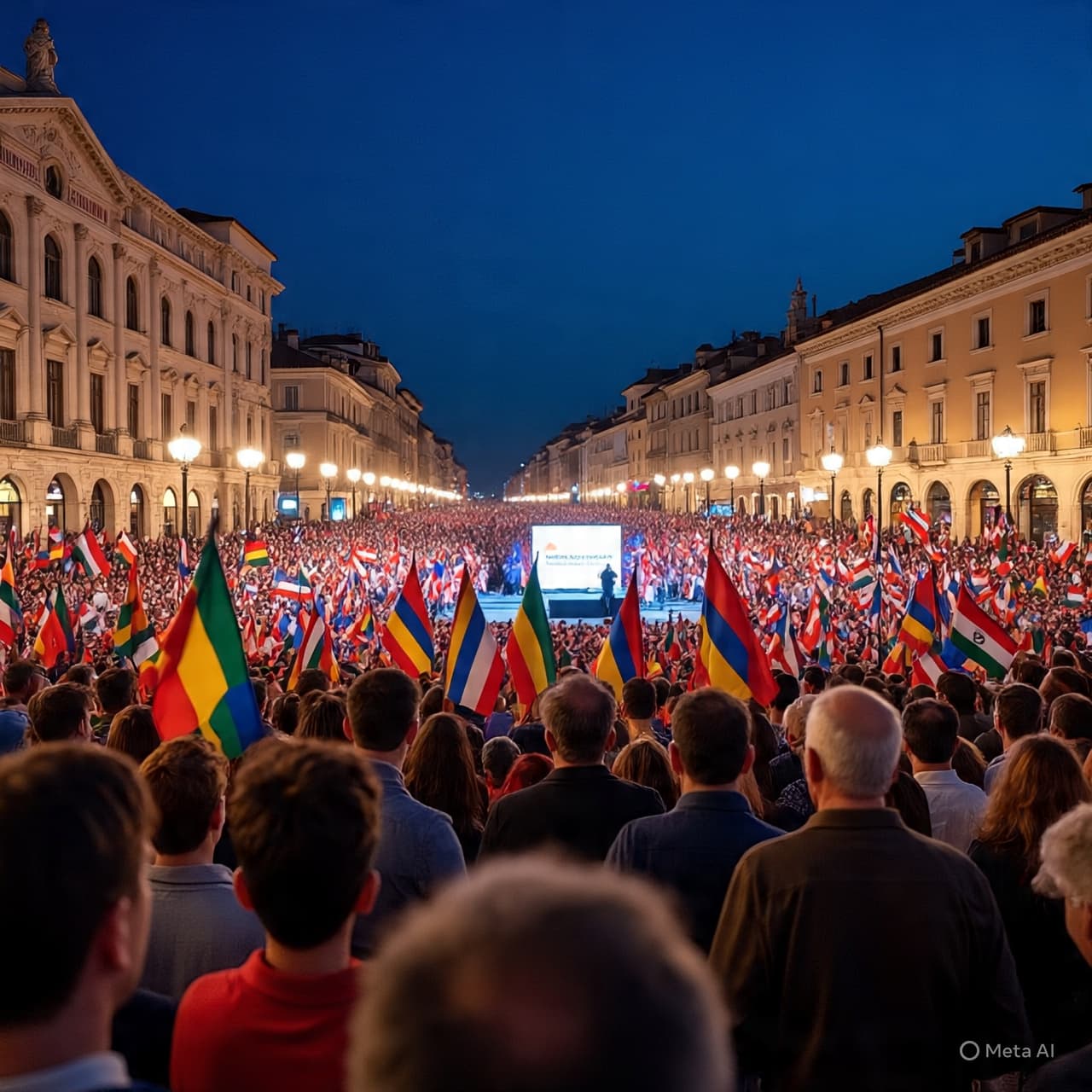
In Hungary, the final days of the election campaign are unfolding with a palpable sense of urgency and anticipation. As candidates take to the streets, the atmosphere is charged with emotion, reflecting a nation at a crossroads. Crowds gather in city squares and provincial towns, not merely to listen but to engage with the political discourse that shapes their future. This moment is marked by a blend of hope and uncertainty, as voters prepare to make choices that will impact the country's trajectory.
The rallies serve as a stage for competing narratives. On one side, opposition figures, united in their call for change, articulate a vision of renewal. They frame their messages around the need for a fresh start, appealing to voters who may feel disillusioned by the current administration. Their speeches resonate with urgency, emphasizing the importance of this election as a pivotal moment for Hungary.
Conversely, the ruling party, led by Viktor Orbán, underscores the importance of continuity and stability. They argue that their governance has provided resilience during challenging times, positioning themselves as the guardians of Hungary's current path. This narrative is designed to reassure voters who may fear the uncertainties that come with change.
As the campaign progresses, the stark contrast between these messages becomes increasingly evident. The rallies are not just about political persuasion; they are a reflection of the nation's identity and aspirations. Supporters wave flags and chant slogans, creating a vibrant atmosphere that underscores the significance of this electoral moment. Yet, beneath the surface, there is an undercurrent of division that cannot be ignored. Economic concerns, governance issues, and Hungary's relationship with Europe loom large, complicating the narrative.
The final days of campaigning are also a time for reflection. While the noise of the crowd is loud, the true decisions will be made in the quiet of the voting booth. Voters will weigh their options, considering not just the promises made but the realities of the past years. This election is more than a routine political exercise; it is a moment of expression for the Hungarian people, encapsulating their hopes, fears, and desires for the future.
As ballots are prepared to be cast, the scenes from these final rallies will serve as a reminder of the democratic process. It is a process that is often messy and uncertain, yet fundamentally human. The outcome of this election will shape Hungary's future, but the journey to that decision is equally important, highlighting the diverse voices that make up the nation's fabric.
In the coming days, as the votes are counted and results are announced, the echoes of these final campaign moments will linger. They will remind us that democracy is not just about the act of voting, but about the collective expression of a society grappling with its identity and future.
Published by Banx Network. This article is part of the Banx decentralized media programme, powered by the BXE token on the XRP Ledger.



