The morning sun rises quickly over New Delhi, warming broad avenues before traffic reaches its busiest rhythm. Students carrying backpacks pass government buildings that have long symbolized public authority, while tea stalls welcome early conversations about exams, careers, and the uncertain future awaiting millions of young people. In recent weeks, those conversations have increasingly spilled from classrooms into the streets, where hope and frustration now move side by side.
That determination remained visible as India's youth-led "Cockroach" movement declared it would continue nationwide demonstrations despite clashes with police during a march toward Parliament. Organizers said they would not abandon their campaign for education reform and accountability following the examination paper leak scandal that affected millions of students.
The movement began as an online satirical campaign before evolving into one of the country's largest youth-led protest movements in recent years. Participants are demanding the resignation of Education Minister Dharmendra Pradhan, arguing that repeated failures in the examination system have undermined confidence in educational institutions and unfairly affected students preparing for highly competitive entrance examinations.
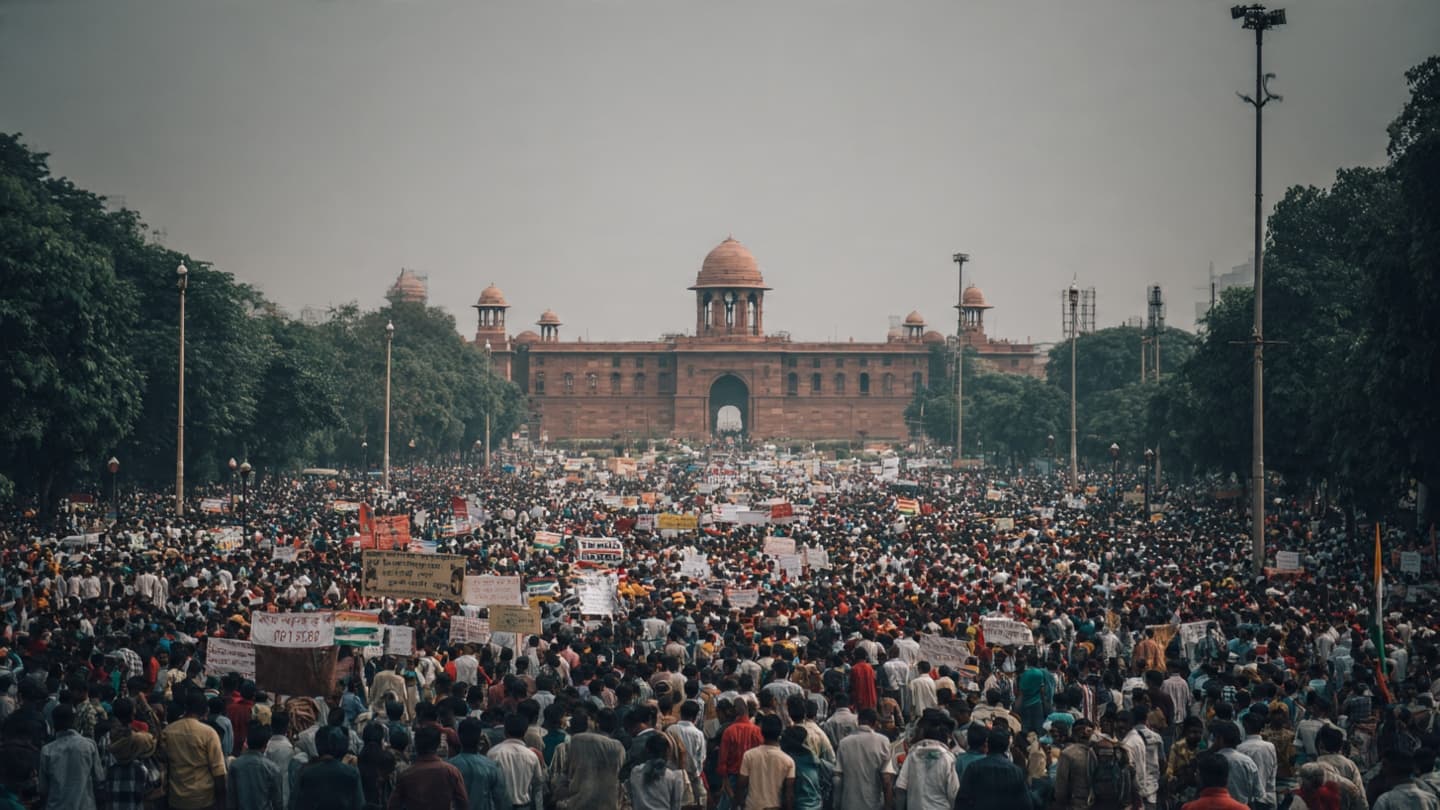
The latest demonstrations followed violent confrontations in central Delhi after thousands attempted to march toward Parliament despite restrictions imposed by authorities. Police said protesters violated prohibitory orders and that officers responded after barricades were breached. Protest organizers, meanwhile, accused security forces of using excessive force against what they described as a peaceful demonstration. Reports indicated that scores of protesters and police officers were injured during the clashes.
Prime Minister Narendra Modi pledged action following the examination controversy, and authorities have announced arrests connected to the paper leak investigation. Even so, many demonstrators say those measures do not fully address broader concerns about transparency, accountability, and fairness within India's education system. For many participants, the movement has grown beyond a single incident into a wider expression of public frustration over opportunities available to young people.
Support has also expanded beyond students themselves. Parents, professionals, educators, and civil society figures have joined demonstrations, reflecting the importance of competitive examinations in shaping educational and professional futures across India. The movement's broadening appeal has transformed it into a significant public challenge for the government during Prime Minister Modi's third term.
Despite the confrontations, protest leaders have signaled that future demonstrations will continue while seeking to reduce the risk of further injuries. Some organizers have indicated they may adjust tactics, including emphasizing sit-ins and peaceful gatherings rather than large marches toward heavily secured government areas. At the same time, dialogue between government representatives and movement leaders has yet to produce a resolution accepted by protesters.
History often remembers protest movements through dramatic images of crowded streets and raised banners. Yet beneath those moments lies something quieter: young people asking whether effort, education, and perseverance will continue to open doors for the next generation. Their concerns reach beyond a single examination or a single minister, touching broader questions about trust in public institutions and confidence in the future.
As evening settles across Delhi, traffic once again fills the city's wide roads and Parliament stands illuminated against the night sky. Whether negotiations eventually replace demonstrations remains uncertain. For now, the voices gathering in parks, public squares, and university campuses suggest that the movement's greatest strength lies not in a single march, but in its continued resolve to keep the conversation alive.
AI Image Disclaimer: These illustrations were generated using AI to provide conceptual representations of the reported events and are not actual photographs.
Sources: Reuters, Associated Press, The Guardian, Amnesty International, Times of India.
Published by Banx Network. This article is part of the Banx decentralized media programme, powered by the BXE token on the XRP Ledger.