There are moments in spaceflight when progress feels like a steady climb — engines tested, contracts awarded, countdowns rehearsed in quiet confidence. And then there are pauses. Not dramatic, not declarative, but deliberate. A pause can be as telling as a launch, revealing how carefully the path to orbit is measured.
The U.S. Space Force has temporarily paused certain national security launches planned on the Vulcan rocket developed by United Launch Alliance, following a booster-related issue identified during recent review and testing. The decision reflects the methodical caution that defines missions carrying critical defense payloads into orbit.
The Vulcan rocket, built by United Launch Alliance, or ULA, represents the company’s next-generation launch vehicle. Designed to replace both the Atlas V and Delta IV rockets, Vulcan is intended to serve commercial customers as well as U.S. national security missions. Its role is central to maintaining assured access to space — a principle long emphasized by defense planners.
The current pause stems from a glitch associated with one of the rocket’s solid rocket boosters. While the issue was not reported to have caused catastrophic failure, officials determined that further analysis and corrective steps were necessary before proceeding with additional national security launches. In programs where satellites support communications, missile warning systems, and intelligence gathering, even minor uncertainties invite scrutiny.
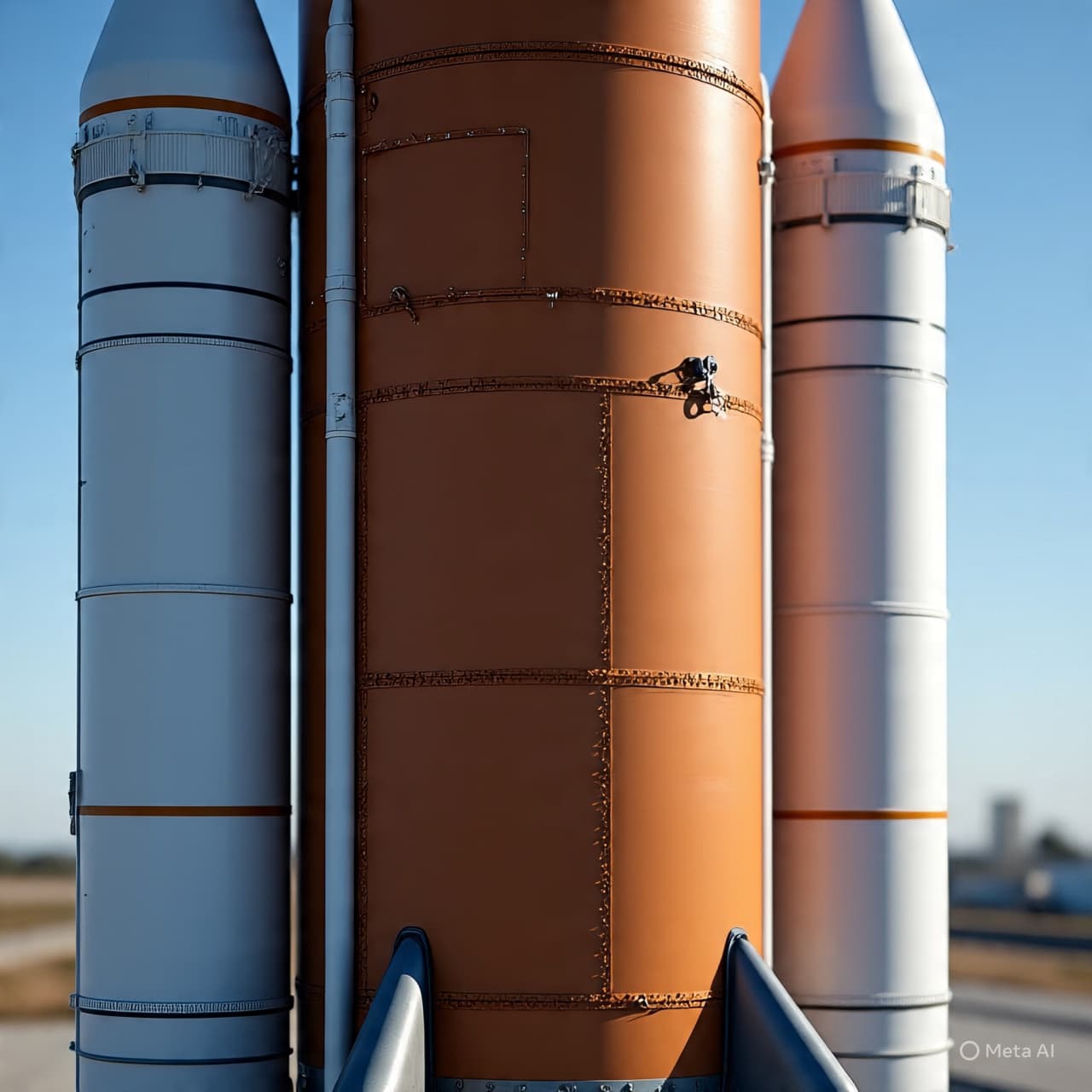
In the architecture of a launch vehicle, boosters play a foundational role. They provide the initial thrust required to lift the rocket off the pad, helping it break free from Earth’s gravity. Any irregularity in that early phase, however small, carries implications that engineers prefer to resolve on the ground rather than confront in flight.
The Space Force’s move underscores a broader culture within national security space operations: reliability takes precedence over schedule. Certification processes for rockets carrying defense payloads are rigorous, often requiring multiple successful flights and extensive technical review. Vulcan, though already demonstrating capability, remains under close evaluation as it transitions fully into operational service.
ULA has indicated it is working closely with government partners to analyze the booster anomaly and implement any necessary fixes. Engineers are reviewing data, inspecting hardware, and assessing whether modifications or additional testing will be required. Such collaboration between contractor and government is routine in high-stakes aerospace programs, where transparency and precision are expected.
For the Space Force, maintaining multiple launch providers is part of a strategy to ensure resilience. Vulcan is one of the vehicles selected under the National Security Space Launch program, alongside rockets from other providers. A temporary pause does not necessarily signal a long-term setback, but rather an effort to safeguard mission assurance.
In the measured cadence of space policy, this development is less a disruption than a recalibration. Rockets are intricate systems of propulsion, guidance, materials science, and human judgment. When one component raises a question, the answer is rarely haste. It is review.
Officials have not publicly detailed the timeline for resuming paused missions, but they have emphasized that evaluation is ongoing. National security payloads awaiting launch may be rescheduled depending on readiness and risk assessment.
For now, the Vulcan rocket remains central to U.S. launch strategy, even as engineers refine its systems. The Space Force’s decision reflects a standard procedural response to technical concerns, with further updates expected as analysis continues.
AI Image Disclaimer:
Graphics are AI-generated and intended for representation, not reality.
Sources:
Reuters SpaceNews Ars Technica Defense News CNBC
Published by Banx Network. This article is part of the Banx decentralized media programme, powered by the BXE token on the XRP Ledger.