There are moments in science when a picture imagined becomes a picture realized. For decades, cosmologists have described the universe’s first moments as a hot, dense, and nearly unfathomable state, often likened to a primordial “soup” from which all matter eventually emerged. It is a poetic metaphor — a swirl of unfettered energy and potential — but until recently it remained just that: a metaphor.
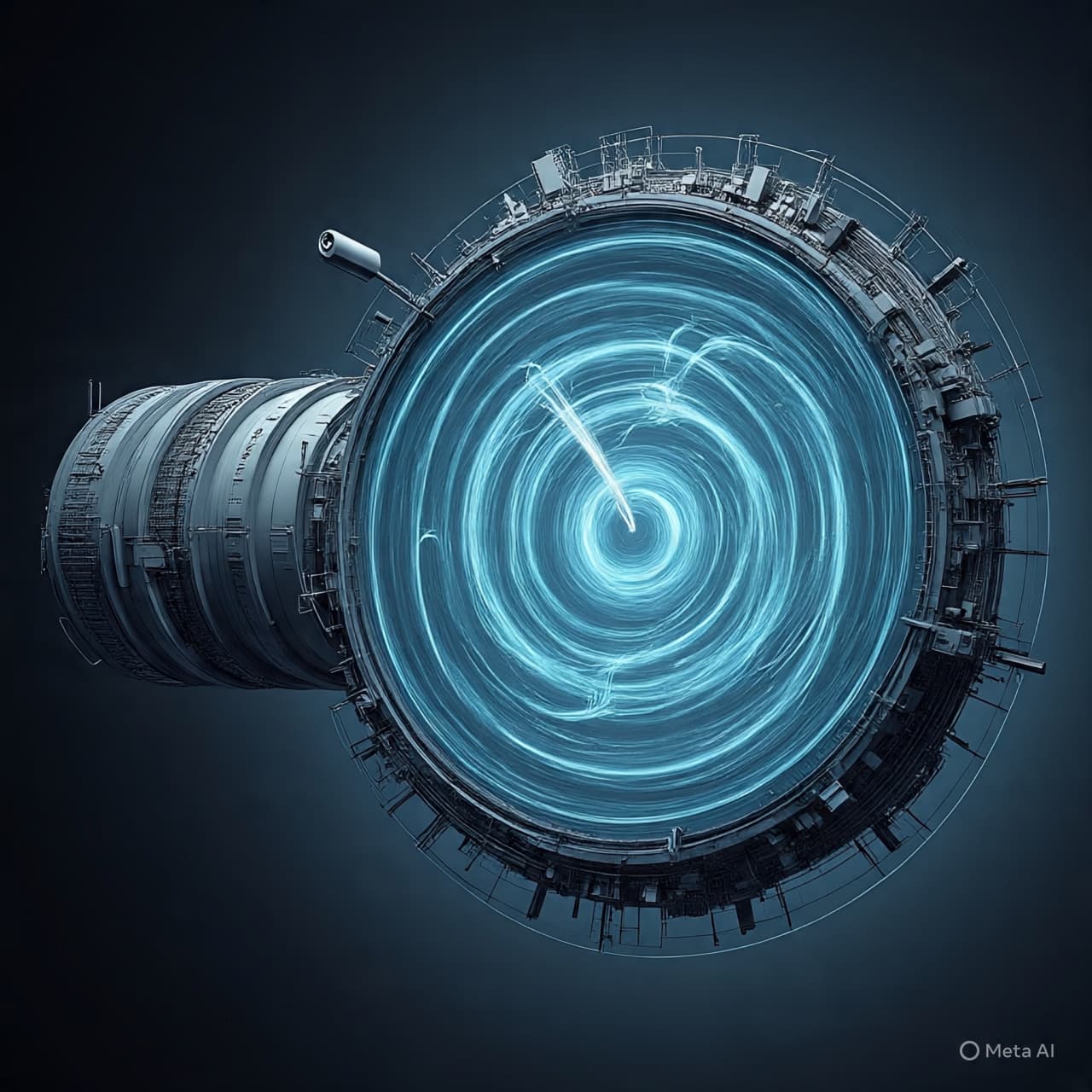
Now, scientists have reached back to the smallest fractions of cosmic time and recreated conditions akin to the aftermath of the Big Bang in the laboratory, and found that this ancient soup really did behave like a liquid. Using collisions at the Large Hadron Collider (LHC) at CERN, researchers accelerated heavy lead ions to nearly the speed of light, generating droplets of the exotic state of matter known as quark-gluon plasma (QGP). This ultra-hot, ultradense medium is believed to have filled the universe in the first microseconds after its birth.
In the blink of a cosmic eye, temperatures soared to trillions of degrees — far hotter than the surface of the Sun — creating a fleeting droplet of primordial plasma. By tracking how streaming quarks moved through this plasma and transferred energy to it, scientists have now seen evidence that it flowed and rippled much like a liquid does. Tiny wakes and disturbances formed behind moving particles — phenomena analogous to the swirl of water trailing a boat — implicit proof that the early universe behaved less like a random scatter of particles and more like a coherent, interacting fluid.
Physicists have long debated the true nature of QGP and how it transitioned into the familiar atoms and particles that compose galaxies, stars, planets, and ultimately life itself. These experimental findings help anchor theoretical models that describe how energy and matter transitioned from those first instants into a universe that could cool, expand, and evolve. In this ancient “soup,” quarks and gluons — the building blocks of protons and neutrons — were free to roam and interact collectively, creating a substance that behaved as a single, dense fluid rather than a chaotic cloud.
The experiments also illustrate science’s remarkable ability to recreate and probe moments that once seemed forever beyond reach. By colliding ions with extraordinary energy, researchers open a window into physics that governed the very beginnings of existence — a window that offers clues about how matter organized into complexity, how fundamental forces shaped the evolving cosmos, and how the universe’s earliest phase might have left subtle signatures still detectable today.
As physicists continue to analyze data and refine these approaches, the findings lay groundwork for future explorations into the deep history of the universe, blurring the line between theoretical description and experimental reality. The notion of a cosmic “soup” has long captured imaginations, but now it has become something more — a time-tested truth emerging from the very tools scientists created to unveil nature’s most hidden patterns.
In the latest analysis, scientists report clear evidence that quark-gluon plasma created at the LHC flows similarly to a liquid and interacts with high-energy quarks in a way that produces detectable wakes. Researchers emphasize that these observations provide important insight into the properties of matter at the highest energies and the universe’s earliest moments. Further experiments and analysis are ongoing to deepen understanding of QGP behavior and early-universe physics.
🖼️ AI Image Disclaimer Visuals are created with AI tools and are not real photographs.
Sources: CERN Massachusetts Institute of Technology Large Hadron Collider ScienceAlert Live Science
Published by Banx Network. This article is part of the Banx decentralized media programme, powered by the BXE token on the XRP Ledger.